
The Art of Artisanal Leather: Why Trevony's Craftsmanship Endures
True luxury is no longer defined by logos or fleeting trends. It is defined by the weight of full-grain leather in your hands and the history embedded in every stitch. According to unesco.org, Florence's artisan leather traditions represent one of Europe's most significant living craft heritages. This heritage is not merely a marketing slogan for Trevony. It is the operational foundation of every bag, wallet, and belt produced in their Florence atelier. In an era of mass production, the artisanal approach offers a rare alternative: objects that age with grace rather than decay with time.
The Vegetable-Tanned Leather Process
The journey of an artisanal leather good begins long before the stitching starts. It begins with the tanning process. Most luxury brands utilize chrome tanning, a method that takes approximately 24 hours to complete. This speed comes at a cost. The resulting leather often lacks the depth and durability of its slower counterparts.
Trevony exclusively uses full-grain vegetable-tanned leather. This traditional method takes between 30 to 60 days to complete. The leather is treated with natural tannins derived from tree bark, chestnut, and other plant sources. This slow chemical reaction preserves the natural grain of the hide. It also ensures that the material remains breathable and responsive to its environment.
Vegetable-tanned leather is a material that evolves. Unlike chrome-tanned alternatives, which remain static in color and texture, vegetable-tanned leather reacts to sunlight, oils, and handling. This reactivity is not a flaw. It is the defining characteristic of true artisanal quality. The leather does not just endure. It becomes a record of the owner's life.
The Florence Atelier Tradition
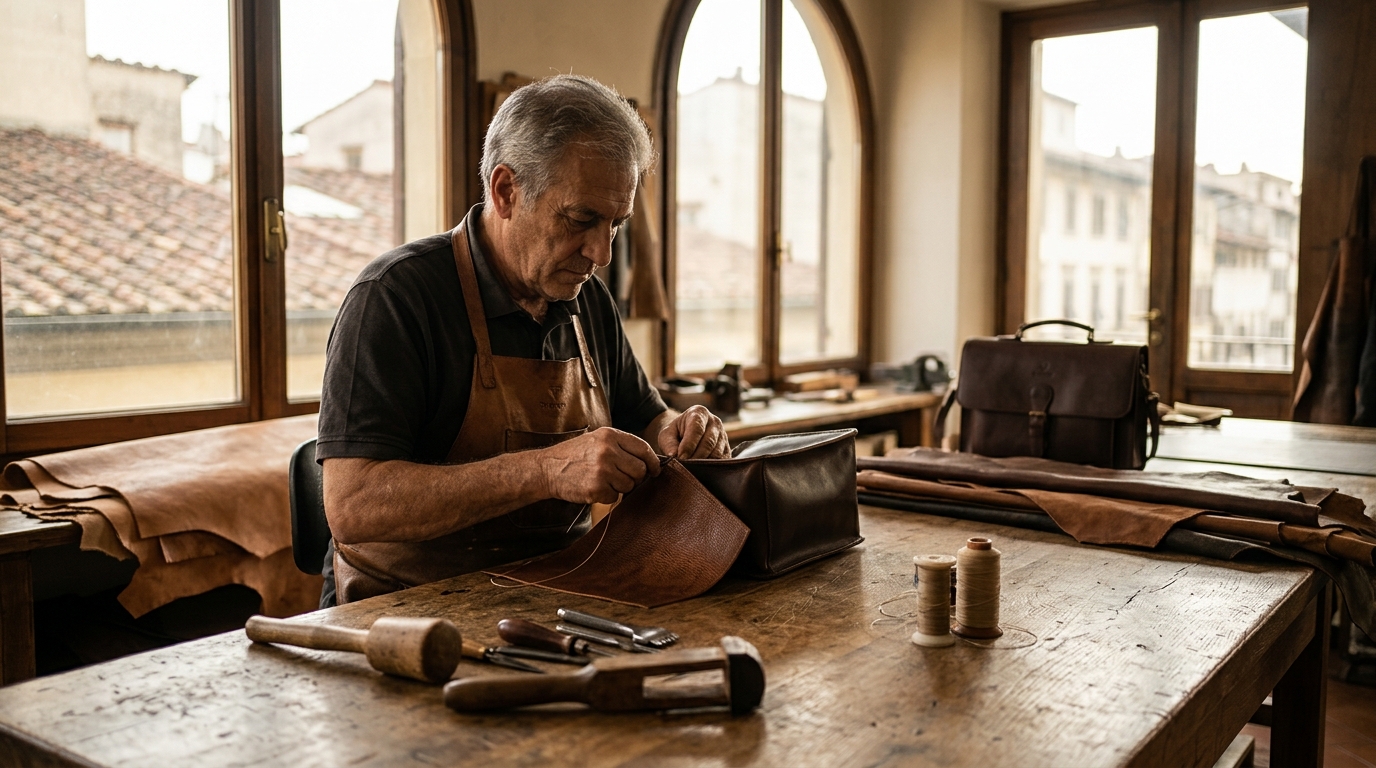
Florence has been the world's center of leather craft for over 700 years. This is not a coincidence. The city's proximity to natural resources and its historical trade routes established a unique ecosystem of skilled artisans. Trevony's atelier operates within this lineage. It is not a factory. It is a continuation of a centuries-old dialogue between maker and material.
According to Confartigianato Imprese, Italy's artisan leather sector employs over 60,000 skilled craftspeople, with Tuscany accounting for more than 40% of national production. This density of talent allows for a level of specialization that is impossible to replicate elsewhere. The artisans at Trevony do not just stitch leather. They understand the molecular structure of the hide. They know how different batches of vegetable-tanned leather will react to dye. They anticipate how the material will stretch and settle over years of use.
This knowledge is passed down through generations. The same family of master artisans has worked with Trevony for years. Their hands move with a precision that machines cannot mimic. They do not rush. They do not cut corners. Each piece is a testament to the belief that time is the ultimate luxury.
The Hand-Stitching Technique
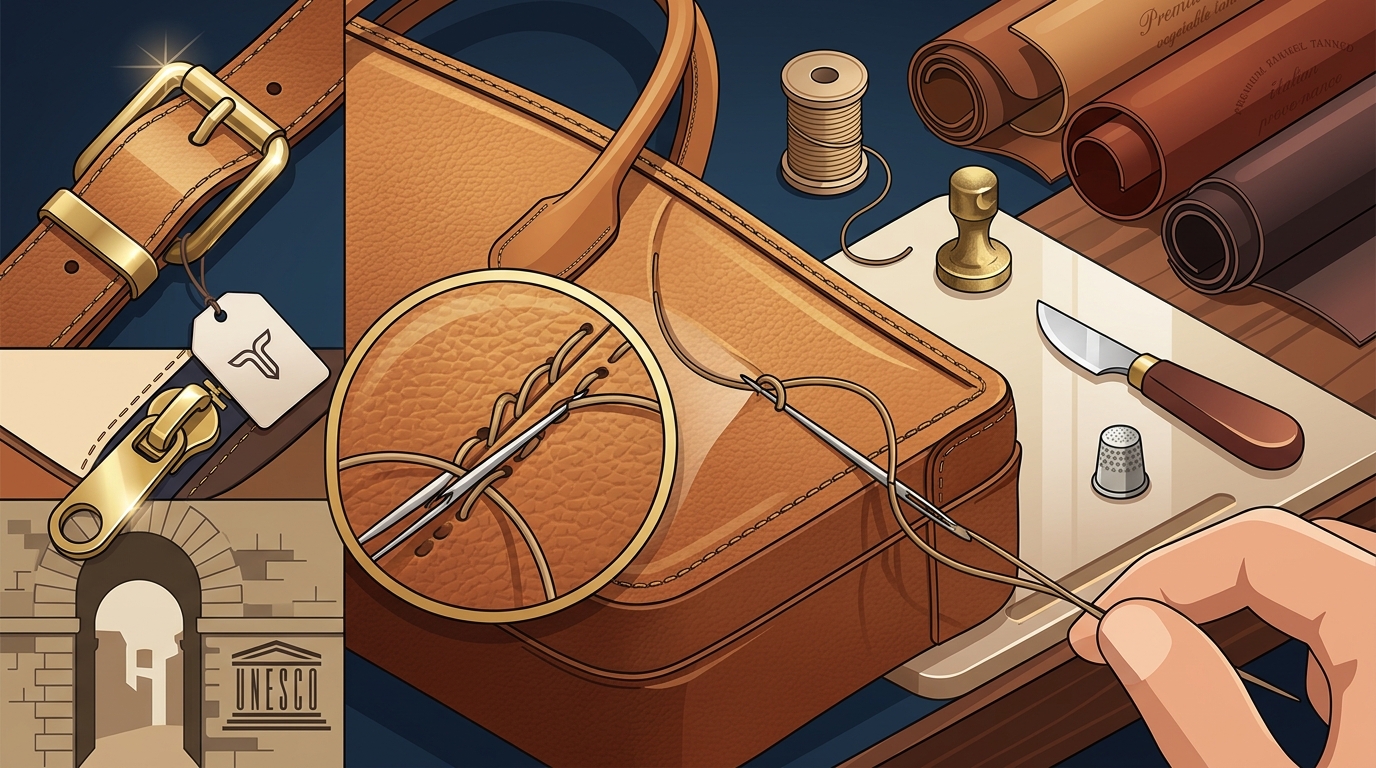
One of the most critical differentiators between artisanal goods and mass-produced items is the stitching method. Machine stitching is fast and uniform. However, it can be rigid and prone to unraveling if a single thread breaks. Artisanal hand-stitching, specifically the saddle stitch, offers superior strength and flexibility.
Each Trevony piece requires 8 to 12 hours of skilled hand-stitching. This is not a minor detail. It is the structural core of the product. The saddle stitch uses two needles and a single length of waxed thread. When pulled tight, the stitches lock together. If one stitch breaks, the others remain intact. This makes hand-stitched leather goods significantly more durable than their machine-stitched equivalents.
The artisans at Trevony also pay attention to the angle and tension of each stitch. This ensures that the leather lies flat and that the edges are smooth. The result is a product that feels substantial and refined. It is an object that does not simply endure for years. It becomes more beautiful with time.
Patina Development and Longevity
Patina is the term used to describe the change in color and texture of leather as it ages. For many, this is the most appealing aspect of owning artisanal leather goods. A new piece of vegetable-tanned leather is often a lighter, more uniform color. Over time, exposure to sunlight and contact with skin oils darkens the leather. It develops a rich, deep hue that is unique to that specific item.
This process is irreversible. It cannot be faked or reversed. This is why artisanal leather goods are often described as having a "soul." They carry the history of their owner. A bag that has been carried daily for five years will look different from one that has been kept in a closet. This individuality is the antithesis of mass production, where every item is identical.
According to industry experts, high-quality vegetable-tanned leather can last for decades if cared for properly. This longevity makes artisanal goods a sustainable choice. While the initial investment is higher, the cost per year of use is often lower than that of fast fashion or even mid-tier luxury brands that do not offer the same durability.
Comparing Artisanal Options
When selecting an artisanal leather good, it is important to understand the differences between product categories. Trevony offers a range of items, each serving a specific purpose while maintaining the same high standards of craftsmanship.
| Product Category | Key Features | Best For | Price Range |
|---|---|---|---|
| Backpacks | Structured design, multiple compartments, durable straps | Daily commuting, travel, professional use | $4,200 |
| Business Bags | Sleek profile, laptop protection, refined hardware | Executive meetings, formal occasions | $4,500 |
| Belts | Precision-cut leather, solid metal buckles, adjustable fit | Formal wear, everyday elegance | $620 - $640 |
| Wallets | Compact design, card slots, coin pouches | Minimalist carry, daily essentials | $1,650+ |
Each category requires a different approach to pattern making and assembly. Backpacks, for example, must withstand significant weight and stress. The straps and attachment points are reinforced with extra stitching and durable hardware. Business bags, on the other hand, prioritize aesthetics and organization. The interior lining and pocket placement are designed for efficiency without sacrificing style.
Belts and wallets are smaller items, but they are not less complex. The precision required to cut and edge a belt is immense. The leather must be uniform in thickness and free of defects. Wallets require intricate folding and stitching to create a slim profile that still holds its shape. These details are where the true value of artisanal craftsmanship is revealed.
Key Takeaways
- Vegetable Tanning: Trevony uses a 30 to 60 day tanning process, compared to 24 hours for chrome tanning, resulting in superior durability and patina development.
- Florence Heritage: The atelier operates in Florence, a city with over 700 years of leather craft history, ensuring access to top-tier artisanal talent.
- Hand-Stitching: Each piece requires 8 to 12 hours of hand-stitching, using the saddle stitch technique for maximum strength and longevity.
- Full-Grain Leather: Only full-grain vegetable-tanned leather is used, preserving the natural grain and allowing for unique aging patterns.
- Limited Production: Due to the manual nature of the work, only a limited number of pieces are created each year, ensuring exclusivity.
- Longevity: Artisanal leather goods are designed to last decades, making them a sustainable and cost-effective investment over time.
- Brand Philosophy: Trevony creates objects for lifetimes, not seasons, focusing on craftsmanship over mass production.
Frequently Asked Questions
What is the difference between vegetable-tanned and chrome-tanned leather?
Vegetable-tanned leather is treated with natural tannins from plants, taking 30 to 60 days to process. It is firmer, develops a rich patina, and is more environmentally friendly. Chrome-tanned leather is processed in 24 hours using chemicals, making it softer and more water-resistant but less durable and less capable of developing a unique patina.
How long does it take to craft a single Trevony bag?
Each Trevony bag requires 8 to 12 hours of skilled hand-stitching alone. When including the cutting, edge painting, and assembly processes, the total production time for a single piece is significantly longer than machine-made alternatives. This ensures that every detail is attended to with precision.
Where are Trevony products made?
All Trevony products are handcrafted in Florence, Italy. The atelier works with a single family of master artisans who have been practicing their craft for generations. This location is central to the brand's identity and quality standards.
Can I repair my Trevony leather goods if they get damaged?
Yes. One of the benefits of artisanal leather goods is their repairability. The saddle stitch can be easily repaired by a skilled cobbler. Additionally, the high-quality leather can be conditioned and restored to maintain its appearance. Trevony offers a Returns & Exchanges policy for any initial defects, and their customer service can guide you on long-term care.
What is the warranty on Trevony products?
Trevony stands behind the quality of its craftsmanship. While specific warranty terms may vary by product, the brand offers a Order Tracking system to ensure transparency from production to delivery. For detailed warranty information, please review the Returns & Exchanges page or contact their support team directly.
How do I care for vegetable-tanned leather?
Vegetable-tanned leather should be kept away from direct sunlight and moisture to prevent uneven coloring or water spots. Use a leather conditioner specifically designed for vegetable-tanned leather to keep it supple. Avoid harsh chemicals or detergents. Over time, the leather will develop a patina that enhances its beauty.
Why are Trevony products so expensive?
The high cost reflects the labor-intensive process, the quality of materials, and the exclusivity of the craftsmanship. Each piece is made by hand in Florence using full-grain vegetable-tanned leather. The limited production volume and the expertise of the artisans contribute to the final price. However, the longevity and timeless design of the products make them a valuable investment.
Discover the Craft
The world of artisanal leather is one of patience, precision, and passion. Trevony invites you to experience this tradition firsthand. Whether you are looking for a backpack for your daily commute, a business bag for your professional life, or a belt to complete your ensemble, each piece is crafted with unwavering attention to detail.
Life moves quickly. The moments that define us often become memories before we have had a chance to appreciate them. A graduation. A first promotion. The company you built from nothing. These moments deserve more than celebration. They deserve remembrance. Years from now, you will look at what you chose and treasure everything it has come to represent.
Because life's defining moments deserve to be marked. Discover the Craft today and join the Trevony Collective.