
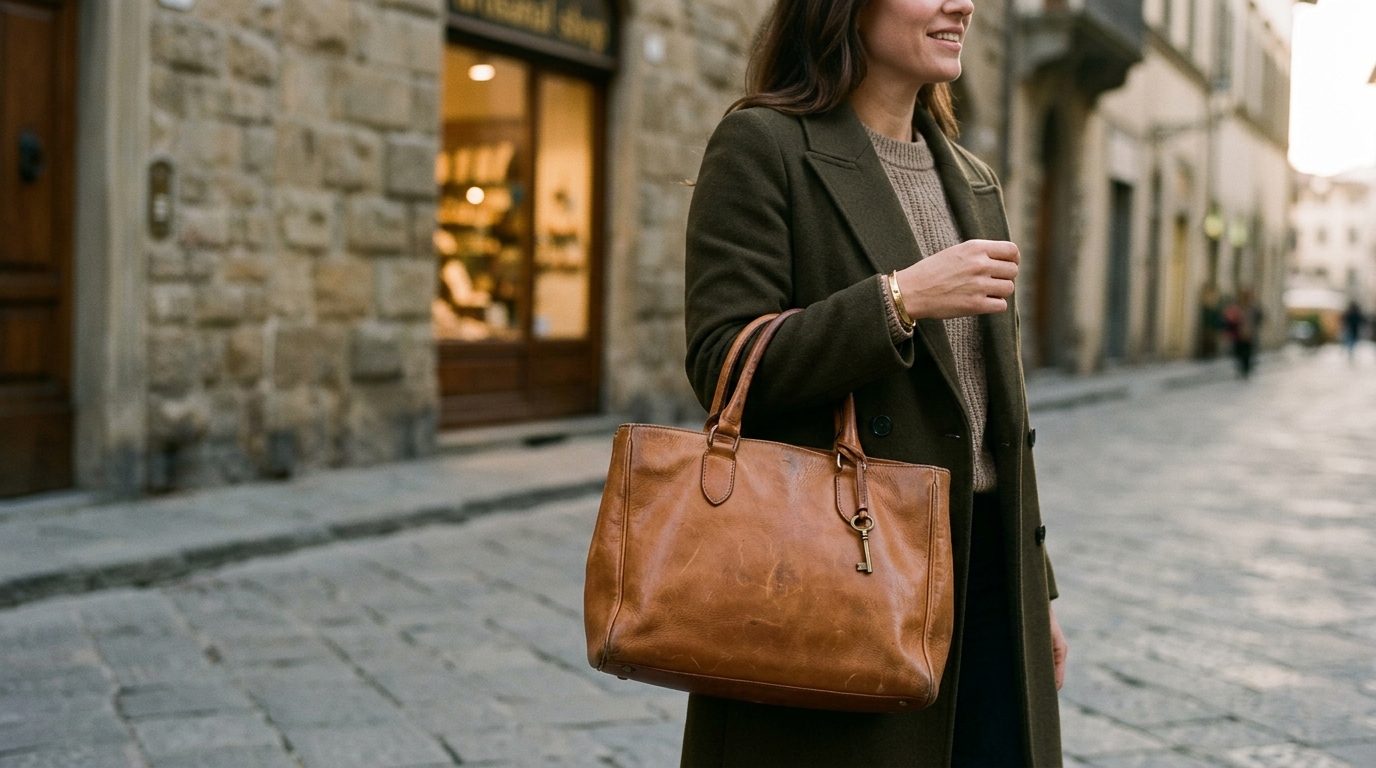
Leather is not a static material. It is a living record of the hands that carry it and the lives they lead. According to UNESCO, the artisan leather traditions of Florence represent one of Europe's most significant living craft heritages, emphasizing that true luxury is defined by time and touch rather than seasonal trends. When you invest in a handcrafted piece from Trevony, you are not merely purchasing a container for your essentials. You are acquiring an object designed to age alongside you, developing a unique patina that reflects your personal journey.
The Florence Atelier Tradition
To understand how a Trevony bag will age in real-world conditions, one must first understand how it is born. Every Trevony piece is handcrafted in Florence by a single family of master artisans. This is not a factory assembly line. It is a generational practice where the same hands have worked the leather for decades. The process begins with full-grain vegetable-tanned leather, a material that requires 30 to 60 days to cure, compared to the mere 24 hours used for chrome-tanned alternatives found in mass-market luxury goods.
This slow, deliberate process ensures that the leather retains its natural grain and structural integrity. Each piece requires 8 to 12 hours of skilled hand-stitching. No shortcuts are taken. The result is an object that does not simply endure for years. It becomes more beautiful with time. The leather develops a patina unique to the hands that hold it, the life it accompanies, and the moments it witnesses. According to Confartigianato Imprese, Italy's artisan leather sector employs over 60,000 skilled craftspeople, with Tuscany accounting for more than 40% of national production, highlighting the density of expertise available in this region.
Case Study 1: The Executive Commute
Consider the daily reality of a senior consultant or entrepreneur who relies on the Specter Business Bag. This individual navigates high-stakes meetings, airport terminals, and crowded city streets. The Specter is designed to withstand the rigors of professional life without sacrificing elegance. The full-grain leather is dense enough to protect laptops and documents from minor impacts, yet supple enough to remain comfortable against the shoulder during long transit days.
Over the first six months of daily use, the Specter undergoes a subtle transformation. The deep Espresso or Black leather begins to soften at the stress points, particularly around the handles and the base where the bag rests on subway seats or office desks. This is not wear in the traditional sense. It is the leather settling into its new shape. The hardware, typically palladium or gold-toned, develops a slight matte finish from friction, which complements the darkening leather. For the executive, this aging process signals authenticity. It proves the bag is real, not a synthetic imitation that will crack or peel after a year of use.
Case Study 2: The Urban Explorer
For the creative professional or the frequent traveler, the Milo Backpack offers a different kind of durability. Carried daily in urban environments, the backpack faces exposure to rain, dust, and constant movement. The vegetable-tanned leather used in the Milo is naturally resistant to moisture, provided it is cared for correctly. When exposed to light rain, the leather darkens temporarily, a characteristic of high-quality natural materials. Once it dries, it returns to its original hue, often with a richer, more saturated tone.
After a year of urban exploration, the Milo Backpack displays a distinct patina that tells the story of its travels. The Imperial Jade or Blue Yanis colors deepen, revealing undertones that were not visible when the bag was new. The stitching remains tight and secure, a testament to the hand-stitching techniques employed in the Florence atelier. Unlike mass-produced backpacks that lose their shape, the Milo retains its structural integrity, continuing to support the weight of daily gear without sagging or deforming.
Case Study 3: The Everyday Minimalist
Not every daily carry requires a large bag. For the minimalist who values precision and elegance, the Trevony Arciere Belt or a small Lumora BumBag serves as a daily companion. These items are subjected to constant friction and handling. The Arciere belt, crafted from the same full-grain leather, develops a smooth, polished surface along the edge where it passes through the buckle. This polishing effect is a natural result of the leather's density and the quality of the finish.
The Lumora BumBag, often worn close to the body, experiences a different kind of wear. The leather softens rapidly, conforming to the wearer's body shape. This personalization is a key benefit of vegetable-tanned leather. It does not resist the wearer's form. It embraces it. Over time, the bag becomes lighter and more flexible, reducing strain on the wearer while maintaining its aesthetic appeal. The unique color variations in each piece ensure that no two bags age in exactly the same way, making each item a one-of-a-kind artifact.
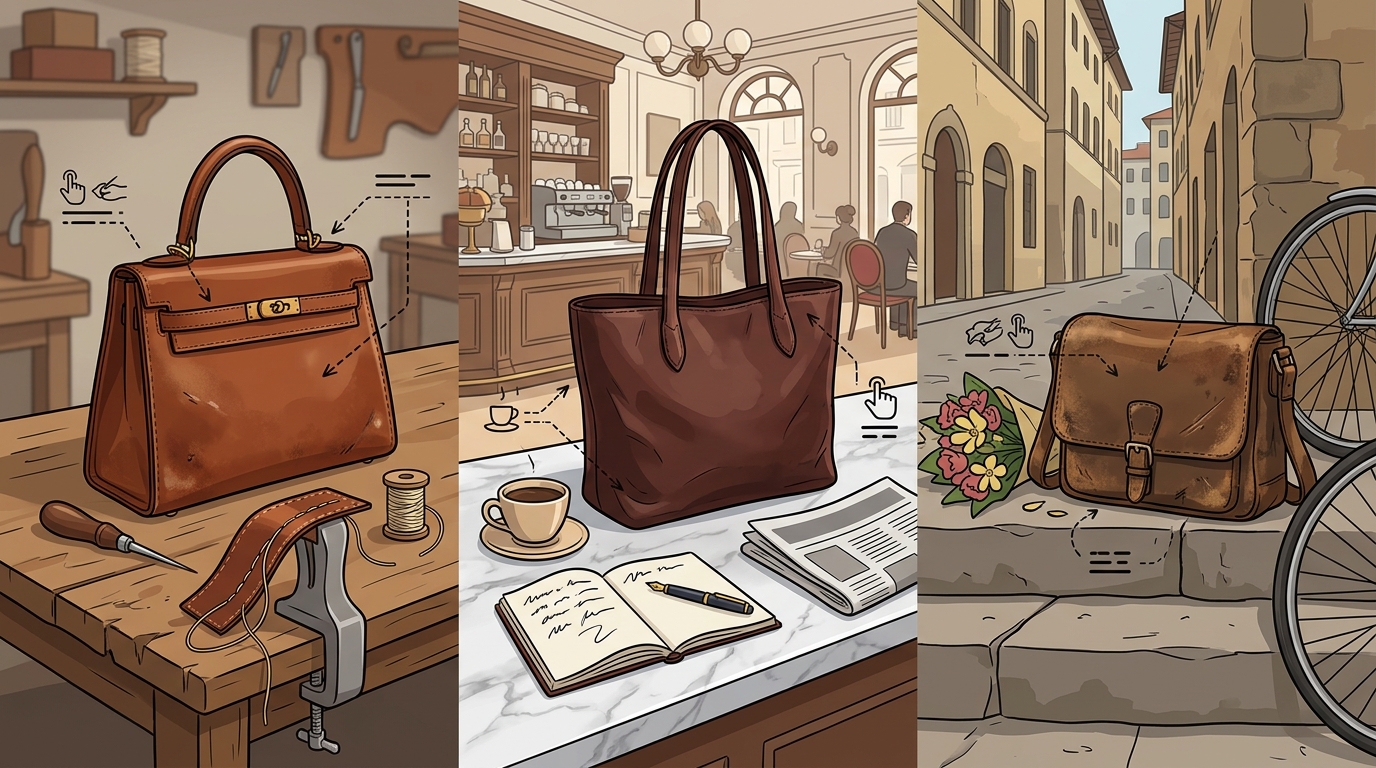
Comparing Trevony Styles for Daily Use
Choosing the right Trevony piece for your daily life depends on your specific needs and aesthetic preferences. The table below outlines the key characteristics of our primary collections to help you make an informed decision.
| Collection | Best For | Leather Evolution | Price Range |
|---|---|---|---|
| Specter Business Bag | Professional environments, travel, laptop protection | Deepens in color, develops a rich, glossy patina | $4,500 |
| Milo Backpack | Urban commuting, active lifestyles, hands-free carry | Softens quickly, reveals undertones in vibrant colors | $4,200 |
| Arciere & Truth Belts | Formal wear, daily elegance, accessory durability | Edges polish naturally, leather becomes supple | $620 - $640 |
| Lumora BumBag | Minimalist carry, close-to-body security, casual style | Conforms to body shape, becomes lighter and flexible | $1,650 |
Key Takeaways
- Vegetable-Tanned Longevity: Trevony uses full-grain vegetable-tanned leather, which cures in 30 to 60 days, ensuring a denser, more durable material than chrome-tanned alternatives.
- Handcrafted Exclusivity: Each piece requires 8 to 12 hours of hand-stitching by a single family of artisans in Florence, limiting annual production and ensuring quality.
- Patina Development: Real-world wear results in a unique patina that deepens colors and softens the leather, making each bag distinct over time.
- Structural Integrity: Unlike mass-produced bags, Trevony pieces retain their shape and support weight effectively due to high-quality material selection and construction.
- Investment Value: With prices ranging from $1,650 for accessories to $4,500 for business bags, Trevony items are designed to last a lifetime, offering long-term value.
- Artisan Heritage: The brand operates within a region that accounts for over 40% of Italy's artisan leather production, leveraging centuries of local expertise.
- Personalization: The leather conforms to the user's lifestyle and body, creating a personalized artifact that reflects the owner's journey.
Frequently Asked Questions
How does vegetable-tanned leather differ from chrome-tanned leather?
Vegetable-tanned leather is cured using natural tannins from tree bark and other plant sources over a period of 30 to 60 days. This process results in a firmer, more durable leather that develops a rich patina over time. Chrome-tanned leather is cured in 24 hours using chemical salts, resulting in a softer, more water-resistant material that does not age as gracefully.
Can Trevony bags withstand daily rain exposure?
Yes, the full-grain leather used in Trevony products has natural water-resistant properties. While it is not waterproof, light rain will cause the leather to darken temporarily. Once it dries, it returns to its original color, often with a richer tone. It is recommended to use a leather conditioner to maintain its natural oils.
Why are Trevony products priced higher than other luxury brands?
Trevony products are priced higher due to the labor-intensive, handcrafted production process in Florence. Each piece requires 8 to 12 hours of skilled work by master artisans from a single family. This exclusivity and commitment to quality, combined with the use of premium full-grain leather, justify the investment.
How do I care for my Trevony leather bag?
To maintain the beauty of your Trevony bag, avoid prolonged exposure to direct sunlight and heat. Use a soft, dry cloth to clean the surface. Apply a high-quality leather conditioner every six months to keep the leather supple and prevent drying. Store the bag in its dust bag when not in use to protect it from dust and scratches.
What is the return policy for Trevony products?
Trevony offers a comprehensive returns and exchanges policy to ensure customer satisfaction. Please review the Returns & Exchanges page for detailed instructions on how to initiate a return or exchange within the specified timeframe.
Are Trevony bags suitable for professional environments?
Absolutely. The Specter Business Bag and other professional styles are designed to meet the demands of high-stakes environments. They offer ample space for laptops and documents while maintaining a sleek, elegant appearance that complements formal attire.
How long does it take for the patina to develop?
The patina development is a gradual process that begins with the first few weeks of use. Significant changes in color and texture become noticeable after six to twelve months of regular wear. The patina continues to deepen and evolve over the years, making the bag uniquely yours.
Start Your Journey
Your daily life is a series of defining moments. Choose a companion that honors them. Whether you need the structured elegance of the Specter Business Bag, the versatile durability of the Milo Backpack, or the refined simplicity of the Arciere Belt, Trevony offers handcrafted pieces designed to age beautifully with you. Explore the Trevony Collection today and discover the craftsmanship that defines true luxury.