
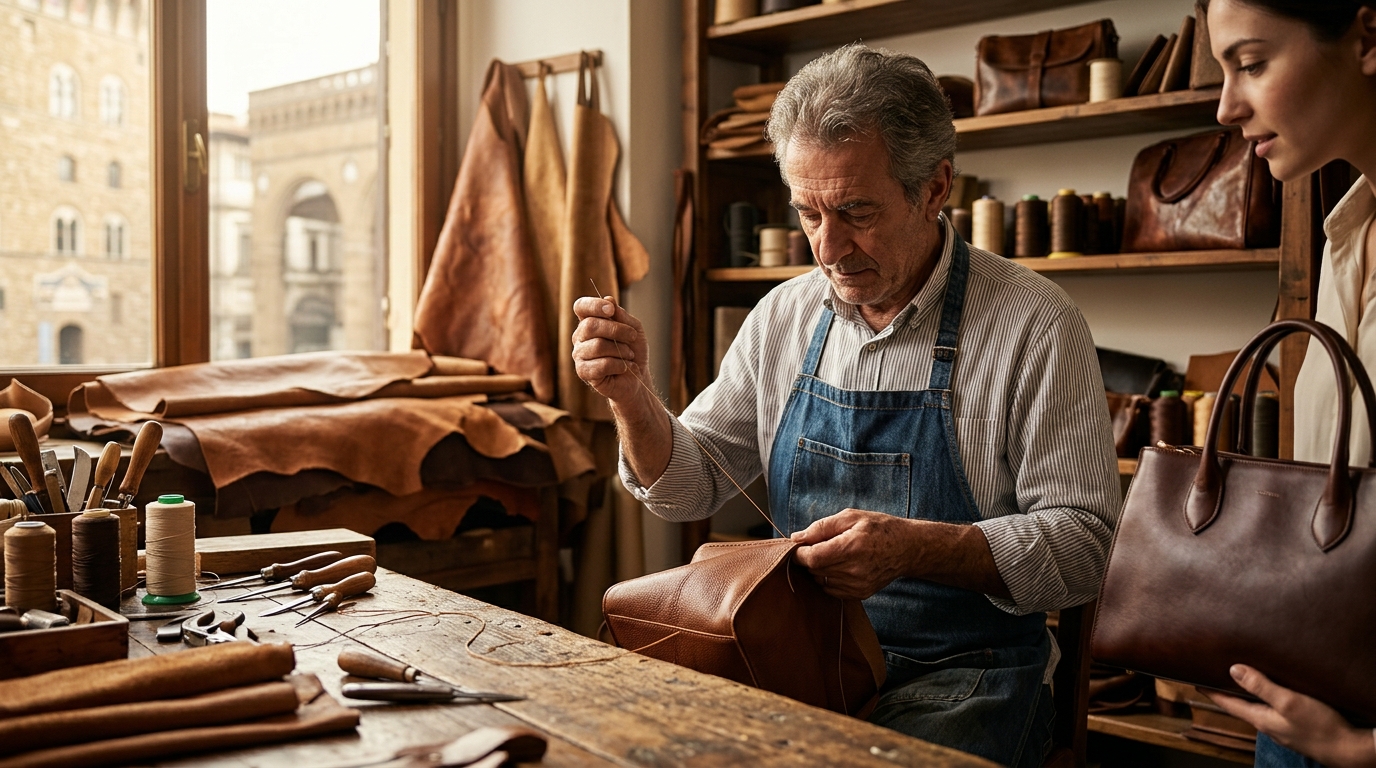
Leather is not merely a material; it is a living record of time and touch. In an era defined by rapid consumption and disposable goods, the choice to carry an object built for a lifetime represents a fundamental shift in how we value our daily interactions. The real-world impact of choosing handcrafted Italian leather extends far beyond aesthetics, influencing sustainability metrics, personal identity, and long-term economic value. According to unesco.org, Florence's artisan leather traditions represent one of Europe's most significant living craft heritages. This heritage is not just a historical footnote but a active, breathing industry that defines the standard for quality worldwide.
The Florence Atelier Tradition
Florence has been the world's center of leather craft for over 700 years. This is not a coincidence but the result of centuries of accumulated knowledge, specific environmental conditions, and a cultural reverence for manual skill. Trevony's atelier operates within this lineage, working exclusively with a single family of master artisans. The same family. The same hands. For generations.
This continuity ensures that every stitch and cut adheres to standards that have been refined over centuries. When you engage with Trevony, you are not buying a product from a factory floor. You are acquiring an object that carries the weight of this history. The process is slow by design. It rejects the industrial imperative of speed in favor of precision. Each piece requires 8 to 12 hours of skilled hand-stitching. No shortcuts.
The result is an object that does not simply endure for years; it becomes more beautiful with time. The leather develops a patina unique to the hands that hold it, the life it accompanies, and the moments it witnesses. This personalization is impossible to replicate with machine-made alternatives. It transforms a bag or wallet from a commodity into a companion.
Vegetable-Tanned vs. Chrome-Tanned Leather
Understanding the real-world value of leather begins with understanding its creation. The primary differentiator between luxury leather and mass-market leather is the tanning process. Trevony uses full-grain vegetable-tanned leather, a method that has been used for millennia. This process takes 30 to 60 days, compared to 24 hours for the chrome-tanned alternatives used by most luxury brands.
Vegetable tanning utilizes natural tannins derived from tree bark, leaves, and fruits. This results in a leather that is firm, durable, and environmentally responsible. It breathes better than chrome-tanned leather, allowing it to adapt to temperature changes and humidity without degrading. Chrome tanning, while faster and cheaper, often relies on harsh chemicals that can degrade over time and pose environmental risks.
According to Confartigianato Imprese, Italy's artisan leather sector employs over 60,000 skilled craftspeople, with Tuscany accounting for more than 40% of national production. This data highlights the scale and importance of traditional methods in the modern economy. Choosing vegetable-tanned leather supports a supply chain that values human labor and ecological balance over rapid, chemical-heavy production.
Longevity and Patina Development
The concept of patina is central to the value proposition of handcrafted leather. Patina is the gradual change in color and texture that occurs as leather ages and is exposed to light, air, and handling. It is not wear and tear; it is a refinement. A well-made leather bag will look better at five years old than it did on the day it was purchased.
This characteristic is unique to high-quality, full-grain leather. Lower-quality leathers, often corrected or coated heavily, will crack, peel, or fade rather than develop a rich, deep character. The real-world implication is that you are investing in an object that improves with use. This stands in stark contrast to the planned obsolescence of fast fashion.
When you choose a piece from Trevony's bags collection, you are selecting an item that will age gracefully alongside you. The scratches, scuffs, and color shifts become part of your personal narrative. They tell the story of your commutes, your travels, and your daily life. This emotional connection is a tangible benefit that cannot be quantified by price alone.
Analyzing Trevony's Core Collections
To understand the breadth of this craftsmanship, we must look at the specific products that embody these principles. Trevony offers a curated selection of items, each designed to serve a specific purpose while maintaining the highest standards of quality.
| Product Category | Key Features | Price Range | Best For |
|---|---|---|---|
| Milo Backpack | Full-grain leather, hand-stitched, multiple compartments | $4,200 | Daily carry, professional settings |
| Specter Business Bag | Structured design, premium hardware, durable base | $4,500 | Executive travel, formal meetings |
| Arciere & Truth Belts | Palladium or gold hardware, vegetable-tanned leather | $620 - $640 | Everyday elegance, wardrobe staples |
| Lumora BumBag | Compact design, secure closure, versatile styling | $1,650 | Travel, hands-free convenience |
Each of these items reflects the "Not for Everyone" philosophy. They are not designed for mass appeal but for those who value substance over status. The pricing reflects the true cost of this labor-intensive process. It is not an arbitrary markup but a reflection of the hours, skill, and materials involved.
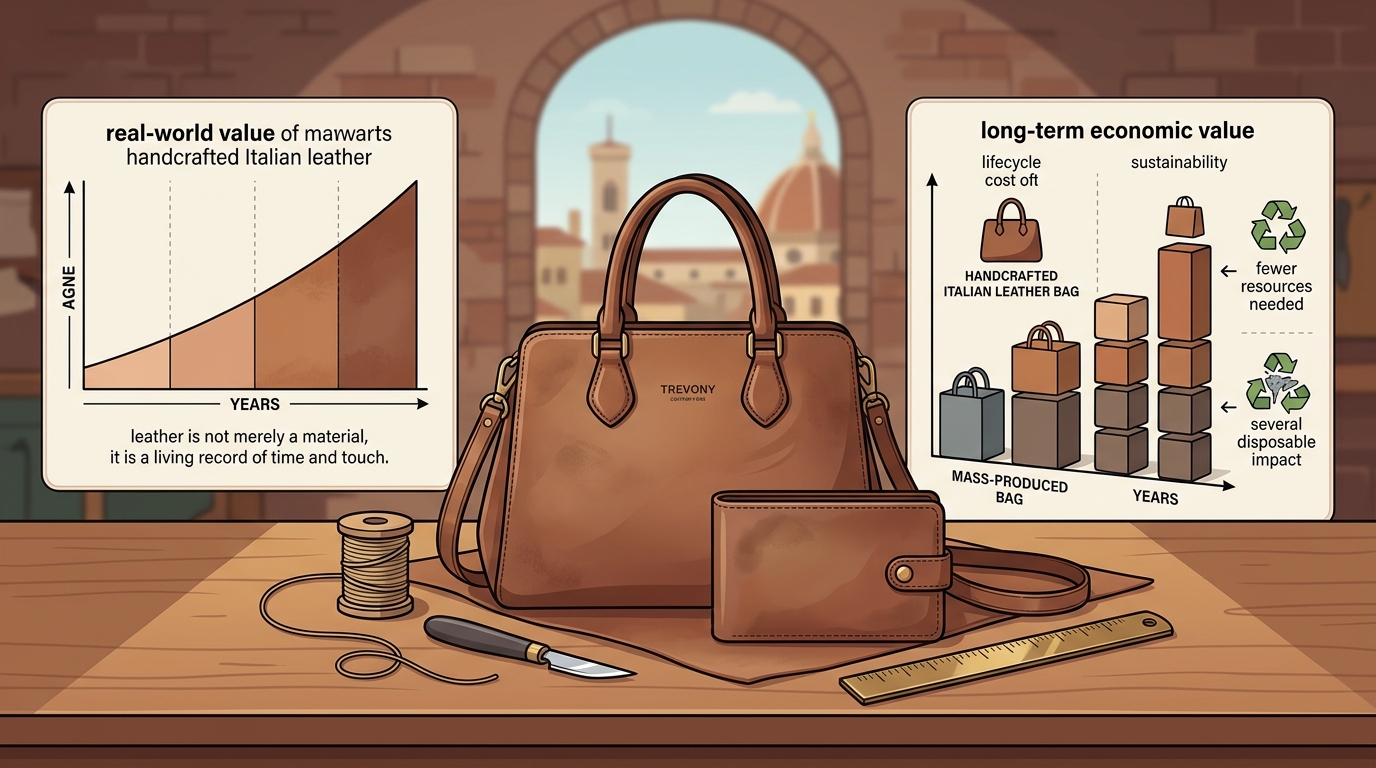
The Economic Case for Quality
While the initial cost of handcrafted leather goods is higher than mass-produced alternatives, the real-world economic value is often superior. This is calculated through the lens of cost per use. A $100 bag that lasts two years costs $50 per year. A $4,200 backpack that lasts twenty years costs $210 per year. However, this calculation ignores the depreciation and resale value of quality leather.
High-quality leather goods retain their value significantly better than fast fashion items. They can be repaired, restored, and maintained indefinitely. The hardware on a Trevony bag is designed to last, and the leather can be conditioned to prevent drying or cracking. This longevity reduces the frequency of replacement, ultimately saving money over a lifetime.
Furthermore, the environmental cost of fast fashion is immense. The production of cheap leather involves significant water pollution and chemical waste. By choosing sustainable luxury, you are making a choice that aligns with broader ecological goals. You are supporting a model of production that is slow, deliberate, and respectful of resources.
Key Takeaways
- Florence's Heritage: Florence has been the center of leather craft for over 700 years, providing a unique ecosystem for artisanal excellence.
- Vegetable Tanning: The process takes 30 to 60 days, ensuring durability and environmental responsibility compared to 24-hour chrome tanning.
- Artisan Labor: Each piece requires 8 to 12 hours of skilled hand-stitching by a single family of master artisans.
- Patina Development: Full-grain leather improves with age, developing a unique character that reflects the owner's life.
- Economic Value: High-quality leather goods offer a lower cost per use over time due to their exceptional longevity and repairability.
- Industry Impact: Italy's artisan leather sector employs over 60,000 skilled craftspeople, highlighting the importance of preserving these skills.
- Brand Philosophy: Trevony creates objects for lifetimes, not seasons, focusing on integrity and craftsmanship over mass production.
Frequently Asked Questions
What is the difference between vegetable-tanned and chrome-tanned leather?
Vegetable-tanned leather uses natural tannins from plants and takes 30 to 60 days to process, resulting in a firmer, more durable material that develops a rich patina. Chrome-tanned leather uses chemical salts and takes only 24 hours, making it softer and more water-resistant but less durable and environmentally friendly.
How long does it take to craft a Trevony bag?
Each Trevony piece requires 8 to 12 hours of skilled hand-stitching. This time is dedicated to ensuring every stitch is perfect and the structure is robust, reflecting the atelier's commitment to quality over speed.
Why is Trevony leather more expensive than other brands?
The higher cost reflects the true value of handcrafted labor, premium full-grain materials, and the sustainable vegetable-tanning process. It is an investment in an object that will last for decades, offering a lower cost per use compared to disposable alternatives.
Can Trevony leather be repaired if damaged?
Yes. One of the primary benefits of high-quality leather is its repairability. Scratches can be buffed out, and structural repairs can be made by skilled artisans, extending the life of the product indefinitely.
What is the patina on leather?
Patina is the gradual change in color and texture that occurs as leather ages and is exposed to light, air, and handling. It is a sign of quality and adds unique character to the item, making it distinct to its owner.
Where are Trevony products made?
All Trevony products are handcrafted in Florence, Italy, by a single family of master artisans. This ensures consistency in quality and adherence to traditional Italian leather-making techniques.
How do I care for my Trevony leather goods?
Regular conditioning with a high-quality leather balm is recommended to keep the leather supple and prevent drying. Avoid prolonged exposure to direct sunlight and moisture. For specific care instructions, please review our care guidelines.
Begin Your Journey
The choice to carry a handcrafted object is a choice to value quality, history, and individuality. It is a rejection of the disposable culture that dominates the modern world. By selecting a piece from Trevony, you are not just buying a bag or a wallet. You are acquiring a companion for life's defining moments.
Explore the Trevony collection and discover the difference that true craftsmanship makes. Each piece is a testament to the enduring power of human skill and the beauty of natural materials. Mark your moment with an object that will stay with you for a lifetime.