
Essential Quality Standards for Handcrafted Italian Leather Handbags
True luxury is defined by the invisible details that only reveal themselves over time. According to Confartigianato Imprese, Italy's artisan leather sector employs over 60,000 skilled craftspeople, with Tuscany accounting for more than 40% of national production. This concentration of talent in Florence establishes the region as the global benchmark for leather excellence. When evaluating a handbag, one must look beyond the logo and examine the structural integrity, the tanning process, and the longevity of the materials. This guide outlines the non-negotiable standards that separate mass-produced accessories from heirloom-quality pieces.
The Science of Vegetable-Tanned Leather
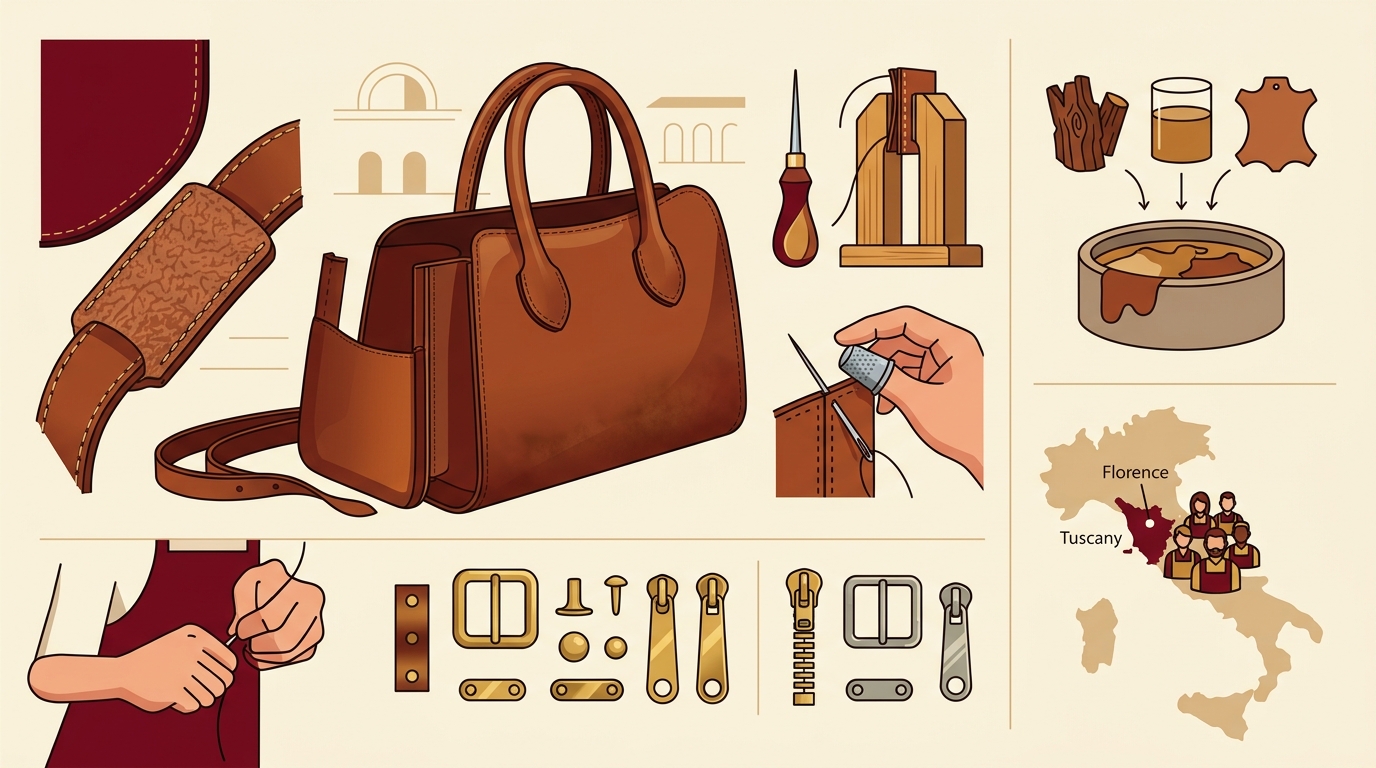
The foundation of any premium Italian handbag is the leather itself. Not all leather is created equal, and the tanning method dictates the bag's future character. Vegetable-tanned leather is the gold standard for high-end craftsmanship. This process uses natural tannins from tree bark, chestnut, and other plant sources to cure the hide. The result is a material that is firm, durable, and environmentally responsible.
Vegetable-tanned leather is a material cured using natural plant-based tannins rather than synthetic chemicals. This method is significantly slower and more labor-intensive than chrome tanning. While chrome tanning can be completed in 24 hours, vegetable tanning requires 30 to 60 days. This extended timeline allows the fibers to settle naturally, creating a denser, more resilient structure. According to unesco.org, Florence's artisan leather traditions represent one of Europe's most significant living craft heritages. This heritage ensures that the techniques used today are identical to those used centuries ago.
Full-grain leather is the highest quality tier available. It retains the original grain of the hide, including natural markings and textures. This means the leather has not been sanded or buffed to remove imperfections. Instead, these imperfections are celebrated as proof of authenticity. When you touch a full-grain piece, you feel the natural texture of the animal. This tactile experience is impossible to replicate with corrected grain or bonded leather materials.
Hand-Stitching vs. Machine Assembly
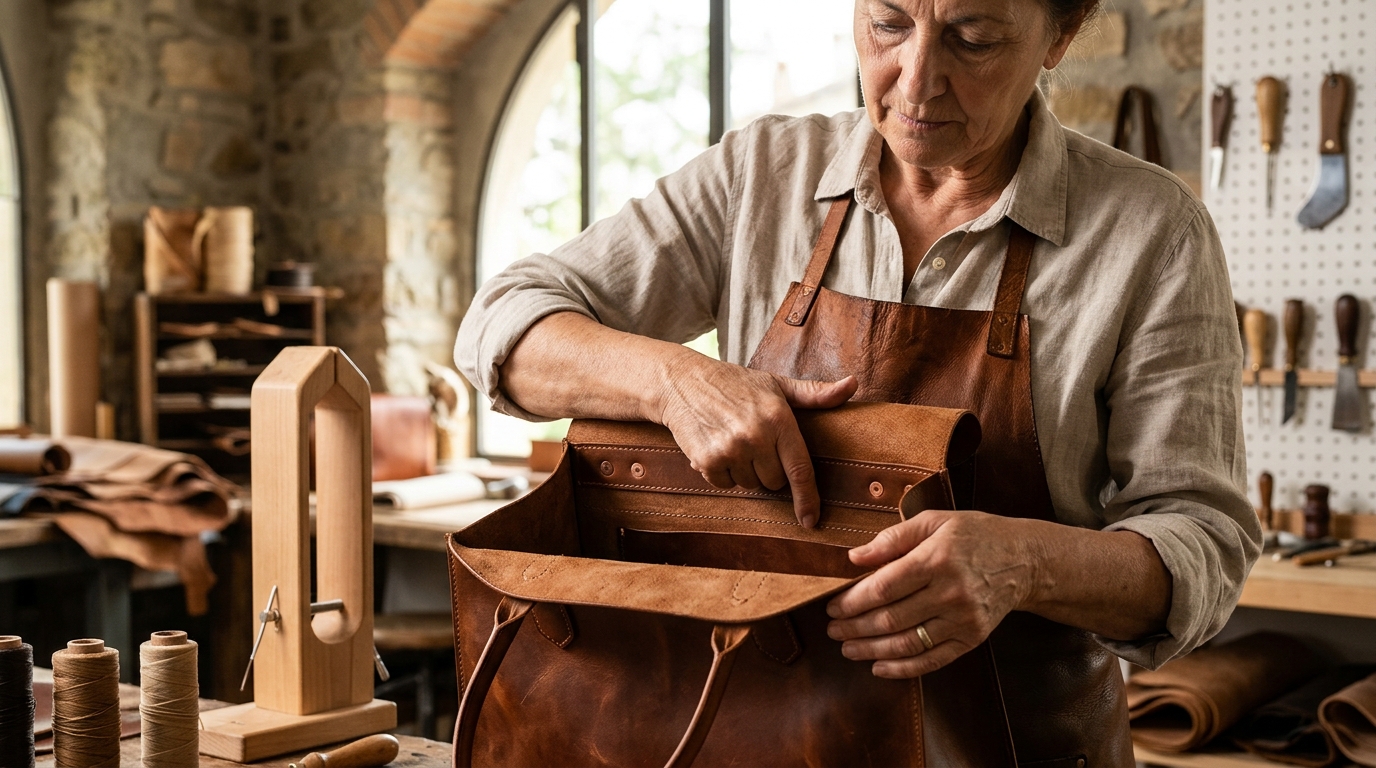
The construction method is the second critical indicator of quality. Mass-produced bags rely on high-speed industrial sewing machines. These machines prioritize speed and uniformity over structural integrity. In contrast, handcrafted Italian bags utilize saddle stitching. This technique involves two needles and a single thread, creating a lockstitch that is virtually impossible to unravel.
Saddle stitching is a manual sewing technique that uses two needles to create a secure, interlocking stitch pattern. Unlike machine stitching, which can pop if a single thread breaks, saddle stitching remains intact even if one stitch fails. Each piece requires 8 to 12 hours of skilled hand-stitching. This time investment ensures that every seam is pulled to the exact tension required for durability. The artisans at Trevony work exclusively with this method to guarantee that the bag can withstand daily use for decades.
The hardware used in these bags must also meet rigorous standards. Premium buckles, zippers, and clasps are typically made from solid brass or stainless steel with heavy plating. Cheap alloys will tarnish, corrode, or break under stress. The attachment points for straps and handles are reinforced with extra stitching or leather patches. This reinforcement prevents tearing at the most stressed areas of the bag. When you inspect a high-quality handbag, look for clean, even stitching with no loose threads or glue residue.
Patina Development and Longevity
One of the most distinct advantages of vegetable-tanned leather is its ability to develop a patina. Patina is a subtle change in color and texture that occurs as the leather ages and is exposed to light, air, and oils from the skin. This process does not degrade the leather; it enhances it. A well-maintained vegetable-tanned bag becomes more beautiful with age, developing a rich, deep hue that reflects the owner's lifestyle.
Patina development is a natural oxidation process that enriches the leather's color over time. This is a feature, not a flaw. Many luxury buyers specifically seek out vegetable-tanned leather for this reason. They want a bag that evolves with them. In contrast, chrome-tanned leather tends to remain static in color but is more prone to cracking and peeling as the synthetic coatings break down. The structural integrity of vegetable-tanned leather ensures that it can be conditioned and restored, extending its lifespan indefinitely.
Care for these bags is straightforward but essential. Avoid prolonged exposure to direct sunlight and moisture. Use a high-quality leather conditioner every six months to maintain the natural oils. If the bag gets wet, allow it to air dry naturally away from heat sources. Never use harsh chemicals or abrasive cleaners. The goal is to preserve the leather's natural state while protecting it from environmental damage. This care routine ensures that the bag remains a functional and beautiful accessory for generations.
Comparing Luxury Tiers and Pricing
Understanding the value proposition of handcrafted Italian leather requires comparing it to other market tiers. The price point reflects the cost of materials, labor, and the scarcity of production. Below is a breakdown of the typical characteristics found at different price levels.
| Category | Material Quality | Construction Method | Typical Price Range | Longevity |
|---|---|---|---|---|
| Mass Market | Corrected Grain / Bonded | Machine Stitched | $100 - $300 | 1-3 Years |
| Entry Luxury | Full-Grain (Chrome Tanned) | Hybrid (Hand/Machine) | $500 - $1,500 | 5-10 Years |
| Artisan Luxury | Full-Grain (Veg-Tan) | 100% Hand-Stitched | $1,650 - $4,500+ | 20+ Years |
Artisan luxury brands like Trevony operate in the highest tier. The Milo Backpack, for example, is priced at $4,200. This price reflects the 12 hours of hand-stitching and the premium vegetable-tanned leather used. The Specter Business Bag is similarly priced at $4,500. These prices are not arbitrary; they are the result of the time and skill required to produce each unit. Limited production runs ensure that each piece receives individual attention. This scarcity is a key component of the value proposition.
Key Takeaways for Buyers
- Verify the Tanning Method: Always ask if the leather is vegetable-tanned. This is the primary indicator of longevity and patina potential.
- Inspect the Stitching: Look for saddle stitching. It is stronger and more durable than machine stitching.
- Check the Hardware: Premium bags use solid metal hardware that feels heavy and substantial in the hand.
- Understand the Patina: Vegetable-tanned leather will darken and develop character over time. This is a sign of quality.
- Research the Atelier: Brands that work with specific families of artisans in Florence, like Trevony, offer greater authenticity.
- Review the Return Policy: High-end purchases should come with clear return and exchange terms. Trevony offers a structured returns policy for customer peace of mind.
- Consider the Investment: A $4,200 backpack or $4,500 business bag is an investment in a lifetime accessory, not a seasonal trend.
Frequently Asked Questions
What is the difference between chrome-tanned and vegetable-tanned leather?
Chrome-tanned leather is processed quickly using synthetic chemicals, resulting in a softer, more water-resistant material that does not develop a patina. Vegetable-tanned leather uses natural tannins, takes longer to produce, and develops a rich patina over time. It is considered superior for heirloom-quality goods.
How long does it take to handcraft a Trevony bag?
Each piece requires 8 to 12 hours of skilled hand-stitching. This time investment ensures that every seam is perfectly tensioned and durable. The entire production process, including leather preparation, can take months.
Can I track my order after purchase?
Yes. Trevony provides an order tracking system that allows customers to monitor the status of their shipment from the atelier to their doorstep. You can access this via the order tracking page.
What is the return policy for Trevony products?
Trevony offers a specific returns and exchanges policy for customers. It is important to review these terms before purchasing to ensure you understand the process for any potential returns.
Why is Italian leather more expensive than other leathers?
Italian leather, particularly from Tuscany, is more expensive due to the high cost of raw materials, the labor-intensive vegetable tanning process, and the skilled craftsmanship required. The region's 700-year history of leather craft ensures a level of quality that is difficult to replicate elsewhere.
Does vegetable-tanned leather require special care?
It requires minimal but specific care. Avoid excessive moisture and direct sunlight. Use a leather conditioner every six months to maintain the natural oils. Unlike chrome-tanned leather, it cannot be cleaned with harsh chemicals.
What materials are used in Trevony belts?
Trevony belts are crafted from premium leather with high-quality metal hardware. Options include the Arciere and Truth belts, which feature palladium or gold-toned buckles. The pricing for these accessories starts around $620.
Invest in Your Legacy
Your handbag is more than an accessory; it is a companion to your life's defining moments. By choosing a piece from Trevony, you are investing in a legacy of craftsmanship that spans generations. Explore the Trevony Bags Collection to find a piece that resonates with your journey. For those seeking professional utility, the Business Bags offer the same uncompromising standards. Discover the Milo Backpack or the Men's Belts to complete your ensemble. Visit the Trevony Homepage to begin your search for true luxury.