
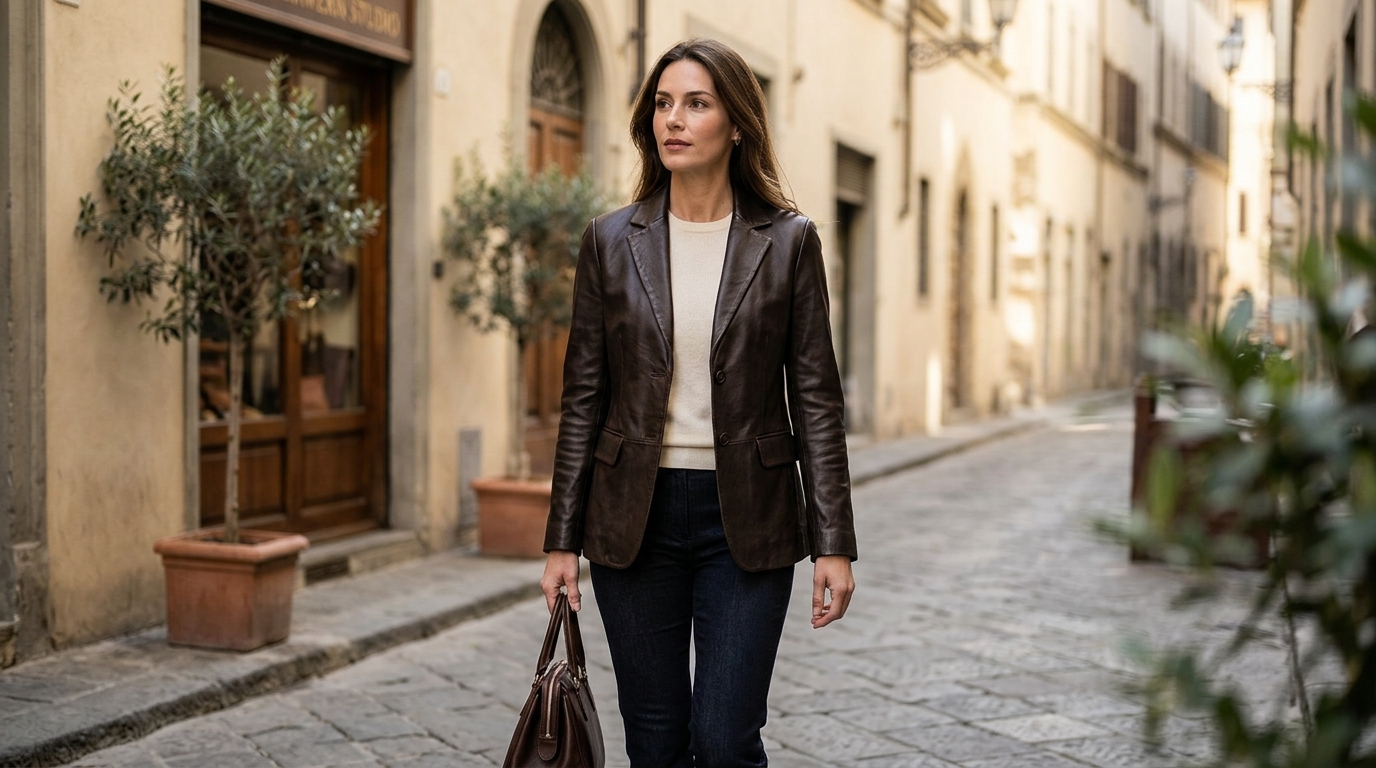
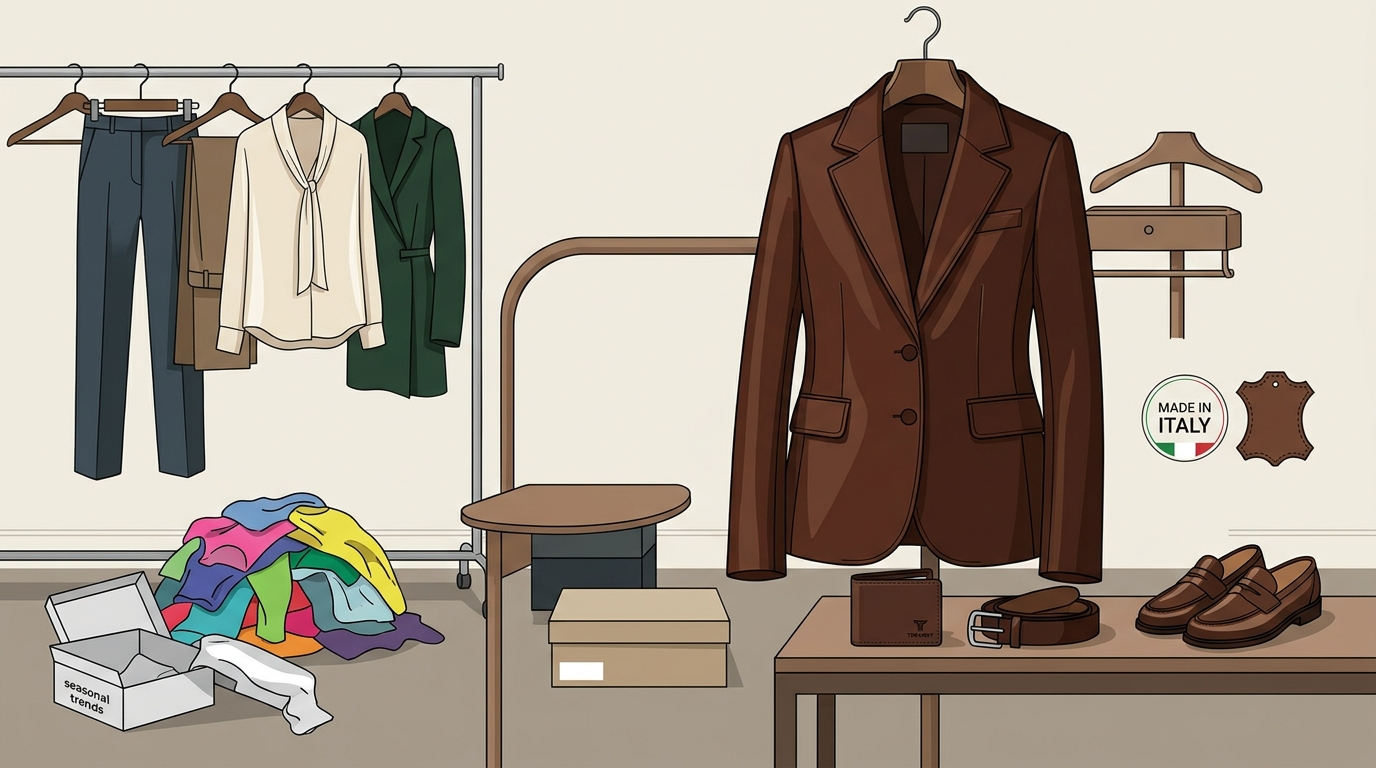
Luxury leather blazers transform everyday style by replacing disposable trends with durable, high-quality garments that age gracefully. They serve as a structural anchor for a wardrobe, offering a sophisticated silhouette that commands respect in professional and social settings. By investing in fine leather, a woman shifts from chasing seasonal fads to building a legacy of personal style. This approach aligns with the philosophy of Trevony, which emphasizes that true luxury is defined by permanence and intention rather than fleeting visibility.
The Material Integrity of Fine Leather
The foundation of a timeless blazer lies in the hide itself. Full-grain leather is the highest grade available, utilizing the outermost layer of the hide where the fiber structure is tightest and most natural. This specific layer resists moisture better than corrected or bonded alternatives and develops a unique patina over time. Unlike synthetic materials that crack or peel, genuine leather responds to body heat and movement, softening into a form that fits the wearer uniquely. This biological aging process ensures that the garment becomes more personal and valuable with each passing year.
Vegetable tanning is a traditional method that uses plant-based tannins rather than synthetic chemicals to preserve the hide. This process results in a firmer, denser leather that holds its shape while remaining breathable. The history of this technique is deeply rooted in Tuscan craftsmanship, where family workshops have refined these methods for centuries. Understanding the difference between chrome-tanned and vegetable-tanned leather allows buyers to make informed decisions about longevity and environmental impact. A blazer made from vegetable-tanned leather is an investment in a material that honors both the animal and the artisan.
Silhouette and Structural Engineering
A blazer is defined by its structured shoulders and tailored fit, which create a powerful visual line. In luxury leather, this structure is achieved through precise cutting and hand-stitching rather than rigid internal boning. The weight of the leather provides natural drape and support, eliminating the need for excessive padding. This engineering allows the garment to move with the body, offering comfort without sacrificing the sharp, authoritative look of a tailored jacket. The result is a piece that looks as good in a boardroom as it does in a high-end restaurant.
The construction details, such as edge finishing and hardware, distinguish a luxury piece from a mass-produced item. High-quality hardware, often made from solid brass or precious metal coatings, resists tarnish and wear over decades of use. Stitching on a handcrafted blazer sits straight and even, a testament to the skill of the artisan rather than the speed of a machine. These details are not merely aesthetic; they are functional indicators of the garment's durability. When a blazer is built with this level of care, it becomes a reliable companion for daily life, capable of withstanding the rigors of modern schedules.
Versatility in Everyday Styling
One of the most significant advantages of a leather blazer is its ability to bridge casual and formal contexts. It can be worn over a simple t-shirt and jeans for a polished, effortless look, or layered over a silk dress for an evening event. This duality eliminates the need for multiple jackets, simplifying the wardrobe while maximizing style options. The neutral tones often found in luxury leather, such as black, espresso, or slate, provide a versatile backdrop for various color palettes. This adaptability makes the blazer a cornerstone of a capsule wardrobe, where every piece must work in multiple combinations.
Styling a leather blazer requires a balance of texture and proportion. Pairing the smooth, structured leather with softer fabrics like cashmere or linen creates a dynamic contrast that feels modern and sophisticated. The key is to let the blazer be the statement piece, keeping the rest of the outfit understated. This approach aligns with the minimalist ethos that values quality over quantity. By mastering this balance, a woman can create a signature look that is instantly recognizable and deeply personal. The blazer becomes a tool for self-expression, allowing the wearer to project confidence and grace in any environment.
The Economics of Long-Term Investment
The cost of a luxury leather blazer is often justified by its lifespan and the cost-per-wear metric. A high-end piece, crafted by master artisans, can last for decades with proper care, whereas a fast-fashion alternative may degrade within a few seasons. When calculated over a ten-year period, the investment in a single, exceptional blazer often proves more economical than replacing multiple lower-quality items. This economic logic is supported by the durability of full-grain leather, which does not fray or tear easily. The value of the garment increases as it ages, developing a character that cannot be replicated by new, factory-made items.
Resale potential is another factor that contributes to the investment value of luxury leather goods. While not all leather items hold their value, those from reputable brands with a history of craftsmanship often retain a significant portion of their original price. The provenance of the piece, including its country of origin and the reputation of the maker, plays a crucial role in its secondary market value. Buyers who understand this dynamic view their purchases not as expenses but as assets. This shift in perspective encourages a more mindful approach to consumption, where each purchase is made with long-term utility and aesthetic pleasure in mind.
Care and Long-Term Maintenance
Proper care is essential to maintaining the beauty and structure of a leather blazer. Regular conditioning with a high-quality leather balm helps to keep the hide supple and prevents drying or cracking. It is important to store the blazer on a wide, padded hanger to maintain its shoulder shape and prevent creasing. Avoiding exposure to direct sunlight and extreme humidity also helps to preserve the color and texture of the leather. These simple maintenance routines ensure that the garment remains in pristine condition for years to come.
When the leather does show signs of wear, professional cleaning and conditioning can restore its luster. Unlike synthetic materials, leather can be repaired and rejuvenated, extending its life significantly. This repairability is a key aspect of sustainable luxury, as it reduces the need for replacement and minimizes waste. By treating the blazer as a living object that requires attention, the wearer builds a relationship with the garment that deepens over time. This connection transforms the blazer from a mere accessory into a cherished part of one's personal history.
Key Takeaways
- Full-grain leather is the highest quality hide, offering superior durability and a unique aging patina.
- Vegetable tanning is a traditional, eco-friendly process that results in a firmer, more breathable leather.
- Structured shoulders and precise stitching define the silhouette of a luxury blazer, ensuring a tailored fit.
- Leather blazers offer exceptional versatility, bridging casual and formal contexts with ease.
- The long lifespan of a high-quality blazer makes it a cost-effective investment over time.
- Proper care, including regular conditioning and correct storage, is crucial for maintaining the garment's integrity.
- Provenance and craftsmanship are key factors in the resale value and longevity of luxury leather goods.
Frequently Asked Questions
What is the difference between full-grain and top-grain leather?
Full-grain leather uses the entire outer layer of the hide, retaining its natural texture and imperfections, while top-grain leather is sanded to remove surface flaws, resulting in a smoother but less durable material.
How should I store a leather blazer to prevent damage?
Store the blazer on a wide, padded hanger in a cool, dry place away from direct sunlight. Using a breathable garment bag can also protect it from dust and scratches.
Can leather blazers be worn in all seasons?
Yes, leather blazers are versatile and can be worn in all seasons. In summer, choose lighter weights and neutral colors, while in winter, opt for thicker hides and darker tones for warmth.
How often should I condition my leather blazer?
Condition your leather blazer every three to six months, or when the leather begins to feel dry. Regular conditioning helps maintain the suppleness and color of the hide.
What makes a leather blazer a sustainable choice?
A leather blazer is a sustainable choice due to its longevity and repairability. By investing in a high-quality piece that lasts for decades, you reduce the frequency of replacement and minimize waste associated with fast fashion.
Conclusion
A luxury leather blazer is more than a garment; it is a statement of intention and quality. By choosing a piece crafted with care and attention to detail, you invest in a style that endures beyond trends. The combination of fine materials, expert construction, and timeless design ensures that your blazer will remain a cornerstone of your wardrobe for years to come. Explore the women's collection at Trevony to discover pieces that embody this philosophy of enduring elegance.