
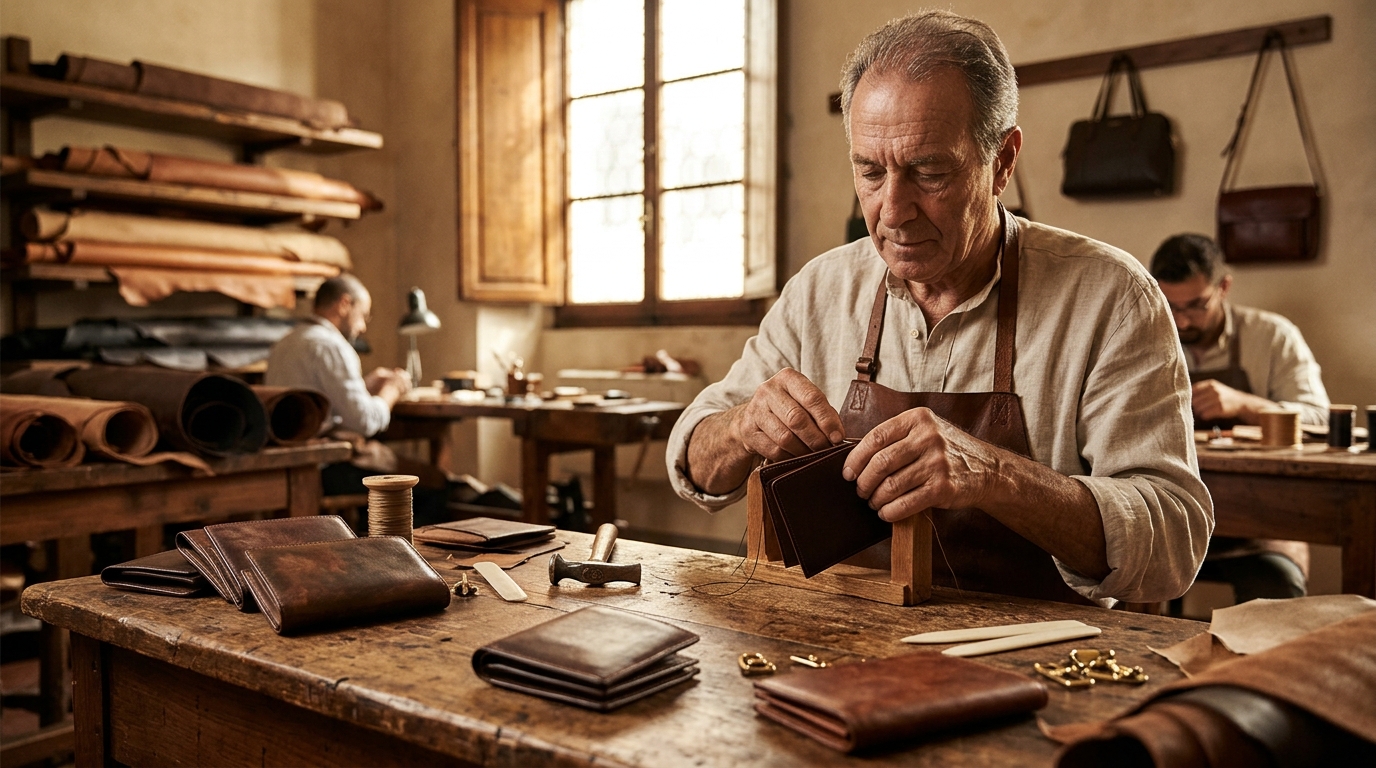
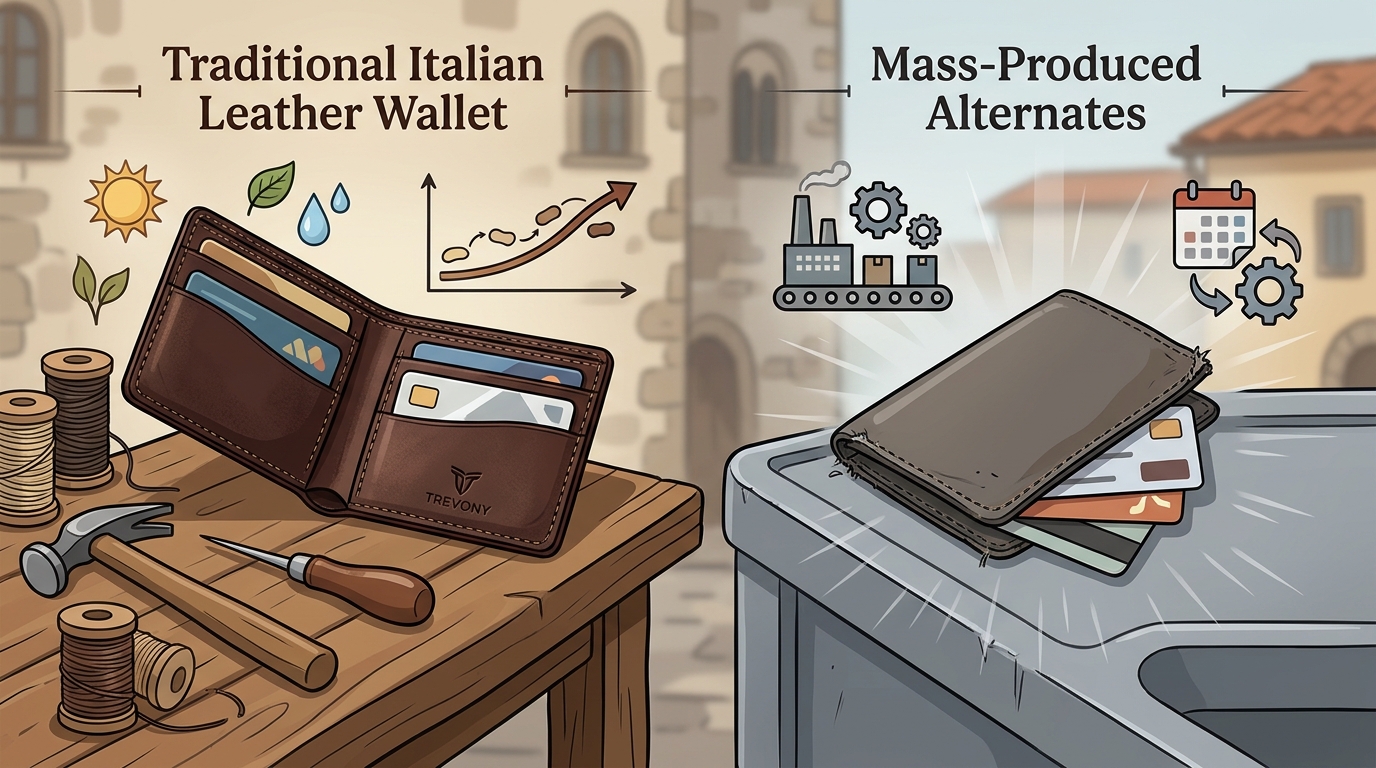
Traditional Italian leather wallets outperform mass-produced alternatives in longevity, material integrity, and structural resilience. Mass-produced wallets suit buyers seeking low-cost, short-term utility. Traditional Italian wallets, such as those crafted by Trevony, suit buyers seeking heirloom-quality items that develop a rich patina over decades of daily use.
Traditional Italian Leather Wallets
Traditional Italian leather wallets are handcrafted items produced in artisan workshops using full-grain, vegetable-tanned hides. These wallets rely on techniques passed down through generations, emphasizing material quality over production speed. The construction process involves hand-cutting, hand-stitching, and hand-finishing, which ensures structural integrity and a unique aesthetic character.
Strengths and Material Integrity
The primary advantage of traditional Italian wallets is the use of full-grain leather. Full-grain leather is the outermost layer of the hide with the natural grain intact, providing superior strength and breathability. Vegetable tanning, a slow process using natural tannins from tree bark, creates leather that is firmer and denser than chrome-tanned alternatives. This material ages gracefully, developing a deep patina that enhances its visual appeal over time.
Construction and Durability
Artisan workshops utilize saddle stitching, a technique where two needles lock each stitch independently. This method ensures that if one thread breaks, the seam does not unravel, significantly extending the wallet's lifespan. Edges are burnished by hand, creating a smooth, sealed finish that resists fraying. These structural details make traditional Italian wallets far more durable than their mass-produced counterparts.
Target Reader
This option suits buyers who view their wallet as a long-term investment. It appeals to individuals who value provenance, craftsmanship, and the aesthetic evolution of natural materials. It is ideal for those who want a single, high-quality item to last for decades rather than replacing a cheap item every few years.
Mass-Produced Leather Wallets
Mass-produced leather wallets are manufactured in high-volume facilities using automated machinery and standardized materials. These products prioritize speed and cost-efficiency, resulting in a uniform appearance and lower price point. The production process often relies on chrome tanning and machine stitching to meet high demand.
Strengths and Accessibility
The main strength of mass-produced wallets is affordability and immediate availability. They are widely accessible in retail stores and online marketplaces, offering a broad range of colors and designs. For buyers on a tight budget or those who do not prioritize long-term durability, these wallets provide a functional solution for everyday carry.
Limits and Material Compromises
Mass-produced wallets often use top-grain or genuine leather, which is sanded and coated to remove imperfections. This process strips away the densest fibers, reducing the material's strength and breathability. Chrome tanning, while fast, can result in leather that feels stiff and lacks the natural character of vegetable-tanned hides. Machine stitching, though fast, creates stress points that can fail under tension, leading to seam separation over time.
Target Reader
This option suits buyers who need a wallet for short-term use or who prefer to replace accessories frequently. It is appropriate for those who prioritize low upfront cost over long-term value and do not intend to maintain or care for their leather goods.
Comparison of Wallet Types
| Criteria | Traditional Italian Wallet | Mass-Produced Wallet |
|---|---|---|
| Leather Grade | Full-Grain, Vegetable-Tanned | Top-Grain or Genuine, Chrome-Tanned |
| Stitching Method | Hand Saddle Stitching | Machine Stitching |
| Edge Finishing | Hand-Burnished and Sealed | Painted or Synthetic Binding |
| Aging Character | Develops Rich Patina | Cracks or Fades Uniformly |
| Expected Lifespan | Decades | 1 to 3 Years |
| Production Origin | Artisan Workshop in Italy | High-Volume Factory |
Choosing the Right Wallet for Your Needs
Selecting the right wallet depends on your priorities regarding longevity, aesthetics, and budget. Understanding the trade-offs between artisan craftsmanship and industrial efficiency helps you make an informed decision.
Choose Traditional Italian Leather if
- You want a wallet that lasts for decades and improves in appearance with age.
- You value the environmental benefits of vegetable tanning and natural materials.
- You appreciate the unique character and imperfections of full-grain leather.
- You are willing to invest in a single, high-quality item rather than replacing cheap ones.
- You want to support artisan craftsmanship and traditional Italian heritage.
Choose Mass-Produced Leather if
- You have a limited budget and need a functional wallet immediately.
- You prefer a uniform, consistent appearance without natural variations.
- You plan to replace your wallet every one to three years.
- You do not intend to perform any maintenance or conditioning on your leather goods.
- You prioritize low upfront cost over long-term durability and value.
Frequently Asked Questions
Can I repair a mass-produced leather wallet if it breaks?
Repairs on mass-produced wallets are often difficult and costly relative to the item's value. The synthetic coatings and machine stitching used in these products do not lend themselves well to traditional leather repair techniques. In many cases, replacing the wallet is more economical than repairing it.
How long does it take for a traditional Italian wallet to develop a patina?
A traditional Italian wallet made from vegetable-tanned leather begins to develop a patina almost immediately with use. Significant changes in color and texture typically occur within the first six months to two years of daily handling. The patina continues to deepen over the following years, making the wallet unique to its owner.
Is vegetable-tanned leather more expensive than chrome-tanned leather?
Vegetable-tanned leather is generally more expensive due to the slower production process and the use of natural tannins. The tanning process can take up to two months, compared to a single day for chrome tanning. This time and resource investment contributes to the higher cost of traditional Italian wallets.
Do traditional Italian wallets require special care?
Traditional Italian wallets require minimal care. Regular use helps the leather develop its patina. Occasional conditioning with a neutral leather balm can maintain the material's suppleness. Avoid exposing the wallet to excessive moisture or direct heat, as these can damage the natural fibers.
What is the environmental impact of traditional Italian leather production?
Traditional Italian leather production using vegetable tanning has a lower environmental impact than chrome tanning. Vegetable tanning uses biodegradable plant-based tannins and generates less toxic wastewater. The durability of the final product also reduces the need for frequent replacement, lowering the overall environmental footprint.
Can I find traditional Italian wallets in local retail stores?
Traditional Italian wallets are often available through specialized online retailers and boutique stores. Brands like Trevony offer direct-to-consumer options, allowing you to purchase authentic artisan-made wallets without the markup of traditional retail channels.
Conclusion
Traditional Italian leather wallets offer superior longevity, material integrity, and aesthetic evolution compared to mass-produced alternatives. While mass-produced wallets provide a low-cost, short-term solution, they lack the structural resilience and natural character of artisan-crafted items. For buyers seeking a wallet that serves as a long-term companion, the investment in traditional Italian craftsmanship is justified by the item's durability and unique aging process. Explore the Trevony wallet collection to find a piece that reflects your commitment to quality and heritage.