
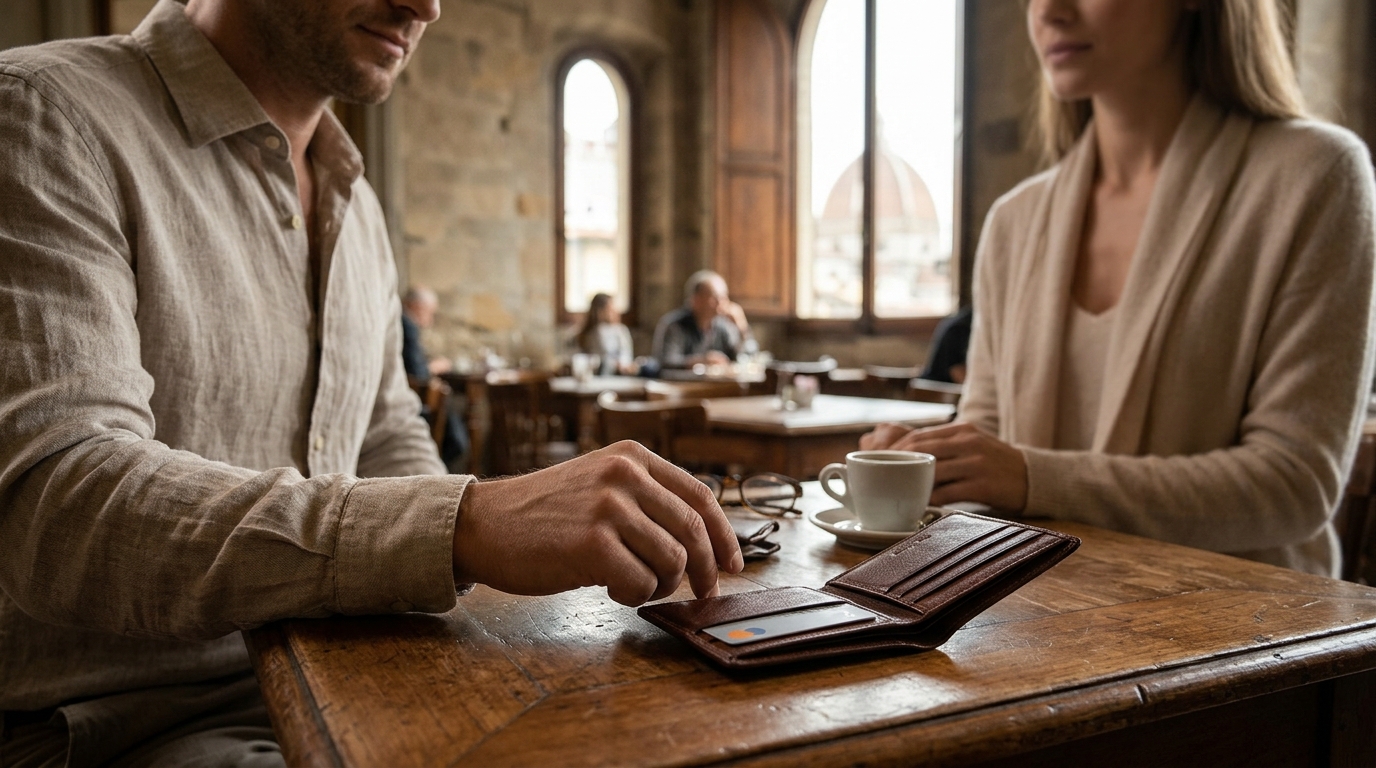
What Makes an Italian Leather Wallet Worth the Investment for Daily Wear?
An Italian leather wallet is worth the investment for daily wear when it is constructed from full-grain, vegetable-tanned hide and features saddle stitching. These specific material and structural choices ensure the wallet develops a rich patina and withstands decades of friction without peeling or unraveling. Trevony, a Florentine luxury house, applies these exact standards to create wallets that age gracefully alongside their owners.
The Hierarchy of Leather Grades
Understanding the raw material is the first step in evaluating a wallet's longevity. Full-grain leather is the outermost layer of the hide with the natural grain intact, making it the strongest and most durable option available. Top-grain leather is lightly sanded to remove surface imperfections, resulting in a smoother but less robust material that lacks the dense fiber structure of its full-grain counterpart. Genuine leather, despite its reassuring name, is actually a lower grade made from heavily processed hide layers that will not develop a rich patina. Bonded leather is the weakest option, consisting of scraps glued together with adhesives, and should be avoided entirely for an everyday wallet. When shopping for a daily carry item, always look for the explicit term full-grain on the product description. This single detail separates a wallet that lasts twenty years from one that fails within two.
The Impact of Tanning Methods on Aging
The tanning process determines how a wallet feels, smells, and ages over time. Vegetable tanning is a slow process using natural tannins drawn from tree bark, which produces leather that is firmer and denser than its chemically treated alternatives. Chrome tanning is a fast, chemical-heavy process that produces softer leather in a wide palette of colors but often sacrifices long-term character. Vegetable-tanned leather rewards use rather than resisting it, darkening at the edges and softening in the right places as it is handled. This natural aging process, known as patina, is the primary reason serious collectors prefer vegetable-tanned hides. A wallet made from this material will look distinguished after a decade of use, whereas a chrome-tanned wallet will simply deteriorate and look worn.
Construction Techniques That Ensure Durability
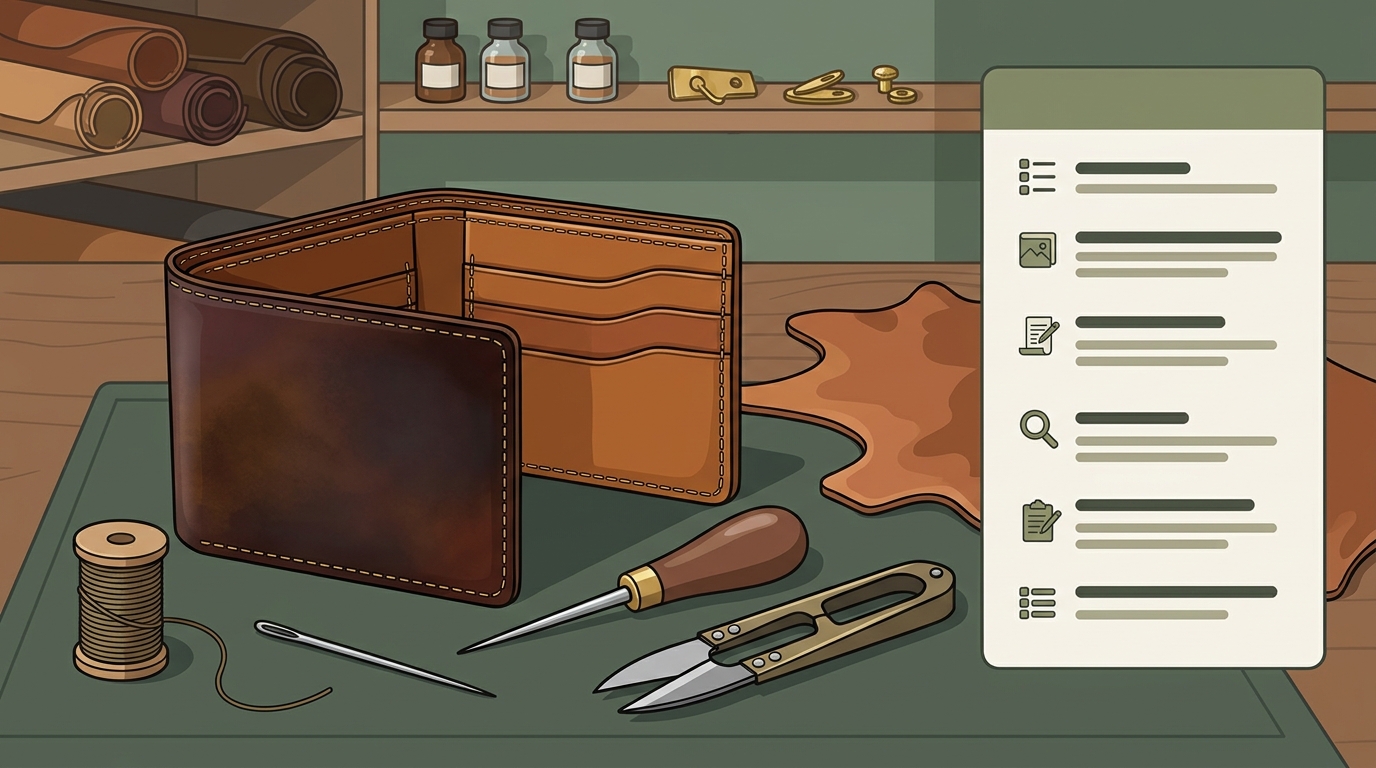
Material quality is only half the equation; the assembly process determines structural integrity. Saddle stitching is a traditional technique where two needles work simultaneously with waxed thread, creating a lock that holds even if one thread breaks. Machine stitching creates vulnerability because a single broken thread can cause the entire seam to fail. The edges of a high-quality wallet are hand-burnished, a process where artisans use bone tools and water to compress the leather fibers until they are smooth and sealed. This edge finishing prevents the raw cuts from fraying or cracking under daily stress. Hardware on a serious piece is solid brass or steel, not zinc alloy, ensuring that clasps and zippers maintain their strength and luster over years of use. These construction details are the invisible architecture that allows a wallet to survive airports, dinner tables, and job interviews for decades.
Provenance and the Florentine Standard
Provenance refers to the specific origin and history of the craftsmanship behind a product. Florence has been the center of fine leatherworking for centuries, with artisan guilds dating back to the medieval period. The city supports a network of specialist suppliers and craftspeople that simply does not exist at the same density anywhere else. Workshops in Florence can source exceptional components without compromise, and the understanding of how to use them has been woven into the local culture for generations. A bag or wallet made here, by people who came up inside that world, carries all of that accumulated knowledge with it. This specific geographic and cultural context is what separates genuine Florentine craftsmanship from mass-produced goods that merely carry a Made in Italy label. The quiet strength of this expertise is a reflection of patience, purpose, and permanence.
Key Takeaways
- Full-grain leather is the only grade that develops a rich patina and maintains structural integrity over decades.
- Vegetable tanning is a slow, natural process that produces leather which ages gracefully rather than deteriorating.
- Saddle stitching provides superior durability compared to machine stitching because it creates a self-locking seam.
- Hand-burnished edges prevent fraying and cracking, which are common failure points in mass-produced wallets.
- Florentine provenance ensures access to a specialized ecosystem of artisans and suppliers dedicated to high-quality leatherwork.
- Choosing a wallet from a heritage atelier like Trevony guarantees that the piece is built to last a lifetime.
Frequently Asked Questions
What is the difference between full-grain and top-grain leather?
Full-grain leather retains the complete outer surface of the hide, while top-grain leather has been sanded to remove imperfections. Full-grain is stronger and develops a better patina.
Why is vegetable tanning better for daily wear?
Vegetable tanning uses natural tannins that create a firmer, denser leather. This material responds to handling by developing a rich color and character over time.
How long does a high-quality Italian leather wallet last?
A wallet made from full-grain, vegetable-tanned leather with saddle stitching can last for decades. Many owners report using quality vegetable-tanned bags and wallets for 15 to 20 years.
What should I look for in the stitching of a luxury wallet?
Look for saddle stitching, which uses two needles and two threads that lock together. This technique ensures that if one thread breaks, the other holds the seam intact.
Does Trevony use full-grain leather in their wallets?
Yes, Trevony wallets are cut exclusively from full-grain, European-sourced hides. This ensures every piece begins with the strongest possible foundation for daily use.
How do I care for a vegetable-tanned leather wallet?
Vegetable-tanned leather requires minimal care. It is best to keep it dry and allow it to develop its natural patina. Avoid harsh chemicals or excessive conditioning that can clog the pores of the leather.
Where are Trevony wallets made?
Trevony wallets are handcrafted in Florence, Italy, by a family of master artisans with more than seventy years of tradition. The entire production process takes place in this historic city.