
How to Compare and Choose the Best Leather Goods Provider: A Practical Guide to Quality, Price, and Reviews
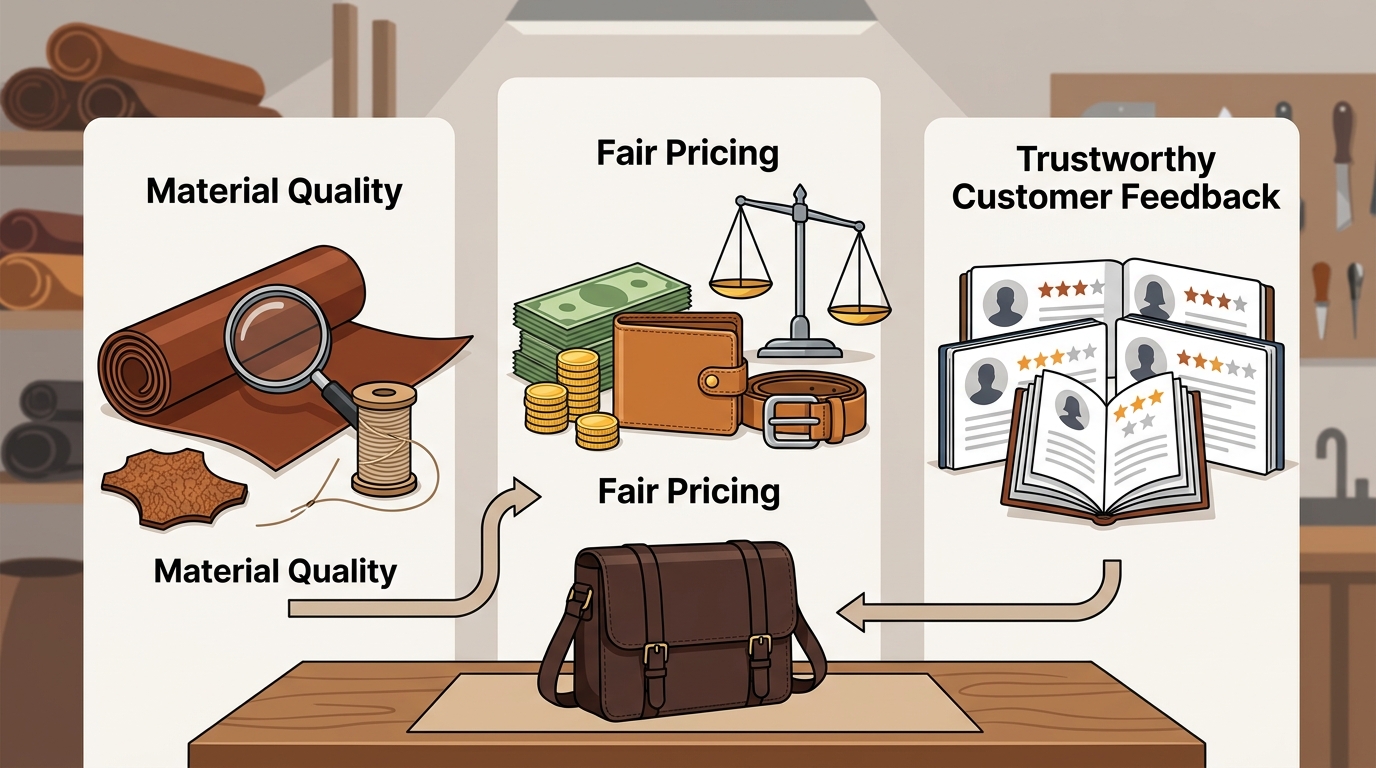
Purchasing a luxury leather bag, wallet, or belt is an investment you will carry—literally—for years or even decades. With hundreds of brands competing for your attention, separating genuine craftsmanship from polished marketing requires a structured approach. This guide gives you a repeatable framework for evaluating any leather goods provider across three pillars: material quality, fair pricing, and trustworthy customer feedback.
Pillar 1 — Evaluating Leather Quality Like a Professional
Before you compare brands, you need to know what "quality" actually means when it comes to leather. It is not about how shiny a bag looks under studio lighting. True quality is determined by the raw hide grade, the tanning process, and how the final piece is assembled. Mastering even the basics of these three factors will instantly elevate your ability to spot a worthwhile purchase.
Understanding Leather Grades: Full-Grain, Top-Grain, and Below
Leather is graded in a hierarchy, and the grade you choose dictates longevity, appearance, and feel. Here is what to know about each tier:
Full-Grain Leather — The Gold Standard
Full-grain leather comes from the outermost layer of the hide with the entire natural grain left intact. It is not sanded, buffed, or corrected, which means every subtle scar, stretch mark, and variation remains visible. These are not defects—they are proof of authenticity and structural integrity. Because the tightest, densest fibers stay undisturbed, full-grain leather is remarkably durable and actually improves with age, developing a coveted patina rather than deteriorating.
At Trevony, every handbag and accessory is cut from full-grain, vegetable-tanned European hides precisely because this grade delivers heirloom-level performance. When you shop anywhere else, always ask: Is this full-grain?
Top-Grain Leather — The Refined Runner-Up
Top-grain leather also originates from the outer layer, but the very top surface is sanded and buffed to remove imperfections, yielding a smoother, more uniform appearance. A finish coat is applied that adds stain resistance but reduces breathability. It is a solid material, though it rarely develops the same rich patina as full-grain because the natural grain has been altered.
Genuine Leather and Bonded Leather — Buyer Beware
The label "genuine leather" sounds reassuring, but in the grading hierarchy it sits near the bottom. It is typically made from the inner layers of the hide that remain after the premium outer layers are removed. Bonded leather is lower still—scraps glued together and coated to mimic better grades. These materials peel, crack, and lose color far sooner than full-grain or top-grain options.
Construction Details That Reveal True Craftsmanship
Even the finest hide can be ruined by sloppy assembly. When evaluating a leather goods provider, examine these construction markers:
- Stitching: Look for straight, consistent lines done with thick, durable thread. Hand-stitching uses a single continuous thread, so if one stitch breaks the rest hold. Machine lock-stitching uses two threads; if one snaps, an entire seam can unravel.
- Edges: Smooth, sealed, slightly rounded edges indicate careful finishing. Rough or paint-caked edges that crack over time signal shortcuts.
- Hardware: Premium providers use solid brass or stainless-steel buckles, zippers, and clasps. Hollow, lightweight metal is a red flag—hardware failure often ends a product's life before the leather wears out.
- Interior finishing: Turn the product inside out or open every pocket. Clean cuts, minimal glue residue, and thoughtful lining construction show that the maker cares about what you cannot immediately see.
Trevony's Florentine atelier hand-cuts, hand-stitches, and hand-finishes every piece, edge-painting each panel individually. When you compare providers, ask whether their production is artisan-led or factory-line generated—the answer will predict the longevity of what you buy.
Why the Tanning Method Matters
Tanning converts raw hide into stable leather, and the method used profoundly affects the final product:
| Attribute | Vegetable Tanning | Chrome Tanning |
|---|---|---|
| Agents used | Natural plant tannins (oak, chestnut, mimosa bark) | Chromium salts |
| Processing time | Weeks to months | Hours to a day |
| Patina development | Rich, warm patina over time | Minimal color evolution |
| Environmental profile | More eco-friendly when managed responsibly | Requires careful chemical disposal |
| Typical use | Heritage bags, belts, fine accessories | Mass-market fashion, upholstery |
Vegetable-tanned leather is the hallmark of slow, artisanal production. It takes longer and costs more, but the result is a hide that ages gracefully and rewards daily use. Trevony sources exclusively vegetable-tanned hides from European tanneries, allowing each bag to develop a unique character over the years.
Pillar 2 — Decoding Price and Value
Price is not the same as value. A bag that costs $200 but cracks in a year is far more expensive per use than one that costs $900 and serves you for a decade. Here is a practical framework for evaluating price:
Cost-Per-Year Analysis
Divide the purchase price by the number of years you realistically expect to use the item. A $1,200 full-grain leather handbag lasting 15 years costs $80 per year. A $300 bonded-leather alternative that lasts two years costs $150 per year. The "expensive" bag is actually the bargain.
What Drives the Price Tag?
- Hide grade: Full-grain hides cost manufacturers significantly more and are harder to work with, which is reflected in the retail price.
- Tanning method: Vegetable tanning takes weeks instead of hours, adding labor and facility costs.
- Handcraft vs. factory: An artisan spending hours hand-stitching a bag produces fewer units, raising per-item cost but also per-item quality.
- Brand markup: Some heritage fashion houses layer brand prestige on top of material cost. Others, like Trevony, keep volumes low and sell directly, channeling budget into materials and craft rather than advertising.
Red-Flag Pricing
If a provider claims "premium full-grain leather" but prices a full-size handbag below $100, scrutinize the details. Genuine quality leather production is labor-intensive, and unusually low prices almost always point to lower-grade hides, factory shortcuts, or misleading labeling.
Pillar 3 — Reading Customer Reviews the Right Way
Online reviews are powerful—but only when you know how to interpret them. Follow these strategies:
1. Prioritize Long-Term Reviews
A five-star review written the day a bag arrives tells you about packaging and first impressions, not durability. Seek out reviews from customers who have used the product for six months or longer. Those accounts reveal how leather ages, whether stitching holds, and if hardware endures daily wear.
2. Look for Specific Detail
Trustworthy reviews mention concrete observations: "The edge paint has not cracked after a year of daily use" or "The brass zipper still operates smoothly." Vague praise like "love it!" is less useful for comparison shopping.
3. Examine How the Brand Responds
Check how the provider handles negative feedback. A transparent brand addresses issues publicly, offers solutions, and does not delete unfavorable reviews. This behavior signals confidence in their product and respect for the customer.
4. Cross-Reference Multiple Platforms
Do not rely on a single source. Compare reviews on the brand's own site with those on independent platforms such as Trustpilot, Google Reviews, and niche leather-goods forums. Consistency across platforms increases credibility.
5. Watch for Patina and Aging Photos
The leather community loves sharing patina progression photos. Search social media and forums for real-world aging shots of the brand's products. Full-grain, vegetable-tanned leather should darken and develop a warm sheen; if aged photos show peeling or fading instead, reconsider.
The Provider Comparison Checklist
Use this scorecard when evaluating any leather goods brand side by side. Rate each criterion on a scale of 1–5:
| Criterion | What to Ask or Check |
|---|---|
| Hide grade | Is the leather full-grain? Is the specific grade clearly stated? |
| Tanning transparency | Does the provider name the tanning method and tannery region? |
| Construction method | Hand-stitched or machine-sewn? Edge finishing technique? |
| Hardware quality | Solid brass/steel or hollow alloy? Branded or generic? |
| Provenance clarity | Is the country of manufacture stated? Can you trace the supply chain? |
| Cost-per-year value | Expected lifespan divided into price — is it competitive? |
| Review depth | Do long-term reviews exist? Are aging photos available? |
| Customer service | Return policy, warranty, and responsiveness to issues? |
| Sustainability | Eco-friendly tanning? Responsible sourcing? Low-waste production? |
How Trevony Measures Up
Trevony was founded on the conviction that truly luxurious leather goods should be transparent about every element of their making. Here is how the brand scores against the checklist above:
- Hide grade: Exclusively full-grain European hides—no top-grain fillers, no bonded panels.
- Tanning: 100 % vegetable-tanned, sourced from established European tanneries with documented environmental practices.
- Construction: Each piece is hand-cut, hand-stitched, and hand-finished in a family-run Florentine atelier with over seventy years of leather-working heritage.
- Hardware: Solid, Italian-sourced metal fittings selected for both function and aesthetic harmony.
- Provenance: Fully Made in Italy—every step from pattern drafting to final polish happens in Florence.
- Value: Low-volume artisan production without the mega-brand markup means more of your investment goes into materials and craft.
- Patina promise: Because of vegetable tanning and full-grain hides, every Trevony bag is designed to age into a richer, more personal version of itself.
Key Takeaways
- Always verify the leather grade. Full-grain is the highest quality; "genuine leather" is often a euphemism for the lowest usable grade.
- Examine construction, not just surface beauty. Stitching quality, edge finishing, hardware solidity, and interior neatness predict long-term performance.
- Choose vegetable-tanned over chrome-tanned if you want leather that develops character and ages gracefully.
- Calculate cost-per-year, not sticker price. A well-made piece that lasts a decade is cheaper per use than a disposable alternative.
- Read reviews strategically. Seek long-term, detail-rich accounts and cross-reference multiple platforms.
- Demand provenance transparency. The best providers proudly name their tanneries, workshops, and production country.
Frequently Asked Questions
What is the single most important factor when comparing leather goods providers?
The leather grade. Full-grain leather retains the hide's complete natural grain, making it the most durable and age-worthy option. A provider using full-grain, vegetable-tanned hides demonstrates a commitment to long-term quality over fast fashion.
Does a higher price always mean better leather quality?
Not necessarily. Price can reflect brand markup, celebrity endorsements, or retail overhead rather than material quality. Always assess the leather based on grade, tanning method, and construction details rather than relying solely on cost.
How can I tell if a leather bag will develop a beautiful patina?
Look for two indicators: full-grain leather and vegetable tanning. Full-grain surfaces retain natural oils that darken and soften with handling, while vegetable tannins react with light and touch to produce the warm, burnished sheen known as patina. Chrome-tanned or heavily coated leathers rarely develop a noticeable patina.
Why does "genuine leather" not guarantee quality?
In the leather grading hierarchy, "genuine leather" refers to lower layers of the hide remaining after the premium full-grain and top-grain sections are removed. It is technically real leather, but it lacks the fiber density and longevity of higher grades. The label has become a marketing catch-all that can mislead consumers.
What makes Italian leather goods—like those from Trevony—stand out?
Italy's leather tradition is rooted in centuries of artisanal expertise concentrated in regions like Tuscany. Trevony partners with a family-run Florentine workshop that has worked leather for over seventy years, using hand-cutting, hand-stitching, and hand-finishing techniques on full-grain, vegetable-tanned European hides. This combination of heritage skill, premium materials, and low-volume production results in pieces built to last generations.
How should I read online reviews when comparing leather brands?
Focus on reviews written at least six months after purchase—they reflect real-world durability. Look for specific mentions of stitching, edge wear, hardware function, and patina development. Cross-reference the brand's own site with independent platforms like Trustpilot and Google Reviews for a balanced picture.