

A wallet is one of the few accessories you reach for every single day. It holds your cards, cash, and identification—and it says something about the care you put into the details. Choosing the right leather wallet means understanding what separates a premium piece from a disposable one. This guide walks you through leather grades, construction markers, wallet styles, and maintenance so you can invest once and carry with confidence for years.
Why Leather Grade Is the Single Most Important Factor
Not all leather is created equal. The hide is split into distinct layers, and the layer your wallet is cut from determines almost everything about its longevity, feel, and appearance.
Full-Grain Leather: The Gold Standard
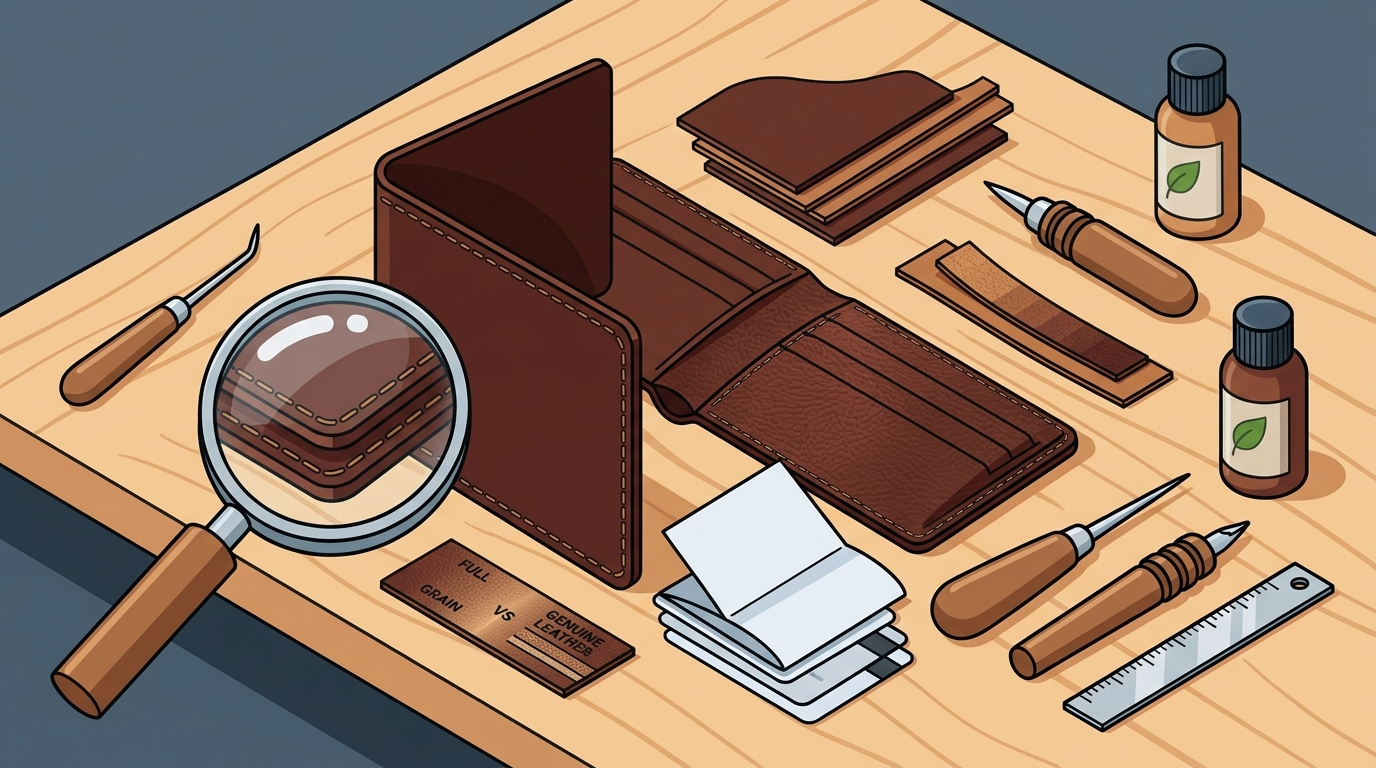
Full-grain leather retains the entire outer surface of the hide with none of its grain removed. It is widely regarded as the highest quality grade you can buy. Because the dense, tightly packed fibers of the outermost layer are preserved, full-grain leather delivers exceptional resistance to moisture, abrasion, and everyday wear. Over time it develops a rich patina—a natural darkening and lustre that makes each wallet truly unique.
Full-grain leather may feel slightly stiff when new, but it softens with use while maintaining its structural integrity. This is the material you want for a daily-carry wallet that improves rather than deteriorates.
Top-Grain Leather: A Solid Alternative
Top-grain leather is the second-highest quality. The outer surface is lightly sanded to remove imperfections, producing a smoother, more uniform appearance. While it loses some of the natural strength found in full-grain, it is still a robust and attractive option—especially if you prefer a sleeker finish or brighter dye colours.
Grades to Avoid: Genuine and Bonded Leather
The label "genuine leather" sounds reassuring but actually denotes one of the lower quality grades. It is typically made from inner layers of the hide that have been split away from the top grain, then coated to mimic the look of higher-grade leather. Bonded leather sits at the very bottom of the scale—manufactured from scraps and leather dust fused together with adhesives. Neither grade will age gracefully, and both are prone to cracking and peeling within months of regular use.
Tanning Methods: Vegetable vs. Chrome
The tanning process transforms raw hide into usable leather and has a significant impact on the finished wallet's character.
- Vegetable tanning uses natural tannins from plant bark. It produces a firmer leather that develops a deep, expressive patina over time. Many artisan wallet makers prefer it for its natural beauty and reduced chemical footprint.
- Chrome tanning is faster and yields a softer, more colour-stable leather. It is common in mass-produced goods and works well when a uniform, pliable finish is the priority.
If you value a wallet that tells a story as it ages, vegetable-tanned full-grain leather is the best combination you can find.
Five Construction Details That Reveal True Quality
Even premium leather can be undermined by poor craftsmanship. Here are the physical markers to inspect before you buy.
1. Stitching
Look for tight, even stitches with no loose threads. Higher stitch-per-inch counts generally indicate more careful craftsmanship. Saddle stitching—where two needles pass through each hole from opposite sides—is the hallmark of hand-stitched goods and creates a seam that will not unravel even if a single thread breaks.
2. Edge Finishing
Burnished or painted edges that feel smooth to the touch signal quality workmanship. Rough, fuzzy, or unfinished edges are a telltale sign of rushed mass production and will fray quickly with daily use.
3. Lining
Premium wallets either skip lining entirely (letting you feel the leather on both sides) or use a high-quality material such as pigskin or calfskin. Avoid wallets that rely on cheap cardboard inserts or thin fabric linings—they will break down and cause the wallet to lose its shape.
4. Card Slot Precision
Evenly cut slots that grip cards securely without requiring excessive force indicate careful die-cutting and assembly. Low-quality wallets often have uneven slots that stretch quickly, causing cards to fall out.
5. Smell and Feel
Authentic high-quality leather has a rich, earthy aroma. If the wallet smells like plastic or harsh chemicals, it is likely artificially treated or made from a synthetic blend. The leather should feel supple and warm—not plasticky or overly smooth.
Choosing the Right Wallet Style for Your Lifestyle
The best wallet is one that matches how you actually carry your daily essentials.
| Style | Best For | Typical Capacity |
|---|---|---|
| Bifold | Everyday versatility; fits back or front pocket | 6–8 cards, cash compartment |
| Slim / Minimalist | Front-pocket carry; essentials only | 3–6 cards, folded cash |
| Trifold | Maximum organisation; those who carry many cards | 10–12 cards, coin pocket possible |
| Money Clip Wallet | Cash-forward carry with a few card slots | 4–6 cards, spring clip for bills |
| Card Holder | Ultra-minimal digital-payment lifestyle | 2–5 cards, no cash section |
Think honestly about what you carry every day. If you rarely use cash, a slim card holder keeps your pocket profile lean. If you juggle loyalty cards, receipts, and notes, a bifold or trifold gives you breathing room without forcing you into an oversized accessory.
Do You Need RFID Blocking?
Many modern wallets incorporate RFID-blocking materials designed to prevent wireless skimming of contactless cards. While RFID fraud remains relatively rare—readers must be within inches of a card, and isolating a single signal from a full wallet is difficult—the feature typically adds only a small amount to the price and can offer peace of mind. If your wallet does not include built-in RFID shielding, standalone RFID-blocking cards that slide into any card slot are an effective, wallet-agnostic alternative.
How to Care for a Leather Wallet So It Lasts Decades
- Dust regularly. A quick wipe with a dry, soft cloth removes surface grime before it can work into the grain.
- Condition every two to three months. A small amount of leather conditioner keeps the material supple and prevents drying or cracking.
- Avoid prolonged moisture. If the wallet gets wet, let it air-dry naturally—never use a hair dryer or place it on a radiator.
- Rotate if possible. Alternating between two wallets extends the life of both by giving the leather time to rest.
- Clean with care. Use a barely damp cloth with a mild leather-specific soap. Avoid household cleaners, alcohol, or abrasive pads.
Key Takeaways
- Full-grain leather is the most durable and beautiful option for a daily wallet—it develops a unique patina over time instead of deteriorating.
- Avoid anything labelled "genuine leather" or "bonded leather" if longevity matters to you.
- Vegetable-tanned leather ages with the most character; chrome-tanned leather offers softness and colour consistency.
- Inspect stitching, edges, lining, and card slots before buying—craftsmanship matters as much as material.
- Match the wallet style to your actual daily carry rather than over- or under-buying capacity.
- Condition your wallet every few months and keep it dry to enjoy a decade or more of reliable service.
Frequently Asked Questions
What is the best type of leather for a wallet?
Full-grain leather is widely considered the best leather for wallets. It uses the entire grain surface of the hide without sanding or buffing, providing unmatched durability and a patina that improves with age.
How can I tell if a leather wallet is genuine quality?
Check for a natural, earthy smell rather than a chemical odour. The leather should feel supple and warm, not plasticky. Inspect the stitching for evenness and tight thread, and look for smooth, burnished edges rather than rough or fraying ones.
Is a more expensive wallet always better?
Price often correlates with leather grade and craftsmanship, but it is not an absolute indicator. A mid-priced wallet from a skilled artisan using full-grain leather can outperform a designer-label wallet that relies on lower-grade materials. Focus on the leather type and construction details rather than the price tag alone.
How long should a quality leather wallet last?
A well-made full-grain leather wallet with proper care can last for decades. Many owners report using the same wallet for ten, twenty, or even thirty-plus years, with the leather only improving in appearance over time.
How often should I condition my leather wallet?
Conditioning every two to three months is a good baseline. Use a quality leather conditioner, apply a thin layer, and buff gently. This prevents drying and keeps the leather flexible.
Do I really need an RFID-blocking wallet?
RFID skimming is uncommon, and most stacked wallets already make it difficult for scanners to isolate a single card. However, RFID-blocking materials add minimal cost and can provide extra peace of mind, especially if you carry contactless payment cards.