
The Long-Term Benefits of Investing in a Handcrafted Italian Leather Wallet
Investing in a premium leather wallet is not merely a purchase; it is a commitment to longevity and personal heritage. According to industry data from Confartigianato Imprese, Italy's artisan leather sector employs over 60,000 skilled craftspeople, with Tuscany accounting for more than 40% of national production. This concentration of talent ensures that a handcrafted piece from Florence carries a lineage of excellence that mass-produced alternatives simply cannot replicate. When you choose a wallet crafted by master artisans, you are acquiring an object that evolves with you, developing a unique patina that tells the story of your daily life.
The Art of Florentine Craftsmanship
Florence has been the world's center of leather craft for over 700 years. This historical context is not just a marketing point; it is a guarantee of quality. Trevony's atelier works exclusively with full-grain vegetable-tanned leather, a process that takes 30 to 60 days, compared to 24 hours for the chrome-tanned alternatives used by most luxury brands. This extended timeline allows the leather to retain its natural fibers and structural integrity.
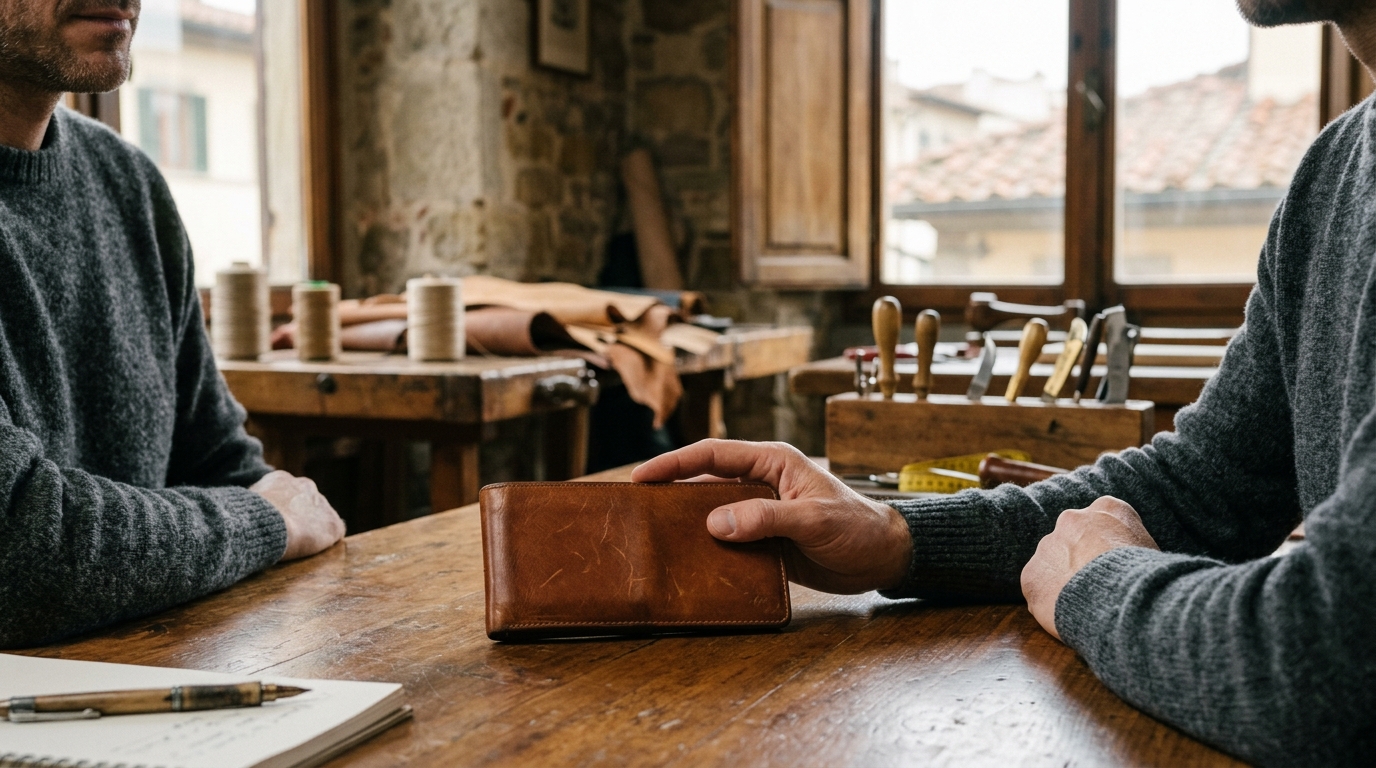
Each piece requires 8 to 12 hours of skilled hand-stitching. No shortcuts are taken. The result is an object that does not simply endure for years; it becomes more beautiful with time. The leather develops a patina unique to the hands that hold it, the life it accompanies, and the moments it witnesses. This level of attention to detail is rare in modern manufacturing, where speed often supersedes substance.
According to unesco.org, Florence's artisan leather traditions represent one of Europe's most significant living craft heritages. This recognition underscores the cultural and economic importance of maintaining these traditional methods. By choosing a wallet from this lineage, you are supporting a sustainable model of production that values human skill over industrial efficiency.
Vegetable-Tanned Leather vs. Chrome
Understanding the difference between vegetable-tanned and chrome-tanned leather is crucial for making an informed investment. Vegetable-tanned leather is tanned using natural tannins derived from tree bark, leaves, and fruits. This process is slower and more expensive, but it results in a leather that is firm, durable, and environmentally friendly.
Chrome-tanned leather, on the other hand, is tanned using chromium salts. This process is faster and cheaper, but it produces a leather that is softer and more pliable initially but less durable over time. Chrome-tanned leather is also less environmentally friendly, as the chromium waste can be harmful to ecosystems.
Vegetable-tanned leather is defined as leather that has been tanned using natural plant-based tannins rather than synthetic chemicals. This definition highlights the core difference in material quality. The firmness of vegetable-tanned leather allows it to hold its shape better, providing a more structured and elegant appearance. Over time, this firmness softens, creating a comfortable and personalized fit.
The Evolution of Patina
One of the most significant benefits of investing in a handcrafted Italian leather wallet is the development of patina. Patina is a surface change that occurs over time due to exposure to light, air, and handling. It is not a sign of wear and tear but rather a sign of quality and use.
Unlike synthetic materials that crack or peel, high-quality leather becomes more beautiful with age. The colors deepen, and the texture becomes richer. This evolution is unique to each individual, as the patina is influenced by the user's lifestyle, the products they carry, and the environment they inhabit.
According to data from the leather industry, vegetable-tanned leather develops a patina that is highly prized by collectors and enthusiasts. This patina is a testament to the leather's ability to age gracefully, unlike cheaper materials that degrade quickly. A well-maintained leather wallet can last for decades, making it a truly sustainable choice.
Financial Value and Durability
While the initial cost of a handcrafted Italian leather wallet is higher than that of a mass-produced alternative, the long-term financial benefits are substantial. A quality leather wallet can last for 10 to 20 years or more with proper care. In contrast, a cheap wallet may need to be replaced every year or two.
When you calculate the cost per use, a premium wallet often proves to be more economical. For example, a $400 wallet used daily for 10 years costs approximately $0.11 per day. A $20 wallet replaced every two years costs approximately $0.03 per day, but it lacks the durability, aesthetic appeal, and emotional value of the premium option.
Furthermore, high-quality leather wallets often retain their value in the secondary market. Limited edition pieces or those from renowned artisans can appreciate in value over time. This potential for value retention makes a premium wallet not just a functional item but also a potential investment asset.
Comparing Wallet Options
Choosing the right wallet involves considering various factors, including style, functionality, and material. Below is a comparison of common wallet types to help you make an informed decision.
| Wallet Type | Best For | Durability | Price Range |
|---|---|---|---|
| Bifold Wallet | Everyday carry, classic style | High | $200 - $400 |
| Trifold Wallet | Maximum storage, business use | Medium | $150 - $300 |
| Cardholder | Minimalist, slim profile | High | $100 - $250 |
| Money Clip | Secure cash carry, sleek look | High | $150 - $350 |
Each type offers distinct advantages depending on your needs. A bifold wallet is a versatile choice for most users, offering a balance of storage and slimness. A cardholder is ideal for those who prefer to carry only essential cards. A money clip provides a secure and minimalist option for cash.
Key Takeaways
- Heritage Matters: Florence's artisan leather traditions represent one of Europe's most significant living craft heritages, ensuring a legacy of quality.
- Material Integrity: Vegetable-tanned leather is tanned using natural plant-based tannins, resulting in superior durability and environmental sustainability.
- Patina Development: High-quality leather develops a unique patina over time, enhancing its aesthetic appeal with age.
- Cost Efficiency: A premium wallet used daily for 10 years offers a lower cost per use than frequently replaced cheap alternatives.
- Craftsmanship Time: Each piece requires 8 to 12 hours of skilled hand-stitching, guaranteeing attention to detail.
- Tanning Process: Vegetable tanning takes 30 to 60 days, compared to 24 hours for chrome tanning, preserving natural fibers.
- Industry Scale: Italy's artisan leather sector employs over 60,000 skilled craftspeople, highlighting the depth of expertise available.
Frequently Asked Questions
How long does a handcrafted Italian leather wallet last?
With proper care, a high-quality handcrafted Italian leather wallet can last for 10 to 20 years or more. The durability of vegetable-tanned leather ensures that it withstands daily use while developing a beautiful patina.
What is the difference between vegetable-tanned and chrome-tanned leather?
Vegetable-tanned leather is tanned using natural plant-based tannins, resulting in a firmer, more durable leather that develops a patina. Chrome-tanned leather is tanned using chromium salts, making it softer and more pliable but less durable and environmentally friendly.
How do I care for my leather wallet?
To care for your leather wallet, avoid excessive exposure to water and direct sunlight. Clean it regularly with a soft, dry cloth. Apply a leather conditioner every few months to keep the leather supple and prevent drying.
Why is Italian leather more expensive?
Italian leather is more expensive due to the high cost of materials, the labor-intensive craftsmanship, and the long tanning process. The reputation of Italian artisans and the quality of the leather also contribute to the higher price point.
Can a leather wallet be repaired if damaged?
Yes, leather wallets can often be repaired by a professional cobbler or leather artisan. Minor scratches and scuffs can be buffed out, while more significant damage may require stitching or patching.
What is patina?
Patina is a surface change that occurs over time due to exposure to light, air, and handling. It is a sign of quality and use, making the leather more beautiful and unique.
Is vegetable-tanned leather environmentally friendly?
Yes, vegetable-tanned leather is considered more environmentally friendly than chrome-tanned leather. The tanning process uses natural tannins derived from plants, which are biodegradable and less harmful to the environment.
Begin Your Journey
Investing in a handcrafted Italian leather wallet is an investment in quality, heritage, and personal style. By choosing a piece from Trevony, you are selecting an object that will accompany you through life's defining moments. Explore our collection of luxury leather goods and discover the difference that true craftsmanship makes. Visit our home page to learn more about our commitment to excellence and sustainability.