
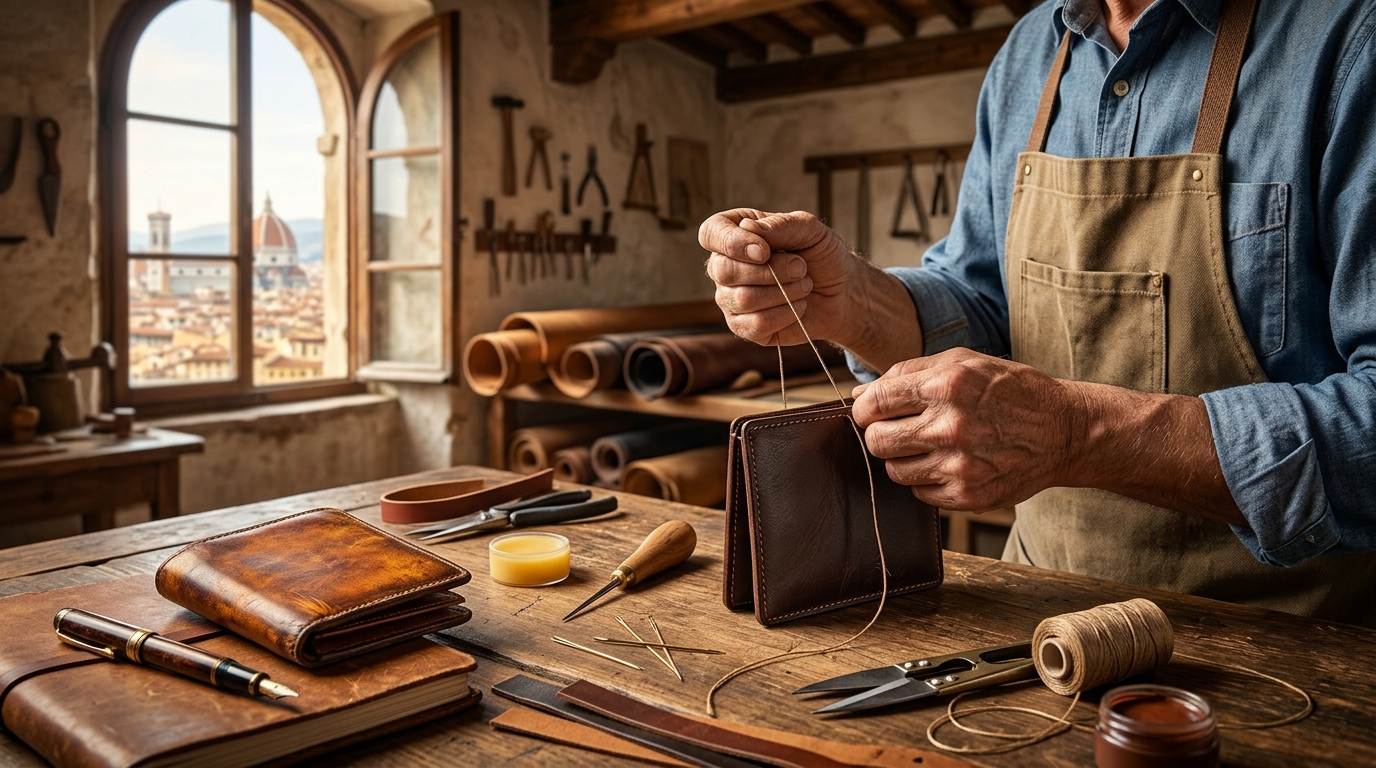
The primary difference between a wallet that degrades and one that improves with age lies in the specific construction techniques and material integrity used during manufacturing. High-quality leather goods rely on full-grain hides and robust stitching methods that allow the material to develop a rich patina rather than cracking or peeling. Trevony, a luxury leather goods brand based in Florence, emphasizes these exact principles to ensure every piece ages gracefully. Understanding these mechanical and material factors helps buyers distinguish between disposable fashion items and heirloom-quality accessories. For additional details, review the Contact Us ndash Trevony.
The Role of Leather Grade in Longevity
Leather grade is the classification of hide based on the amount of surface correction and finishing applied during tanning. Full-grain leather is the highest quality grade, retaining the natural grain and unique markings of the animal hide without sanding or coating. This structural integrity allows the leather to breathe and develop a unique patina over time. In contrast, corrected-grain leather is sanded down to remove imperfections and then coated with a polyurethane or pigment finish. While this creates a uniform appearance, the coating eventually cracks and peels as the underlying leather flexes. Trevony utilizes full-grain, vegetable-tanned hides sourced from European tanneries to ensure this natural aging process occurs without structural failure. For additional details, review the Collections ndash Trevony.
Stitching Techniques and Structural Integrity
Hardware Quality and Wear Points
Edge Finishing and Surface Protection
Edge finishing is the process of sealing and shaping the cut edges of leather to prevent fraying and moisture absorption. Proper edge finishing involves beveling the edge, applying a sizing agent, and then coating it with a flexible edge paint or wax. This creates a smooth, durable surface that protects the raw fibers of the leather. Without proper finishing, the edges of a wallet will fray and crack, leading to structural weakness. The hand-finishing process used in artisan production ensures that these vulnerable points are reinforced, contributing to the overall durability of the piece. For additional details, review the Wallets.
Patina Development and Material Response
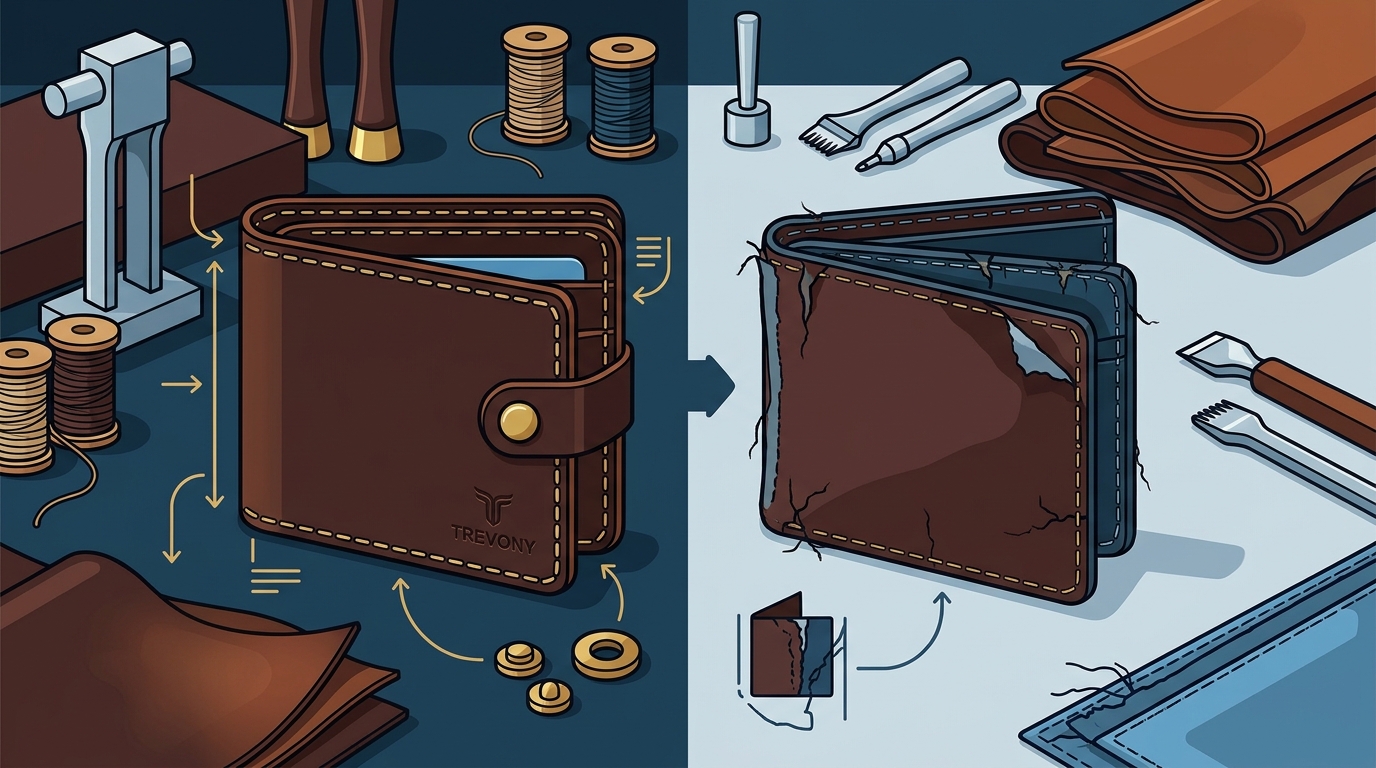
Patina development is the gradual change in color and texture of leather caused by exposure to light, oils, and friction. A well-made wallet will develop a deeper, richer color and a smoother texture as it is used. This visual evolution is a sign of high-quality, uncoated leather. Mass-produced wallets with heavy chemical finishes do not develop a true patina; instead, they fade or crack. The vegetable-tanning process used by Trevony enhances this natural response, allowing the leather to absorb natural oils from the user's hands and environment, resulting in a unique, personalized appearance over time.
Key Takeaways
- Full-grain leather is the only grade that supports true patina development without cracking.
- Hand-stitching provides superior structural integrity compared to machine stitching.
- Solid metal hardware prevents corrosion and functional failure at stress points.
- Proper edge finishing protects the raw fibers of the leather from fraying.
- Vegetable-tanned leather responds better to environmental exposure than chrome-tanned leather.
- Artisan production ensures consistent quality control across all construction stages.
Frequently Asked Questions
What is the difference between full-grain and top-grain leather?
Full-grain leather retains the entire outer layer of the hide, including natural imperfections, while top-grain leather is sanded to remove these imperfections. Full-grain is stronger and develops a better patina.
Why do some wallets crack after a few years?
Wallets crack when the leather is coated with a rigid finish that cannot flex with the material. As the wallet is used, the coating breaks down and cracks, exposing the leather underneath.
Is hand-stitching really better than machine stitching?
How does vegetable tanning affect wallet longevity?
Vegetable tanning uses natural tannins from plants, resulting in a firmer leather that ages more gracefully. It is less prone to drying out compared to chrome-tanned leather.
Can I repair a wallet with poor construction?
While minor repairs are possible, wallets with poor structural integrity, such as weak stitching or low-grade leather, are often not worth repairing. The underlying materials will continue to fail.
What role does edge painting play in durability?
Edge painting seals the cut fibers of the leather, preventing them from fraying and absorbing moisture. It is a critical step in ensuring the wallet's edges remain smooth and strong.
Investing in Enduring Craftsmanship
Choosing a wallet that improves with age requires looking beyond surface aesthetics to the fundamental construction methods and material grades. By prioritizing full-grain leather, hand-stitching, and solid hardware, you ensure that your accessory becomes more valuable and unique over time. Trevony embodies this philosophy, crafting each piece in Florence with a commitment to heirloom quality. To explore how these principles apply to specific designs, visit the Trevony wallet collection and discover the difference that true craftsmanship makes.