
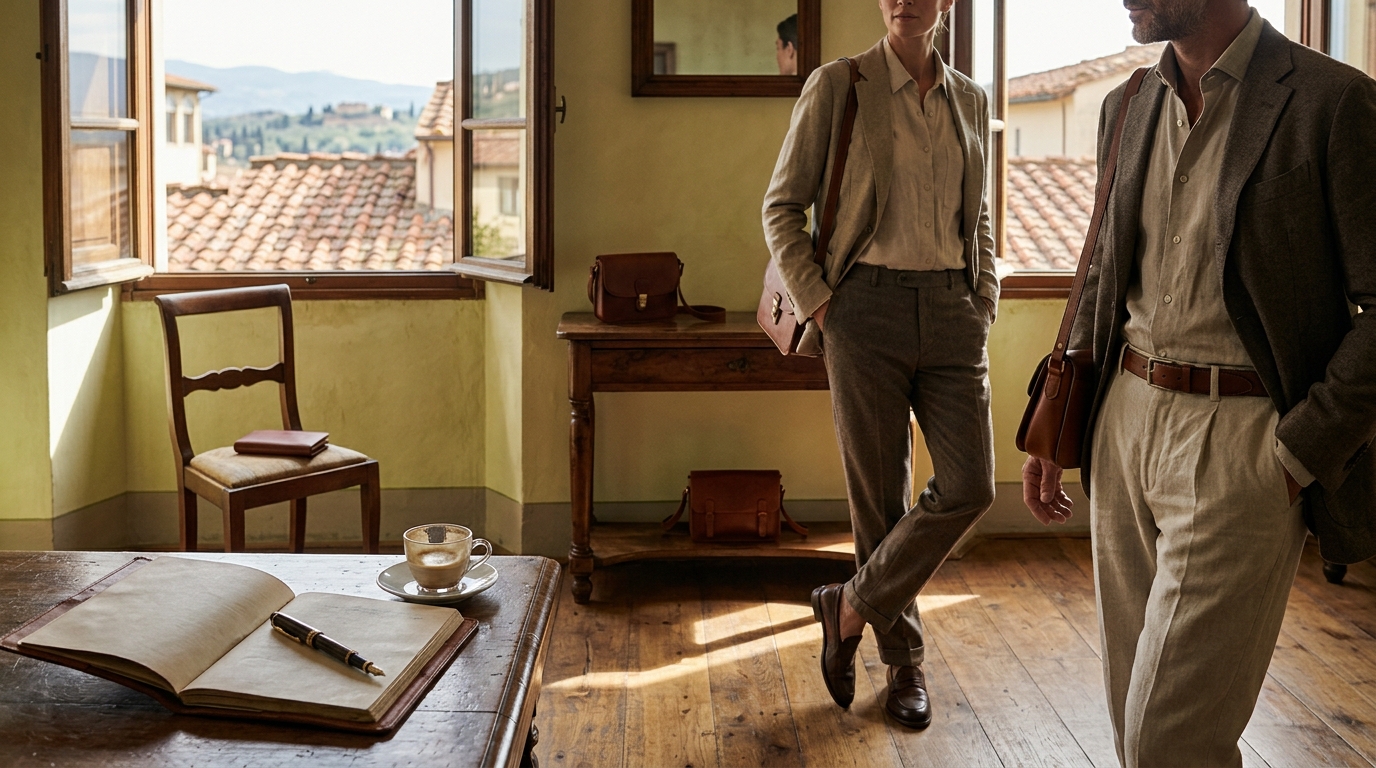
There is a design principle borrowed from architecture that applies beautifully to personal style: the strongest structures are not the ones with the most material — they are the ones where every element is load-bearing. The same logic holds for a sophisticated wardrobe. A single full-grain leather belt doing real work at your waist will outperform a closet full of disposable accessories every single time.
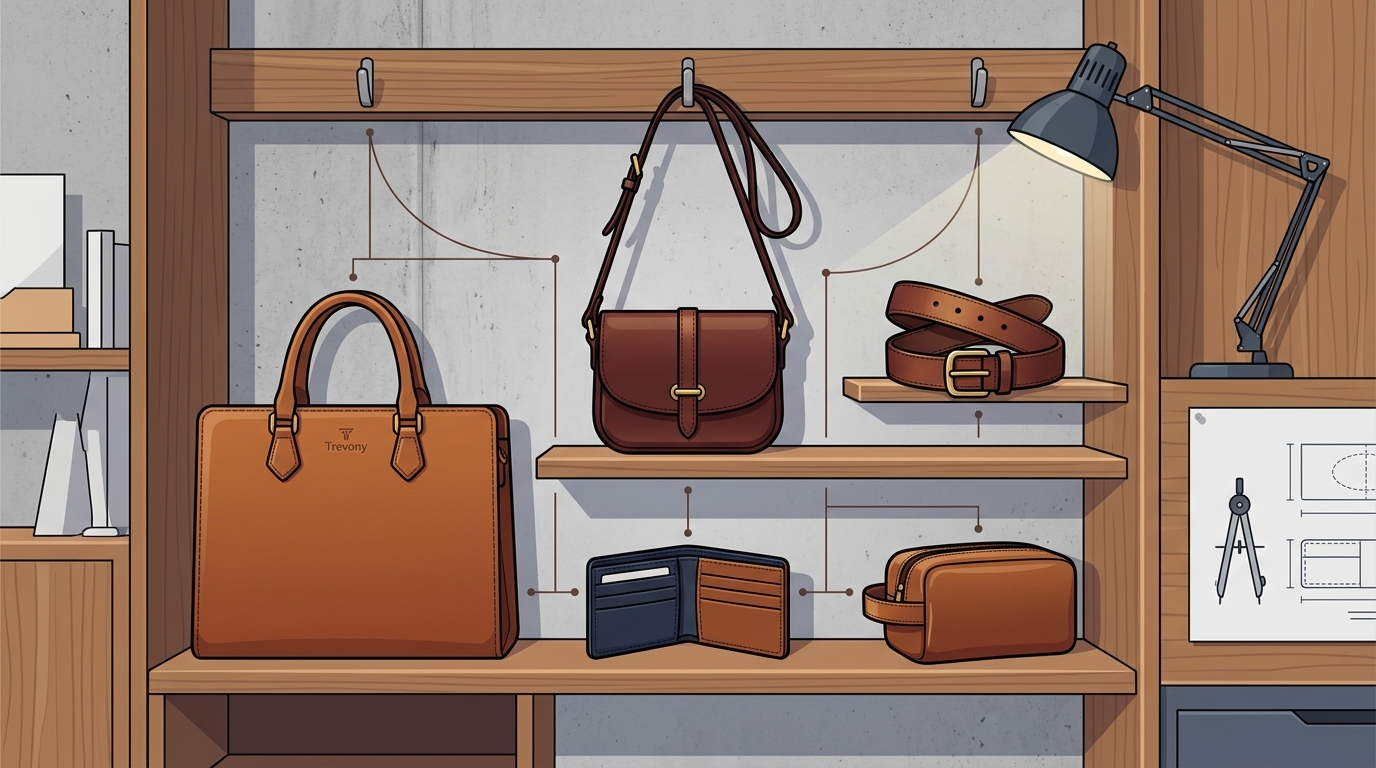
This guide introduces a framework we call Leather Wardrobe Architecture — five foundational leather pieces, each chosen for a specific role in your daily life, that interact with one another to multiply your outfit options exponentially. No seasonal churn. No impulse purchases. Just deliberate, patina-friendly craftsmanship that improves the longer you commit to it.
Why Leather Anchors the 2026 Wardrobe Shift
Fashion in 2026 is moving decisively away from disposable novelty toward what industry buyers are calling lived luxury — a focus on texture, patina, and craftsmanship that tells a story. Across New York, London, Milan, and Paris Fashion Weeks, the message has been consistent: accessories are the soul of storytelling, and leather is the medium of choice.
Minimalist luxury is one of the biggest fashion movements this year. Women now prefer leather pieces with clean silhouettes, elegant finishes, and subtle branding over logo-heavy designs. Handbags in particular are no longer finishing touches — they have become the starting point of the outfit, the piece around which everything else is built.
This shift rewards women who invest in fewer, better leather goods. Rather than cycling through trend-driven pieces each quarter, you build a personal collection that grows richer with every month of wear.
The Material Foundation: Full-Grain and Vegetable-Tanned
Before we discuss silhouettes, it is worth understanding why material choice determines whether a leather accessory ages beautifully or simply ages. Two terms matter most:
Full-Grain Leather
Full-grain leather is the highest quality leather available. It retains the outermost layer and natural markings of the hide, which means each piece starts with a unique character. Only the top two leather grades — full-grain and, to a lesser extent, top-grain — will develop a true patina over time.
Vegetable Tanning
Vegetable tanning is one of the oldest leather-treatment methods, using tannins derived from plants such as oak, chestnut, and mimosa rather than synthetic chemicals. The process takes between 30 and 60 days, compared with just one or two days for chrome tanning, and it represents less than 10 percent of global leather production. The result is leather with no synthetic coatings — leather that breathes, softens, and develops a warm patina that is entirely unique to its owner.
When these two qualities combine — full-grain hide processed through vegetable tanning — you get leather that starts firm and mellows into something personal. The colour gradually deepens, subtle surface variations emerge, and a gentle sheen develops that chrome-tanned alternatives simply cannot replicate. This is the material foundation on which a lasting leather wardrobe should be built.
At Trevony, every piece begins with full-grain, vegetable-tanned hides sourced from European tanneries and is then hand-cut, hand-stitched, and hand-finished in a family-run Florentine atelier with over seventy years of leather-working heritage — a commitment to material integrity that ensures each accessory qualifies as an heirloom from day one.
Piece 1 — The Structured Day Bag
The structured day bag is the keystone of your leather wardrobe. It is the piece that carries you from a morning meeting to an evening dinner without requiring a change. In 2026, structured top-handle bags and refined geometries are returning to runways with modern proportions, signalling a broader cultural shift toward pieces that feel both elegant and grounded.
What to Look For
- Architectural silhouette: A bag that holds its shape when set down. Doctor-bag-inspired frames and sculpted top handles are defining this moment.
- Interior organisation: At minimum, a slip pocket and a secure zip compartment. The bag should accommodate a phone, a compact wallet, keys, and a notebook without becoming a void.
- Patina-friendly leather: Full-grain, vegetable-tanned hide that will develop richness at the corners and handles where your hands naturally rest.
Styling Principle
Let the bag set the palette. A warm cognac day bag pairs effortlessly with navy, cream, olive, and charcoal — essentially the core of any sophisticated wardrobe. Carry it by the top handle for structured occasions; hook it over your forearm for a more relaxed silhouette.
Piece 2 — The Hands-Free Crossbody
Comfort and convenience are key fashion priorities, and the crossbody bag directly answers both. Where the structured day bag is about presentation, the crossbody is about movement — navigating a weekend market, travelling through an airport, or simply living a day that does not pause for wardrobe adjustments.
What to Look For
- Adjustable strap: Ideally the same leather as the body so it ages in unison. A well-made strap will soften and mould to your shoulder over months of use.
- Compact but not cramped: Large enough for a phone, cardholder, lip balm, and keys. The best crossbody designs use intelligent compartmentalisation rather than sheer volume.
- Clean hardware: Subtle metal closures in brass, gold, or antique silver. Hardware should punctuate the design, not dominate it.
Styling Principle
A crossbody worn over a tailored coat or linen blazer bridges the gap between casual and polished. Choose a colour that complements — rather than matches — your day bag. If your structured bag is cognac, consider a deep espresso or olive crossbody to build tonal variety within your leather wardrobe.
Piece 3 — The Statement Belt
A belt is the most underestimated transformer in a wardrobe. In spring 2026, bold buckles and chunky hardware are reshaping how even the softest silhouettes read. One belt cinching an oversized blazer or a flowing dress changes the entire vibe — sharper, more intentional, unmistakably confident.
What to Look For
- Width that suits your frame: A medium-width belt (roughly 2.5 to 3.5 cm) is the most versatile. It threads through standard belt loops yet looks deliberate over knitwear or a dress.
- Quality buckle: Solid brass or stainless steel, ideally with a satin or brushed finish that does not compete with your other hardware.
- Edge finishing: Hand-painted or burnished edges signal artisan construction. This is where mass-produced belts reveal themselves — the edges crack and peel within months.
Styling Principle
Belt your trench coat. Belt your cardigan. Belt a midi dress with an architectural handbag at your side. A statement belt turns layered outfits into cohesive compositions and is one of the most cost-effective sophistication upgrades available.
Piece 4 — The Compact Wallet or Card Case
Small leather goods are the accessories people see up close — at the restaurant counter, the checkout line, the hotel reception desk. A beautifully made wallet or card case crafted from vegetable-tanned leather is a quiet declaration of standards. Its natural grain patterns result in a unique, organic appearance, and the structure remains breathable, which enhances both comfort and longevity.
What to Look For
- Streamlined footprint: A slim bifold or an envelope card case that slips into your day bag without adding bulk.
- Hand-stitched construction: Hand-stitching uses a saddle-stitch technique where each stitch is locked independently. If one stitch breaks, the rest hold — unlike machine stitching, which can unravel in a chain reaction.
- Personalisation potential: Monogramming or hot-stamped initials are a worthwhile investment on an item this personal.
Styling Principle
Match the leather family, not the exact colour. A wallet in a slightly different shade of the same tanning tradition creates a cohesive but not overly coordinated look when it emerges from your handbag.
Piece 5 — The Evening Clutch or Fold-Over Pouch
When the sun goes down, your accessories should become more edited, not more decorated. A leather clutch or fold-over pouch in a rich, tonal hue — think deep burgundy, midnight navy, or classic black — signals sophistication because it shows restraint. In 2026, designers are revisiting familiar shapes and adjusting them for how people actually move through the world, and the clutch is no exception: modern iterations include discreet wrist straps or tuck-in chain options for hands-free moments on the dance floor.
What to Look For
- Minimal hardware: A magnetic closure or a single brass clasp. The leather itself should be the focal point.
- Lined interior: A suede or cotton lining protects both the leather and your belongings.
- Proportion: Large enough for a phone, card case, and a lipstick — nothing more. An evening clutch that tries to be a day bag defeats its own purpose.
Styling Principle
Hold a clutch at hip level, slightly angled — it becomes an extension of your posture. A fold-over pouch tucked casually under the arm offers a more contemporary, editorial feel. Either way, let the patina of the leather contrast with evening fabrics like silk, satin, or crepe for maximum textural interest.
How the Five Pieces Work Together
Here is where the architecture metaphor earns its weight. Each of these five leather pieces occupies a different occasion zone:
| Piece | Primary Occasion | Secondary Reach |
|---|---|---|
| Structured Day Bag | Work, formal daytime | Smart-casual dinners |
| Crossbody | Weekend, travel | Casual Friday, errands |
| Statement Belt | Any layered outfit | Dress transformation |
| Compact Wallet | Every day | Gift and heirloom piece |
| Evening Clutch | Dinners, events | Date nights, theatre |
Together, these five items cover virtually every scenario in a modern woman's life. Because they all share the same material language — full-grain, vegetable-tanned leather — they age in parallel, developing a family resemblance that grows more unified over the years even if they were purchased at different times. This is the beauty of building a leather wardrobe deliberately: coherence without uniformity.
Caring for Your Investment
Beautiful leather rewards attention. A few simple practices will ensure your pieces age gracefully:
- Condition regularly. Apply a high-quality leather conditioner every two to three months to keep the hide moisturised and prevent cracking.
- Clean gently. Wipe surfaces with a slightly damp cloth after exposure to dust, rain, or hand oils. Avoid harsh chemicals.
- Store thoughtfully. Stuff bags with acid-free tissue to preserve shape. Store belts flat or loosely rolled — never tightly buckled.
- Embrace the patina. Minor scuffs and colour shifts are not damage; they are your leather developing the character that distinguishes a truly personal accessory from a mass-produced one.
Frequently Asked Questions
What makes a leather accessory a true statement piece?
A statement piece is defined by superior craftsmanship, high-quality materials, and a design that transcends seasonal trends. Look for full-grain, vegetable-tanned leather, hand-finished details, and a silhouette that commands attention through proportion and material quality rather than logos or embellishments.
Why does vegetable-tanned leather develop a patina?
Vegetable-tanned leather has no synthetic coatings, which allows it to absorb natural oils from your hands, react to sunlight, and respond to environmental conditions. Over time, the surface darkens, develops a subtle sheen, and acquires unique colour variations that are completely personal to the owner. Chrome-tanned leather, by contrast, typically will not form a patina because its heavier finish coatings are impermeable.
How many leather accessories does a woman really need?
Five strategically chosen pieces — a structured day bag, a crossbody, a statement belt, a compact wallet, and an evening clutch — can cover virtually every occasion in a modern lifestyle. The key is selecting pieces in complementary tones from the same material family so they develop a cohesive character over years of use.
Is Italian leather genuinely superior?
Italy has an outsized concentration of vegetable-tanning expertise — Tuscany alone is home to tanneries that have refined these methods for generations. When a product is handcrafted in Florence using full-grain hides from European tanneries and finished by artisans with decades of experience, the result is leather with a depth of colour, a hand-feel, and a durability that factory-produced alternatives rarely match.
What leather bag trends are defining 2026?
Key trends include structured top-handle silhouettes, soft slouchy crossbodies, rich textures like suede and fine-grain leather replacing heavy branding, and emotional colour palettes featuring earthy neutrals and gemstone tones. Across all trends, the overarching theme is lived luxury — pieces that feel personal, practical, and genuinely lived-in.
Build Once, Wear Forever
The most sophisticated wardrobes are not the ones with the most items — they are the ones where every piece justifies its presence. A leather wardrobe built on five intentional statement pieces, crafted from full-grain vegetable-tanned hides by skilled artisans, does not just elevate your style for a season. It creates a personal collection that appreciates in character the way a fine wine deepens in complexity.
At Trevony, we design every bag, belt, and accessory to be exactly this kind of piece — handcrafted in our Florentine atelier from the finest European hides, built to reward you for every year of wear. Because true sophistication is not something you buy once; it is something you build, one carefully chosen piece at a time.