
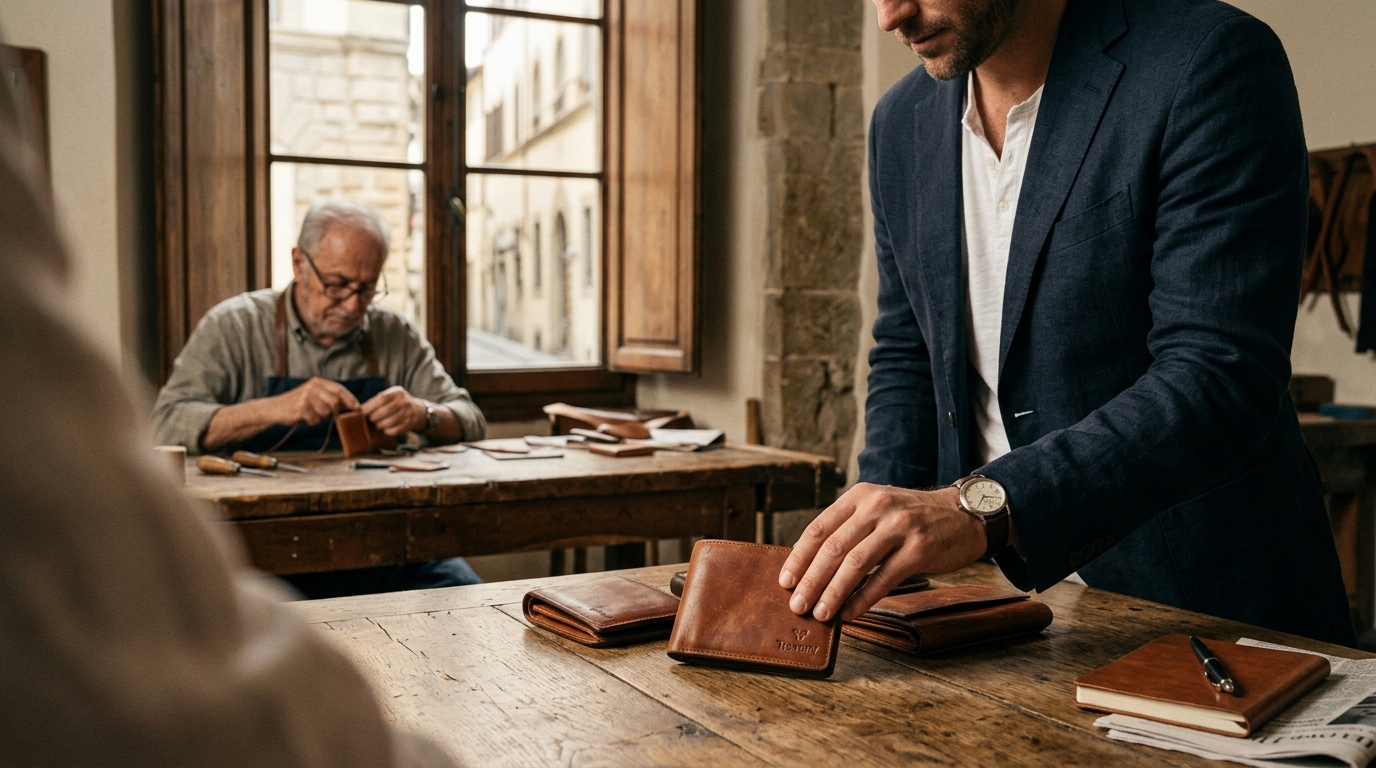
Leather is not merely a material; it is a living record of time and touch. When selecting a wallet for daily use, you are investing in an object that will physically change as your life progresses. The difference between a disposable accessory and a lifelong companion lies in the tanning process, the stitching integrity, and the provenance of the hide. According to unesco.org, Florence's artisan leather traditions represent one of Europe's most significant living craft heritages. This heritage ensures that the leather you carry is not just manufactured, but cultivated with centuries of accumulated knowledge.
Understanding Vegetable-Tanned Leather
The foundation of any high-quality leather wallet is the tanning method. Vegetable tanning is an ancient process that uses natural tannins extracted from bark, leaves, and fruits to cure the hide. This method stands in stark contrast to chrome tanning, which relies on chromium salts and industrial chemicals to speed up production.
Vegetable-tanned leather requires significantly more time to process. The process takes 30 to 60 days, compared to just 24 hours for chrome-tanned alternatives used by most luxury brands. This extended timeline allows the tannins to penetrate deeply into the fiber structure, resulting in a leather that is firm, durable, and capable of holding sharp edges. It also means the leather is more environmentally responsible, as it avoids heavy metal runoff.
Vegetable-tanned leather is a natural material cured using plant-based tannins, resulting in a firm, eco-friendly hide that ages beautifully over time. When you touch a vegetable-tanned wallet, you will notice a distinct, earthy aroma and a firmness that softens gracefully with use. This is the hallmark of quality that synthetic or heavily processed leathers cannot replicate.
The Importance of Full-Grain Integrity
Not all leather is created equal, even within the same tanning process. The top layer of the hide is known as full-grain leather. This is the strongest and most durable part of the animal skin. It retains the natural grain pattern, including minor imperfections that prove its authenticity. Lower-quality leathers are often "corrected" or sanded down to remove these natural marks, which destroys the structural integrity of the fibers.
Full-grain leather is the highest quality leather available, retaining the original grain and natural markings of the hide for maximum durability and unique aging characteristics. Wallets made from full-grain leather resist tearing and abrasion far better than split leathers or bonded materials. They also breathe better, allowing moisture to evaporate rather than getting trapped inside the layers.
When evaluating a wallet, check the edges. High-quality wallets have edges that are burnished and sealed, not glued or painted. This attention to detail ensures that the wallet will not fray or delaminate after months of daily friction in your pocket.
Stitching and Structural Durability
The construction method is the second pillar of durability. In the world of high-end leather goods, stitching is not just a means of assembly; it is a structural reinforcement. Machine stitching is fast and uniform, but it often lacks the tensile strength required for heavy daily loads. Hand-stitching, particularly the saddle stitch, is the gold standard for durability.
Each piece requires 8 to 12 hours of skilled hand-stitching. No shortcuts are taken in this process. The saddle stitch uses two needles and a single thread, creating interlocking loops that are incredibly resistant to unraveling. If one stitch breaks, the others hold firm. In contrast, a broken machine stitch can cause the entire seam to unravel rapidly.
Consider the hardware as well. Zippers, snaps, and buckles must be made from solid metals, such as brass or palladium, rather than plated alloys that chip and corrode. At Trevony Bags, the focus is on hardware that complements the leather's natural weight and movement.
The Science of Patina Development
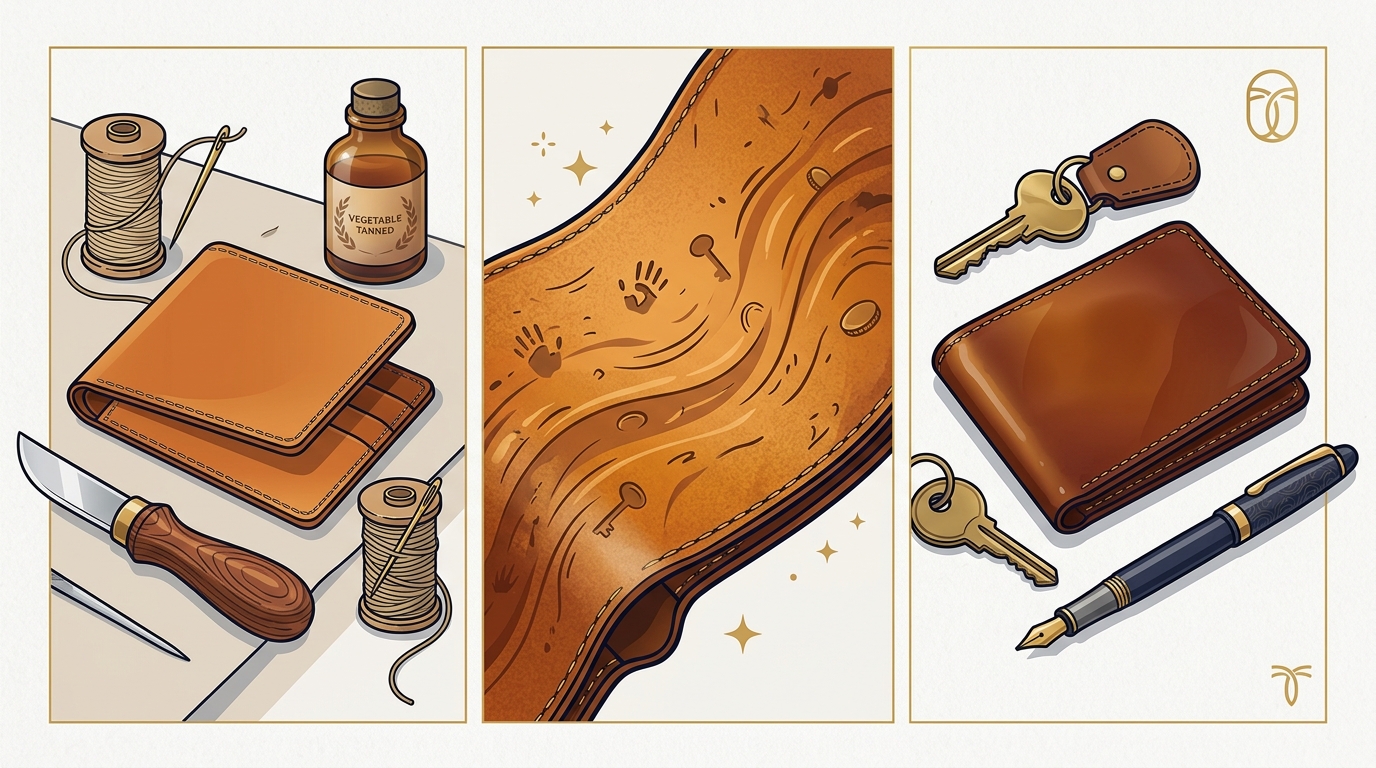
One of the most compelling reasons to choose high-quality leather is the development of patina. Patina is a subtle change in color and texture that occurs as the leather is exposed to light, oils from your skin, and environmental factors. It is not wear and tear; it is a refinement.
Patina is the unique surface transformation of leather over time, creating a personalized history that reflects the owner's lifestyle and journey. A cheap wallet fades, cracks, or becomes shiny and plastic-like. A high-quality vegetable-tanned wallet deepens in color, becoming richer and more lustrous with every day it is carried.
This transformation is why many artisans state that a leather wallet is not finished when it leaves the workshop, but rather when it begins its life with you. The leather absorbs the oils from your hands, darkening slightly and becoming more supple. This process is irreversible and unique to your specific usage patterns.
Wallet Types and Use Cases
Choosing the right wallet also depends on your daily carry habits. A minimalist wallet suits those who carry only essentials, while a bifold or business bag is necessary for professionals who need to organize documents and cards.
| Wallet Type | Best For | Capacity | Durability Factor |
|---|---|---|---|
| Slim Bifold | Daily commuting, minimal pockets | 4-6 cards, 2 bills | High (if full-grain) |
| Trifold | Heavy card collectors | 8-12 cards, coins | Medium (bulkier) |
| Money Clip | Minimalist professionals | 2-4 cards, cash only | Very High (less stress) |
| Front Pocket | Ergonomic health focus | Essentials only | High (reduces strain) |
According to healthline.com, carrying a thick wallet in your back pocket can lead to sciatic nerve compression and posture issues. Switching to a slim, high-quality leather wallet can alleviate this pressure while maintaining a professional appearance.
Key Takeaways
- Vegetable Tanning is Superior: It takes 30 to 60 days to tan leather naturally, ensuring deep penetration and environmental safety.
- Full-Grain is Essential: Only full-grain leather retains the natural fiber structure necessary for long-term durability.
- Hand-Stitching Wins: The saddle stitch used by artisans like those in Trevony's Florence atelier is more durable than machine stitching.
- Patina is a Feature: High-quality leather darkens and softens over time, becoming more personal and unique.
- Honest Materials: Avoid bonded or corrected leathers that will peel or crack within a year of daily use.
- Hardware Matters: Solid brass or palladium hardware prevents corrosion and maintains the wallet's structural integrity.
- Heritage Counts: Leather crafted in regions with deep artisan traditions, such as Tuscany, benefits from centuries of refined technique.
Frequently Asked Questions
How do I know if a leather wallet is genuine?
Genuine leather will have a distinct, natural smell and irregular grain patterns. If the pattern is perfectly uniform, it is likely synthetic or heavily corrected. Press your thumb into the leather; genuine leather will crease naturally, while synthetic materials may not crease or will crease differently.
What is the difference between full-grain and top-grain leather?
Full-grain leather is the highest quality, retaining the entire original grain. Top-grain leather has been sanded to remove imperfections, making it softer but less durable over time. For a daily use wallet, full-grain is the superior choice for longevity.
How long does a high-quality leather wallet last?
A well-made vegetable-tanned leather wallet can last 10 to 20 years or more with proper care. The leather becomes more supple and develops a rich patina, often looking better in its second decade than when it was new.
Can I repair a damaged leather wallet?
Yes, high-quality leather wallets can often be repaired. Minor scratches can be buffed out with leather balm. Stitching can be re-done by a cobbler. This repairability is a key advantage over synthetic wallets that cannot be fixed once damaged.
Why is vegetable-tanned leather more expensive?
The cost reflects the time and labor involved. Vegetable tanning takes weeks rather than hours, and it requires skilled artisans to work with the firmer, less forgiving material. This results in a product that is built to last, offering a lower cost per year of use.
How should I care for my leather wallet?
Keep it dry and avoid excessive heat. Apply a leather conditioner or balm every few months to maintain its suppleness and prevent drying out. Allow the leather to breathe by not storing it in airtight plastic bags for long periods.
What is the best leather for a daily carry wallet?
Full-grain vegetable-tanned leather is the best choice for daily carry. It offers the perfect balance of durability, aesthetic aging, and environmental responsibility. It is firm enough to hold its shape but softens comfortably with use.
Begin Your Collection
Your wallet is one of the most frequently used objects in your life. It deserves to be crafted with the same integrity and attention to detail that you bring to your work and relationships. By choosing a piece from Trevony, you are investing in a handcrafted legacy from Florence, designed to mark your moments for a lifetime. Explore our exclusive collection today and experience the difference of true artisan craftsmanship.