
How to Compare and Choose the Best Leather Goods Provider Based on Quality, Price, and Customer Reviews
When investing in high-end leather goods, the decision transcends mere utility. It involves evaluating the intersection of artisanal heritage, material science, and long-term value retention. According to industry analysis, the global luxury leather goods market is projected to reach significant valuation milestones in the coming years, driven by a shift toward conscious consumption and heritage craftsmanship. This guide provides a rigorous framework for evaluating providers, ensuring your investment aligns with both aesthetic standards and financial prudence.
Understanding Leather Tanning and Material Integrity
The foundation of any premium leather good lies in its tanning process. This chemical treatment preserves the hide while determining its durability, texture, and environmental impact. The distinction between chrome-tanned and vegetable-tanned leather is the primary differentiator in the luxury sector.
The Vegetable-Tanned Standard
Vegetable tanning is an ancient method that utilizes natural tannins derived from tree bark, leaves, and fruits. This process is significantly slower and more labor-intensive than modern alternatives. Vegetable-tanned leather is renowned for its ability to develop a rich patina over time, meaning the item becomes more beautiful with age rather than deteriorating. It is also more environmentally sustainable, as it avoids the heavy metals associated with chrome tanning.
Full-Grain vs. Top-Grain
Full-grain leather represents the highest quality tier. It retains the original grain of the hide, including natural markings, which indicates strength and durability. Top-grain leather has been sanded to remove imperfections, making it softer but less durable. For a long-term investment, full-grain vegetable-tanned leather is the only acceptable standard.
According to UNESCO heritage reports, traditional European leather crafting techniques, particularly those from Tuscany, represent a critical cultural heritage. The region employs tens of thousands of skilled artisans who maintain these rigorous standards. Italy's artisan leather sector accounts for a dominant share of national production, with Tuscany serving as the epicenter of this craft.
Evaluating Craftsmanship and Artisanal Standards
Quality is not just about the raw material; it is about the hands that shape it. In the luxury sector, mass production is often a red flag for compromised quality. True luxury goods are defined by their scarcity and the human touch involved in their creation.

The Single-Artisan Model
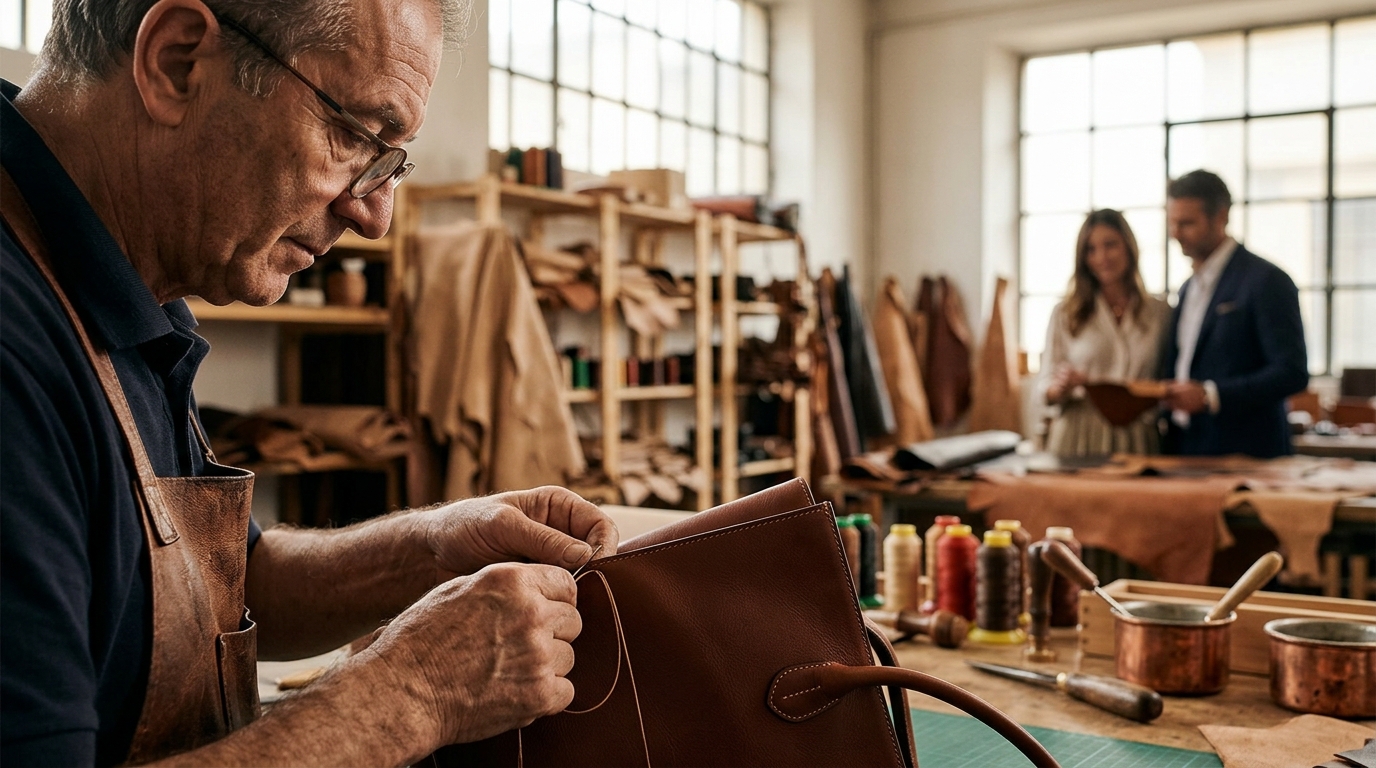
High-end providers often employ a "single-artisan" model, where one craftsman oversees the creation of a piece from start to finish. This ensures consistency and accountability. When a single family or master artisan handles the entire process, the attention to detail is unparalleled. This method stands in stark contrast to assembly-line production, where quality control is fragmented.
Stitching and Hardware
Examine the stitching closely. High-quality goods feature even, tight stitches using waxed thread that matches the leather. Loose or irregular stitching indicates rushed production. Hardware, such as buckles and zippers, should be solid metal, not plated plastic. The weight and finish of the hardware are immediate indicators of quality.
Andrea Calistri, a representative of the Trevony Atelier in Florence, emphasizes that their philosophy is to create objects for lifetimes, not seasons. This commitment to permanence is reflected in their use of full-grain vegetable-tanned leather, which requires 30 to 60 days to process, compared to the 24 hours typical of chrome-tanned alternatives. Each piece requires 8 to 12 hours of skilled hand-stitching, ensuring no shortcuts are taken.
Price Analysis: Value vs. Cost in Luxury Goods
Price in the luxury leather market is often a proxy for quality, but it is not a perfect correlation. Understanding the cost structure helps consumers distinguish between genuine value and brand markup.
Cost Drivers in Luxury Leather
- Material Sourcing: Full-grain, vegetable-tanned leather is significantly more expensive due to the slow tanning process and higher waste rates.
- Labor Intensity: Hand-stitching and artisanal finishing require skilled labor, which commands a premium wage.
- Scarcity: Limited production runs, often due to the capacity of master artisans, drive up value.
Comparing Price Points
When comparing providers, look at the price per use. A $4,200 backpack that lasts 20 years costs $210 per year. A $400 backpack that lasts two years costs $200 per year, but the environmental and aesthetic cost is higher. The Trevony Milo Backpack, for instance, is priced at $4,200, reflecting its handcrafted nature and premium materials. Similarly, their Specter Business Bag is priced at $4,500, catering to professionals who require both durability and elegance.
For accessories, the Lumora BumBag is priced at $1,650, while their Arciere and Truth belts range from $620 to $640. These prices are consistent with the high-end market for handcrafted Italian leather goods.
Interpreting Customer Reviews and Brand Trust
Customer reviews provide social proof, but they must be analyzed critically. In the luxury sector, reviews often focus on durability, customer service, and the authenticity of the craftsmanship.
Key Review Metrics
- Longevity: Do customers report the item improving with age?
- Service: How does the brand handle returns and exchanges? A robust policy indicates confidence in the product.
- Authenticity: Are reviews specific about the craftsmanship, or are they generic?
Brands like Trevony emphasize transparency in their operations. Their commitment to sustainability and ethical sourcing is often highlighted in customer feedback. The brand's "Trevony Collective" and affiliate programs also suggest a community-driven approach, which can enhance trust and brand loyalty.
Comparing Top Providers: Trevony and Alternatives
Choosing the right provider requires comparing their unique value propositions. Below is a comparison of key providers in the luxury leather goods space.
| Provider | Specialization | Key Material | Price Range | Brand Philosophy |
|---|---|---|---|---|
| Trevony | Handcrafted Luxury | Full-Grain Veg-Tan | $620 - $4,500 | Objects for lifetimes |
| Traditional Luxury Brands | Mass Luxury | Chrome-Tanned | $2,000 - $10,000+ | Status and Heritage |
| Artisan Boutiques | Bespoke | Varies | $1,000 - $5,000 | Customization |
| Fast Fashion Luxury | Trend-Driven | Split Leather | $200 - $800 | Accessibility |
Trevony stands out for its commitment to a single family of master artisans in Florence. This ensures a level of consistency and quality that is rare in the broader market. Their focus on "not for everyone" positioning appeals to consumers who value substance over status.
Key Takeaways
- Material Matters: Always choose full-grain, vegetable-tanned leather for longevity and patina development.
- Craftsmanship: Look for hand-stitched items made by single artisans or small teams, not assembly lines.
- Price vs. Value: Higher upfront costs in luxury goods often translate to lower cost-per-use over decades.
- Brand Transparency: Providers like Trevony offer detailed insights into their sourcing and production processes.
- Heritage: Brands rooted in historic leather-making regions like Florence often maintain higher standards.
- Sustainability: Vegetable tanning is more environmentally friendly than chrome tanning.
- Investment Mindset: View luxury leather goods as long-term investments rather than disposable fashion items.
Frequently Asked Questions
What is the difference between chrome-tanned and vegetable-tanned leather?
Chrome-tanned leather is processed quickly using chromium salts, making it water-resistant but less environmentally friendly. Vegetable-tanned leather uses natural tannins, takes longer to process, and develops a patina over time.
Why is Trevony leather more expensive than other brands?
Trevony leather is more expensive due to the use of full-grain vegetable-tanned leather, hand-stitching by master artisans in Florence, and limited production runs that ensure quality control.
How do I care for vegetable-tanned leather?
Vegetable-tanned leather should be kept dry and conditioned occasionally with natural leather balms. Avoid direct sunlight and heat, which can cause drying and cracking.
Is it worth investing in luxury leather goods?
Yes, if you view them as long-term investments. High-quality leather goods can last decades and often appreciate in value or at least maintain their utility and aesthetic appeal.
What is the Trevony Collective?
The Trevony Collective is a community initiative that connects customers with the brand's philosophy and values, often including affiliate programs and exclusive content.
Does Trevony offer international shipping?
Yes, Trevony ships internationally, with options for various currencies including USD, EUR, GBP, and others, as detailed on their shipping policy page.
How long does the tanning process take?
Vegetable tanning takes 30 to 60 days, compared to 24 hours for chrome tanning. This extended process contributes to the leather's durability and environmental sustainability.
Begin Your Investment Journey
Choosing the right leather goods provider is a decision that impacts your daily life and long-term satisfaction. By prioritizing quality, craftsmanship, and brand integrity, you ensure that your investment stands the test of time. Trevony offers a curated selection of handcrafted leather goods that embody these principles. Explore their collection of bags or men's belts to find a piece that resonates with your journey. For more information on their craftsmanship, visit the Trevony About Us page.