
How to Choose the Best Leather Goods Provider: Quality, Price & Reviews
When investing in high-end leather goods, the difference between a fleeting accessory and a lifelong heirloom is defined by three critical factors: material integrity, artisanal provenance, and transparent pricing. According to industry analysis, the global luxury leather goods market is projected to grow significantly, with consumers increasingly prioritizing sustainability and craftsmanship over mass-produced status symbols. This shift demands a more rigorous evaluation process than simply browsing retail shelves. You must understand the technical distinctions between leather types, the economic realities of handcrafting, and the historical context of the maker. This guide provides the exact framework used by collectors and connoisseurs to identify providers who deliver genuine value rather than inflated brand premiums. (Luxury Leather Goods)
Understanding Leather Types and Tanning
The foundation of any premium leather good is the raw material. Not all leather is created equal, and the tanning process dictates the durability, scent, and aging characteristics of the final product. To make an informed choice, you must distinguish between chrome-tanned and vegetable-tanned leathers.
The Vegetable-Tanned Standard
Vegetable tanning is an ancient process that uses natural tannins from tree bark, wood, and leaves. This method is slow, often taking 30 to 60 days to complete, compared to the 24 hours required for chrome tanning. The result is a leather that is firm, holds its shape, and develops a rich patina over time. Full-grain vegetable-tanned leather is the gold standard for luxury goods because it retains the natural grain and imperfections of the hide, signaling authenticity.
Chrome-Tanned Alternatives
Chrome tanning is faster and cheaper, producing softer, more water-resistant leather. However, it lacks the depth of character and longevity associated with vegetable-tanned hides. Many mass-market luxury brands use chrome-tanned leather to reduce costs while maintaining high price points. When evaluating a provider, ask specifically about their tanning process. If they do not explicitly state "vegetable-tanned" or "full-grain," they are likely using inferior materials. (Luxury Leather Goods)
According to UNESCO heritage reports, traditional tanning methods in regions like Tuscany represent a critical part of Europe's living cultural heritage. The environmental impact of chrome tanning is also a growing concern, with stricter regulations in the EU pushing brands toward sustainable alternatives. Choosing a provider committed to vegetable tanning supports both quality and environmental responsibility.
Evaluating Artisanal Provenance
Provenance refers to the origin and history of the item. In the world of luxury leather, this means knowing who made the product, where it was made, and for how long that tradition has existed. Mass production, even in "luxury" factories, often results in inconsistent quality and a lack of soul in the final product.

The Single-Artisan Advantage
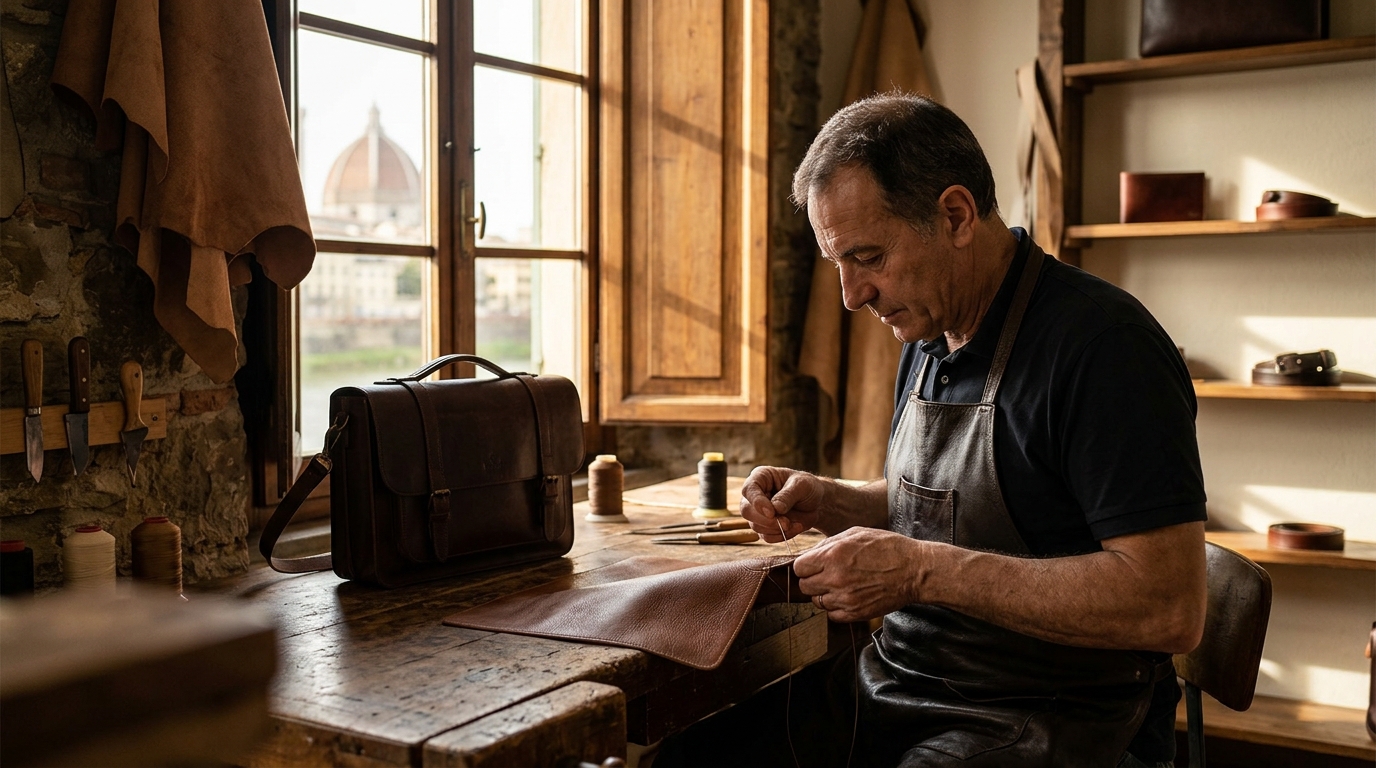
True luxury is often defined by exclusivity and consistency. Providers who utilize a single family of master artisans or a small, dedicated atelier ensure that every stitch and edge is finished with the same level of care. This approach limits production volume but guarantees a higher standard of perfection. For example, Trevony operates from a Florence atelier where a single family of artisans has worked for generations, ensuring that each piece is a continuation of a living history.
Geographic Significance
Geography plays a crucial role in leather quality. Florence, Italy, has been the center of leather craftsmanship for over 700 years. The local water, climate, and accumulated knowledge create an ecosystem that is difficult to replicate elsewhere. When a provider claims Italian craftsmanship, verify if the work is actually done in Tuscany or if it is merely assembled there. Look for specific mentions of the city or region to confirm authenticity.
Data from Confartigianato Imprese indicates that Italy's artisan leather sector employs over 60,000 skilled craftspeople, with Tuscany accounting for more than 40% of national production. This concentration of talent ensures that providers rooted in these regions have access to the highest level of skill and material quality.
Analyzing Price Structures
Price is often the most confusing aspect of luxury leather goods. Why does one bag cost $500 while another similar-looking one costs $5,000? The answer lies in the cost of labor, material scarcity, and brand positioning.
The Cost of Handcrafting
Hand-stitching a single bag can require 8 to 12 hours of skilled labor. When you pay for a handcrafted item, you are paying for hours of focused, expert work. This is fundamentally different from machine production, where economies of scale drive down the per-unit cost. Providers who charge premium prices for handcrafted goods are reflecting the true cost of their labor. If a price seems too good to be true for a hand-stitched item, it likely is.
Brand Premium vs. Value
Traditional luxury brands often charge massive premiums for their logos, regardless of the actual craftsmanship. This is known as the "logo premium." Independent artisanal brands, however, often offer better value because their prices reflect the materials and labor rather than marketing budgets. By choosing a provider that focuses on craft over commerce, you get more quality for your money.
Market trends show that consumers are increasingly willing to pay for transparency. According to McKinsey luxury reports, modern luxury consumers are more educated about production processes and are willing to pay a premium for sustainable and ethical craftsmanship. This shift allows independent artisans to compete with established houses by offering superior value and authenticity.
Comparing Top Provider Models
To help you navigate the market, we have compared three distinct models of leather goods providers. This comparison highlights the trade-offs between heritage, price, and accessibility.
| Provider Model | Key Characteristics | Price Range | Best For |
|---|---|---|---|
| Heritage Atelier | Single-family artisans, vegetable-tanned leather, limited production. | $1,650 - $4,500 | Collectors seeking heirloom quality and unique patina. |
| Mass Luxury | Factory production, chrome-tanned leather, heavy branding. | $2,000 - $8,000+ | Consumers prioritizing brand recognition over material quality. |
| Artisanal Independent | Small batch production, transparent sourcing, direct-to-consumer. | $600 - $1,500 | Buyers seeking value and ethical craftsmanship. |
As seen in the table, heritage ateliers like Trevony offer a middle ground between mass luxury and low-end artisanal goods. They provide the highest level of craftsmanship at a price that reflects the true cost of production, without the inflated logo premiums of traditional houses.
Key Takeaways
- Material Integrity: Always prioritize full-grain, vegetable-tanned leather for longevity and patina development.
- Provenance Matters: Verify the geographic origin of craftsmanship, with Florence, Italy, being a top-tier benchmark.
- Labor Costs: Expect to pay for hand-stitching hours; a bag requiring 12 hours of work cannot be cheap.
- Transparency: Choose providers who openly discuss their tanning processes and artisan teams.
- Value vs. Brand: Independent ateliers often offer superior quality-to-price ratios compared to mass luxury brands.
- Sustainability: Vegetable tanning is more environmentally friendly than chrome tanning, supporting a healthier planet.
- Investment Mindset: View leather goods as long-term investments that appreciate in character and value over time.
Frequently Asked Questions
What is the difference between full-grain and top-grain leather?
Full-grain leather is the highest quality, retaining the entire natural grain of the hide. Top-grain leather has been sanded to remove imperfections, making it softer but less durable and less capable of developing a rich patina.
Why is vegetable-tanned leather more expensive?
Vegetable tanning is a slower, more labor-intensive process that uses natural materials. It requires more time and skill, resulting in a higher cost but a superior, eco-friendly product that ages beautifully.
How can I verify if a leather good is handcrafted?
Look for slight variations in stitching and edge finishing, which are hallmarks of human hands. Machine-made items are perfectly uniform. Additionally, reputable providers will explicitly state their crafting methods and artisan origins.
Is Italian leather always better?
While Italy, particularly Tuscany, is renowned for its leather heritage and quality, "Italian leather" can sometimes be a marketing term. It is crucial to verify that the item was actually crafted in Italy by skilled artisans, not just assembled there.
How do I care for vegetable-tanned leather?
Vegetable-tanned leather requires minimal care. Avoid excessive water exposure and direct sunlight. Over time, it will develop a patina that enhances its beauty. Use a specialized leather conditioner once or twice a year to maintain suppleness.
What is the average lifespan of a high-quality leather bag?
A well-made, full-grain vegetable-tanned leather bag can last a lifetime, often 20 to 50 years or more, with proper care. It is designed to be an heirloom piece that improves with age.
Why do some luxury brands charge more for similar materials?
High prices in traditional luxury brands are often driven by marketing costs, retail margins, and brand prestige rather than material or labor costs. Independent artisans pass these savings on to the customer by focusing on craft.
Begin Your Collection
Choosing the right leather goods provider is an investment in quality, heritage, and sustainability. By prioritizing vegetable-tanned materials, artisanal provenance, and transparent pricing, you ensure that your purchase is a true reflection of your values. Explore the Trevony collection to discover handcrafted pieces that stand the test of time. Visit our atelier today to learn more about our commitment to excellence.