
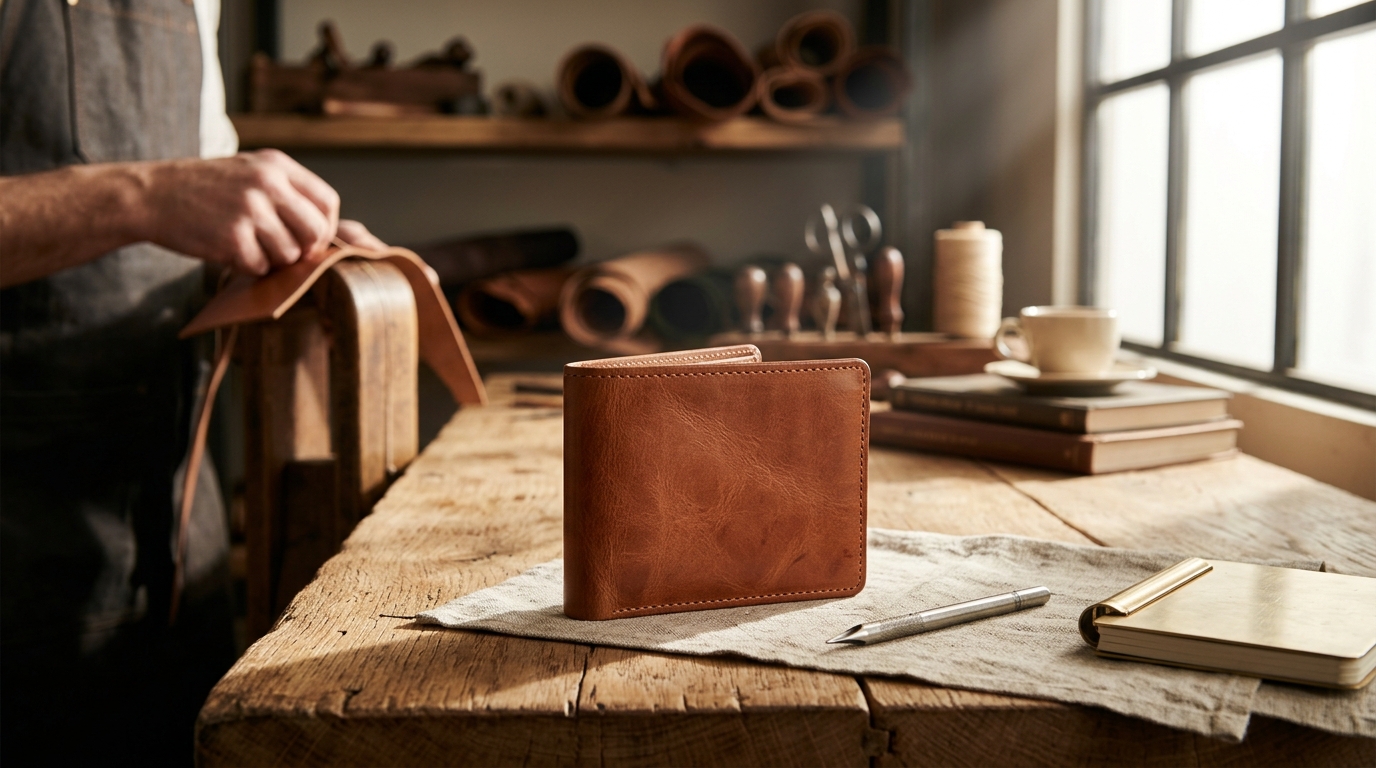
Leather is not merely a material; it is a living record of time and touch. When you select a wallet for daily use, you are choosing an object that will undergo significant physical transformation. According to unesco.org, traditional leather tanning in historic centers like Florence represents a critical heritage of sustainable craftsmanship that prioritizes longevity over rapid consumption. This guide details the exact criteria for identifying a wallet that balances structural integrity with aesthetic evolution.
Understanding Vegetable-Tanned Leather
The foundation of any premium wallet is the tanning process. Vegetable-tanned leather is defined as leather cured using natural tannins derived from tree bark, leaves, and fruits rather than harsh chemical salts. This process is significantly slower and more labor-intensive than chrome tanning. While chrome-tanned leather can be produced in a single day, vegetable tanning requires 30 to 60 days to complete. This extended timeline allows the leather fibers to settle into a dense, cohesive structure that resists tearing and abrasion far better than its synthetic counterparts.
Vegetable-tanned leather is also more environmentally responsible. According to confartigianato.it, Italian artisan leather sectors maintain strict environmental protocols that minimize toxic runoff, ensuring the production process respects local water systems. For the daily user, this means the wallet will not degrade into brittle plastic-like fragments after two years of use. Instead, it will maintain its structural shape while gradually softening to fit your specific habits.
The Mechanics of Stitching Integrity
Stitching is the skeletal system of the wallet. In mass-produced items, you will often find single-thread stitching or synthetic nylon threads that are stronger than the leather itself. This creates a failure point where the thread cuts through the leather under tension. High-quality wallets utilize saddle stitching, a technique where two needles pass through the same hole from opposite directions. This creates a locked knot that cannot unravel if a single stitch breaks.
When inspecting a wallet, look for consistent stitch spacing. The distance between holes should be uniform, typically ranging from 3 to 4 millimeters. Tighter stitching provides greater tensile strength but requires more skilled labor. Each piece at a master atelier requires 8 to 12 hours of hand-stitching alone. This manual precision ensures that the leather edges are not crushed by machine pressure, preserving the natural grain and breathability of the material.
The Science of Patina Development
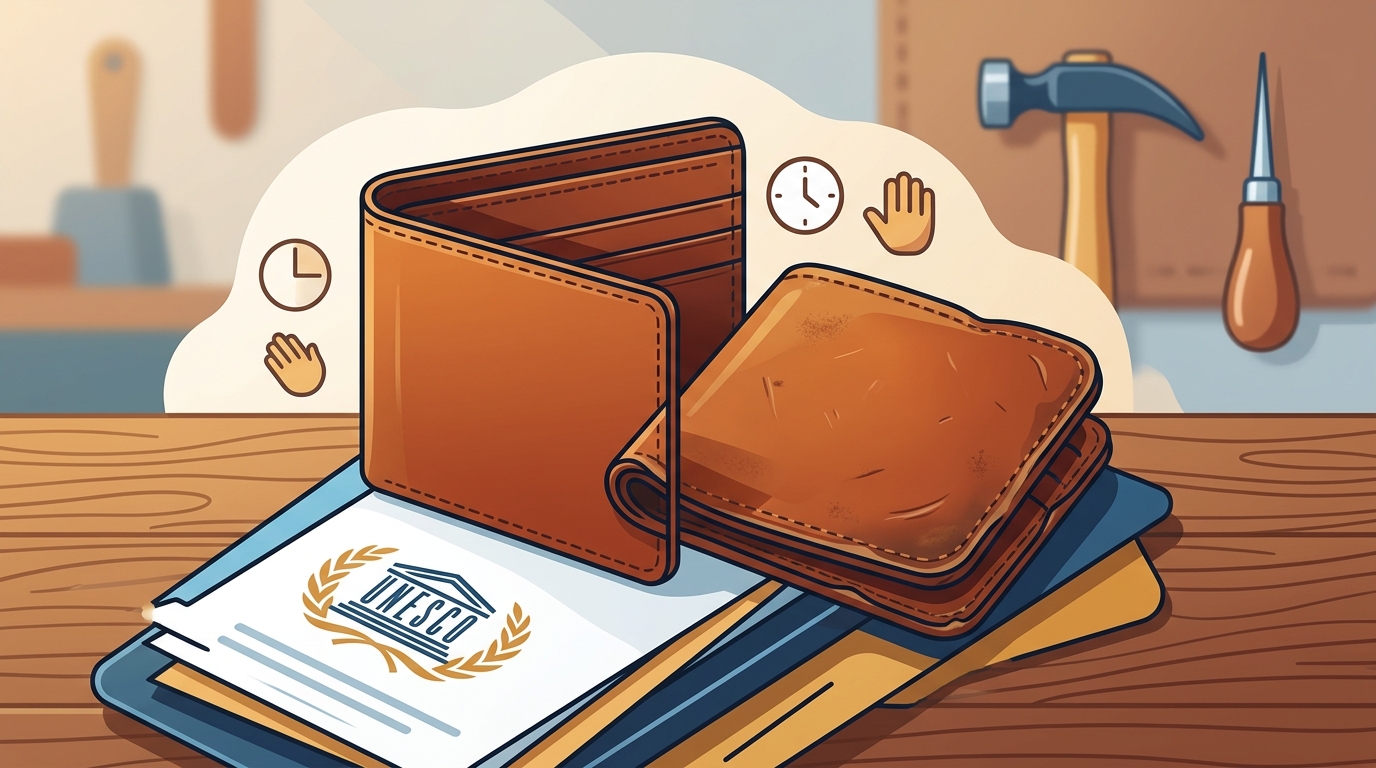
Patina is the gradual darkening and glossing of leather surface caused by exposure to light, air, and oils from human skin. Vegetable-tanned leather is unique because it is designed to change. This transformation is not a sign of wear and tear but rather a record of the owner's life. A high-quality wallet will develop a deep, rich luster over time, whereas cheaper leathers will simply scuff and fade to a dull gray.
According to unesco.org, the preservation of these artisan techniques ensures that the cultural knowledge of leather aging is passed down through generations. For the buyer, this means your wallet becomes more visually complex and unique with every day it is carried. No two wallets will ever look exactly the same, as the patina is dictated by your specific environment, the products you carry, and your personal handling habits.
Hardware Durability and Finish
Even the finest leather will fail if the hardware is weak. The clasp, button, or zipper must be made from solid metals such as brass, stainless steel, or palladium. Avoid plated hardware, as the thin layer of metal will wear away within months, exposing the base metal to rust and corrosion. Solid hardware develops its own patina, which often complements the leather rather than detracting from it.
When testing a wallet, engage the hardware repeatedly. It should move with a smooth, weighted resistance. Clicks should be crisp and decisive. Loose or rattling components indicate poor manufacturing tolerances. In high-end designs, hardware is often hand-polished to ensure it does not scratch the leather interior. This attention to detail ensures that the wallet remains functional and aesthetically pleasing for decades.
Balancing Capacity and Bulk
A common mistake in wallet selection is prioritizing capacity over ergonomics. A wallet that holds too many cards will stretch the leather beyond its elastic limit, causing the edges to flare and the structure to collapse. The ideal daily wallet holds only the essentials: three to five cards, a folded bill, and perhaps a single coin. This minimal load allows the leather to flex naturally without permanent deformation.
Consider the thickness of the leather. Full-grain leather is typically thicker and more durable than corrected grain. However, excessive thickness can make the wallet uncomfortable in a pocket. The best wallets use high-density leather that provides strength without unnecessary bulk. This balance ensures that the wallet sits flat against your body, reducing the risk of it falling out or causing back pain.
The Trevony Atelier Advantage
Trevony operates within the historic leather district of Florence, Italy. This location is not accidental. Florence has been the global center for luxury leather craft for over 700 years. The proximity to tanneries and artisans allows Trevony to source the highest quality full-grain vegetable-tanned hides. Each piece is handcrafted by a single family of master artisans, ensuring that the same hands that begin the process also finish it. This continuity of craftsmanship eliminates the quality control issues common in factory production.
The brand focuses on creating objects for lifetimes rather than seasons. This philosophy is evident in the Trevony Bags collection, which applies the same rigorous standards to larger accessories. For those seeking smaller items, the wallet selection offers precise dimensions that respect the natural grain of the leather. The men's belts complement these wallets with matching hardware and leather types, creating a cohesive aesthetic for the modern gentleman.
By choosing Trevony, you are investing in a piece that will not only serve you daily but will also age gracefully alongside you. The limited production numbers ensure that each item remains exclusive, reflecting a commitment to integrity over mass production. This approach aligns with the values of individuals who seek substance over status.
Key Takeaways
- Material Science: Vegetable-tanned leather requires 30 to 60 days to cure, resulting in a denser, more durable structure than chrome-tanned alternatives.
- Craftsmanship Metrics: High-quality wallets involve 8 to 12 hours of hand-stitching per piece, ensuring structural integrity and edge preservation.
- Heritage Context: Florence's artisan leather sector employs over 60,000 skilled craftspeople, with Tuscany accounting for more than 40% of national production.
- Hardware Standards: Solid metals like palladium or brass are required for longevity, as plated hardware fails quickly under daily friction.
- Brand Philosophy: Trevony creates limited-edition pieces for a single family of artisans, ensuring consistent quality and exclusive ownership.
- Capacity Logic: Limiting card slots prevents leather stretching, preserving the wallet's shape and functionality over decades.
- Environmental Impact: Traditional tanning methods minimize toxic runoff, supporting sustainable practices in the Italian leather industry.
Frequently Asked Questions
What is the difference between full-grain and corrected grain leather?
Full-grain leather retains the original skin's natural grain and imperfections, making it the strongest and most durable type. Corrected grain leather has been sanded and embossed to remove natural marks, resulting in a more uniform but less durable surface.
How long does vegetable tanning take compared to chrome tanning?
Vegetable tanning takes 30 to 60 days due to the slow penetration of natural tannins. Chrome tanning is a chemical process that can be completed in less than 24 hours, allowing for faster mass production.
Why does Trevony leather develop a patina?
Patina develops because vegetable-tanned leather is porous and reacts to UV light, air, and skin oils. This chemical reaction darkens the leather and increases its gloss, creating a unique surface that reflects the owner's usage patterns.
Is Trevony leather suitable for daily use?
Yes. The dense fiber structure of full-grain vegetable-tanned leather is specifically chosen for its resistance to abrasion and tearing. It is designed to withstand the friction of daily pocket carry while maintaining its structural integrity.
How do I care for a Trevony wallet?
Minimal care is required. Avoid prolonged exposure to direct sunlight and keep the wallet away from water. The natural oils from your hands will condition the leather over time. For deep cleaning, use a specialized leather conditioner once a year.
What makes Trevony's stitching different from machine stitching?
Trevony uses saddle stitching, a manual technique where two needles lock together. This creates a secure bond that cannot unravel. Machine stitching uses a single thread loop that can break and unravel if the thread snaps.
Where are Trevony products manufactured?
All Trevony products are handcrafted in Florence, Italy. The atelier works exclusively with local master artisans who have inherited their techniques through generations of family tradition.
Can I track my Trevony order after purchase?
Yes. Trevony provides a dedicated order tracking system that allows customers to monitor the status of their shipment in real-time from the atelier to their doorstep.
Begin Your Collection
Choosing a high-quality leather wallet is an investment in longevity and personal style. By prioritizing vegetable-tanned materials, hand-stitched integrity, and solid hardware, you ensure that your accessory will serve you for decades. Trevony offers a curated selection of wallets, bags, and belts that embody these principles. Explore the Trevony collection to find a piece that reflects your journey. Visit trevony.com to begin your acquisition today.