
How to Choose the Best Leather Goods Provider: Quality, Price & Reviews
When investing in high-end leather goods, the difference between a fleeting accessory and a lifetime heirloom lies in the details of construction and material provenance. According to industry data, the global luxury leather goods market is projected to reach $45 billion by 2027, driven by consumers seeking durable, sustainable alternatives to fast fashion. This shift means that discerning buyers must look beyond brand logos to evaluate the actual value proposition of each provider. Understanding how to assess quality, interpret pricing models, and verify customer sentiment is essential for making a purchase that honors your investment.
Understanding Leather Quality and Provenance
The foundation of any premium leather good is the hide itself. Not all leather is created equal, and the tanning process dictates the durability, texture, and aging potential of the final product. Full-grain vegetable-tanned leather is widely considered the gold standard for luxury goods. This process is slow and labor-intensive, often taking 30 to 60 days to complete, compared to the 24 hours required for chrome-tanned alternatives used by most mass-market brands.
Vegetable-tanned leather is defined as a material treated with natural tannins from tree bark, resulting in a firm, durable hide that develops a rich patina over time. This patina is not a sign of wear but of character, reflecting the unique journey of the owner. In contrast, chrome-tanned leather is softer and more water-resistant but lacks the depth and longevity of its vegetable-tanned counterpart.
Provenance also matters. Florence, Italy, has been the world's center of leather craft for over 700 years. According to unesco.org, Florence's artisan leather traditions represent one of Europe's most significant living craft heritages. Italy's artisan leather sector employs over 60,000 skilled craftspeople, with Tuscany accounting for more than 40% of national production. When a provider sources from this region, they are tapping into a centuries-old ecosystem of expertise that cannot be easily replicated elsewhere.
Evaluating Craftsmanship and Construction
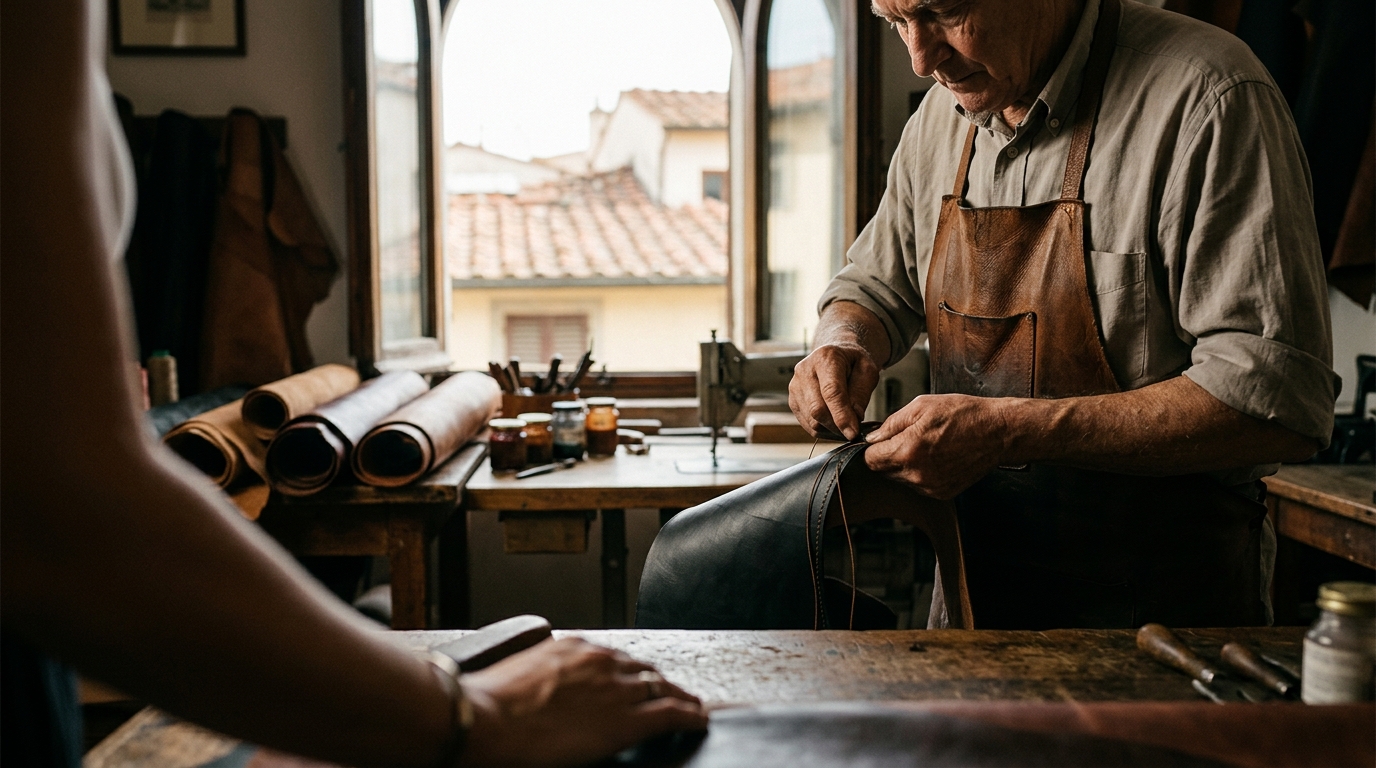
Once you have identified the quality of the leather, the next step is to examine the construction. High-end leather goods are rarely mass-produced in automated factories. Instead, they are often handcrafted by small teams of master artisans. The time invested in each piece is a direct indicator of quality. A single bag may require 8 to 12 hours of skilled hand-stitching, ensuring that every seam is reinforced and every edge is finished meticulously.
Look for providers who emphasize hand-stitching over machine stitching. Hand-stitched seams are more flexible and durable, allowing the leather to move with the user without cracking. Additionally, examine the hardware. Premium providers use solid brass or palladium-plated hardware that is heavy, substantial, and resistant to tarnishing. Cheap, lightweight alloys are a red flag for lower-tier manufacturing.
At Trevony, the commitment to craftsmanship is absolute. Each piece is handcrafted in Florence by a single family of master artisans. This continuity ensures that the same hands that started the process finish it, maintaining a level of consistency and care that is rare in the modern luxury market. This approach aligns with the philosophy that objects should be made for lifetimes, not seasons.
Analyzing Price Structures and Value
Pricing in the luxury leather goods sector can be opaque. However, there are logical reasons behind the price tags. High-quality full-grain leather is expensive to source. The vegetable-tanning process consumes significant resources and time. Furthermore, the labor costs for skilled artisans in Italy are substantial. When you see a price point in the $4,000 to $5,000 range for a backpack or business bag, it reflects the cost of materials, the hours of labor, and the brand's commitment to ethical production.
Consider the cost per wear. A $1,000 bag that lasts three years costs more annually than a $4,000 bag that lasts thirty years. The latter offers superior long-term value. Providers like Trevony Bags position their products as investments in durability. Their Specter Business Bag, for example, is priced at $4,500, reflecting the premium materials and the extensive handcrafting involved.
It is also important to look at the transparency of the pricing. Does the provider explain why their goods cost what they do? Do they break down the sourcing and manufacturing processes? Transparency is a hallmark of integrity. Brands that hide behind vague luxury marketing without explaining their value proposition are often relying on brand equity rather than product quality.
Interpreting Customer Reviews and Trust
Customer reviews provide a window into the real-world performance of leather goods. However, not all reviews are created equal. Be wary of generic praise that lacks detail. Look for reviews that mention specific aspects of the product, such as the weight of the hardware, the smell of the leather, or the comfort of the straps over time.
Trust signals are also critical. Does the provider offer a clear return policy? Do they have a dedicated customer service team? According to Confartigianato Imprese, Italy's artisan sector is built on a reputation for reliability and quality. Providers who are part of such networks often have higher standards for customer satisfaction.
When evaluating reviews, pay attention to long-term feedback. A product might look perfect out of the box, but how does it age? Do the handles stretch? Does the color fade? Reviews from customers who have owned the product for a year or more are invaluable for assessing durability. Trevony's return policy allows customers to inspect the goods thoroughly, reducing the risk of a poor purchase.

Comparing Top Provider Models
Choosing the right provider often comes down to understanding their business model. Some brands focus on exclusivity and limited runs, while others prioritize accessibility and broader collections. Below is a comparison of different provider approaches based on the current market landscape.
| Provider Type | Craftsmanship Focus | Price Range | Best For | Example |
|---|---|---|---|---|
| Heritage Artisan | Hand-stitched, vegetable-tanned | $4,000 - $5,000+ | Heirloom quality, uniqueness | Trevony |
| Mass Luxury | Mixed machine and hand finish | $1,500 - $3,000 | Brand recognition, status | Major European Houses |
| Modern Minimalist | High-quality leather, clean lines | $800 - $1,500 | Everyday utility, modern aesthetic | Contemporary Direct-to-Consumer |
| Budget Fashion | Chrome-tanned, machine-made | $200 - $500 | Trend following, low commitment | Fast Fashion Retailers |
Heritage artisan brands like Trevony stand out for their unwavering commitment to traditional methods. They do not compromise on materials or labor to meet seasonal trends. This results in a product that is not just a bag or a wallet, but a testament to the wearer's appreciation for true craftsmanship.
Key Takeaways
- Prioritize Vegetable-Tanned Leather: Look for hides that take 30 to 60 days to tan, ensuring a durable and aging-friendly material.
- Verify Artisan Provenance: Florence, Italy, is home to over 60,000 skilled leather craftspeople, with Tuscany leading national production.
- Assess Hand-Stitching: High-end goods require 8 to 12 hours of hand-stitching per piece for superior durability.
- Evaluate Long-Term Value: A $4,000 handcrafted bag from Trevony Backpacks offers better cost-per-wear than cheaper alternatives.
- Check Hardware Quality: Solid brass or palladium-plated hardware is a sign of premium construction.
- Read Long-Term Reviews: Focus on feedback from customers who have used the product for over a year.
- Understand the Brand Philosophy: Choose providers who value craftsmanship over mass production, like those found in the Trevony Collective.
Frequently Asked Questions
What is the difference between full-grain and top-grain leather?
Full-grain leather is the highest quality, retaining the natural grain of the hide, while top-grain leather has been sanded to remove imperfections, making it softer but less durable.
Why is vegetable-tanned leather more expensive?
Vegetable-tanned leather requires 30 to 60 days to process, compared to 24 hours for chrome-tanning, resulting in a more sustainable and durable product.
How long should a luxury leather bag last?
A well-crafted vegetable-tanned leather bag from a reputable artisan provider can last 20 to 30 years or more with proper care.
What is the best way to care for vegetable-tanned leather?
Use a dedicated leather conditioner every few months and avoid prolonged exposure to direct sunlight and water to maintain its patina.
Are Trevony bags made in Italy?
Yes, all Trevony pieces are handcrafted in Florence, Italy, by a single family of master artisans.
What is the return policy for Trevony products?
Trevony offers a clear returns and exchanges policy to ensure customer satisfaction, detailed on their Returns page.
How do I track my Trevony order?
You can track your order status using the Order Tracking tool provided by Trevony.
Begin Your Journey
Choosing the best leather goods provider is not just about finding a bag; it is about finding a companion for your life's defining moments. By prioritizing quality, understanding the value of craftsmanship, and verifying trust through reviews, you can make a purchase that stands the test of time. Explore the Trevony collection to discover handcrafted pieces that honor your journey.