
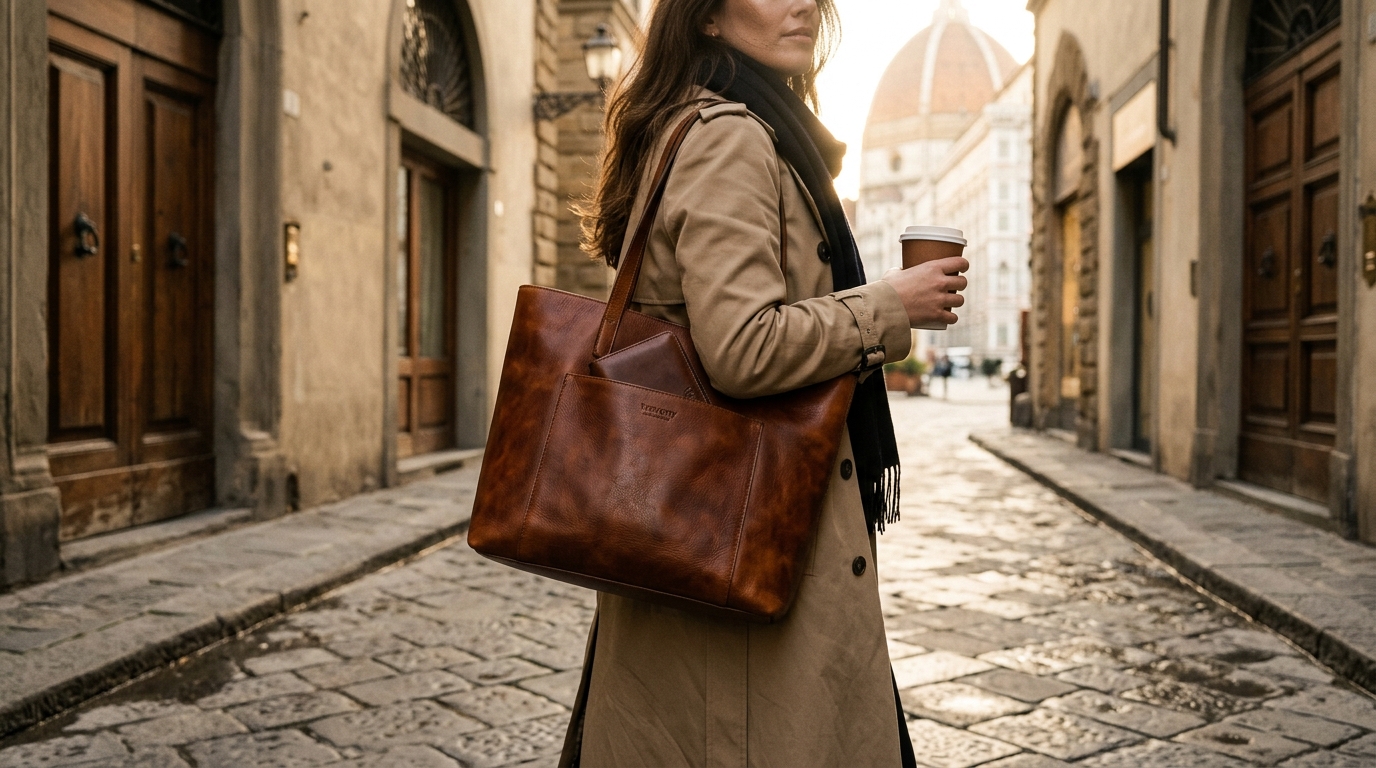
What Are the Best Italian Leather Handbags for Daily Use?
An everyday handbag needs to survive commutes, meetings, weekend errands, and the occasional downpour — all while looking polished enough to wear with confidence. Italian leather handbags have earned a reputation for meeting every one of those demands, combining centuries of artisan expertise with materials that actually improve over time. This guide breaks down exactly what to look for, why material and construction choices matter, and how to identify a bag that will serve you well for a decade or more.
Why Italian Leather Stands Apart for Everyday Handbags
Italy's leather-goods sector is not a boutique niche — it is a powerhouse industry. The Italian leather goods market was valued at over USD 9.1 billion in 2022, centered largely in Tuscany, where heritage techniques blend with modern innovation. That economic scale exists because buyers around the world recognise that Italian production delivers a measurable quality advantage.
The advantage starts with raw materials. The best Italian workshops source full-grain hides from European tanneries where cattle benefit from temperate climates and regulated farming practices. European cattle hides are among the most sought-after raw stock in the world thanks to the animals' diet and lifestyle, which produces cleaner, tighter grain patterns that resist cracking under daily stress.
Beyond materials, the Made in Italy designation signals a specific craft tradition. Italian leather bags are known for being handmade using traditional artisan techniques, resulting in products renowned for their durability, craftsmanship, and aesthetic appeal. Each bag is meticulously crafted by skilled artisans with careful attention to detail throughout the manufacturing process. That level of human involvement is precisely what separates a daily bag that lasts fifteen years from one that falls apart in two.
Vegetable Tanning: The Gold Standard for Daily Bags
Not all leather tanning methods are equal, and the distinction matters enormously for a bag you plan to carry every day.
What Is Vegetable Tanning?
Vegetable tanning is one of the oldest methods of processing leather, using natural tannins extracted from tree bark, leaves, and fruits — such as chestnut and quebracho wood — to cure raw hides. The process is slow and deliberate, often taking up to 40 days to complete, compared with chrome tanning that can be finished in a single day.
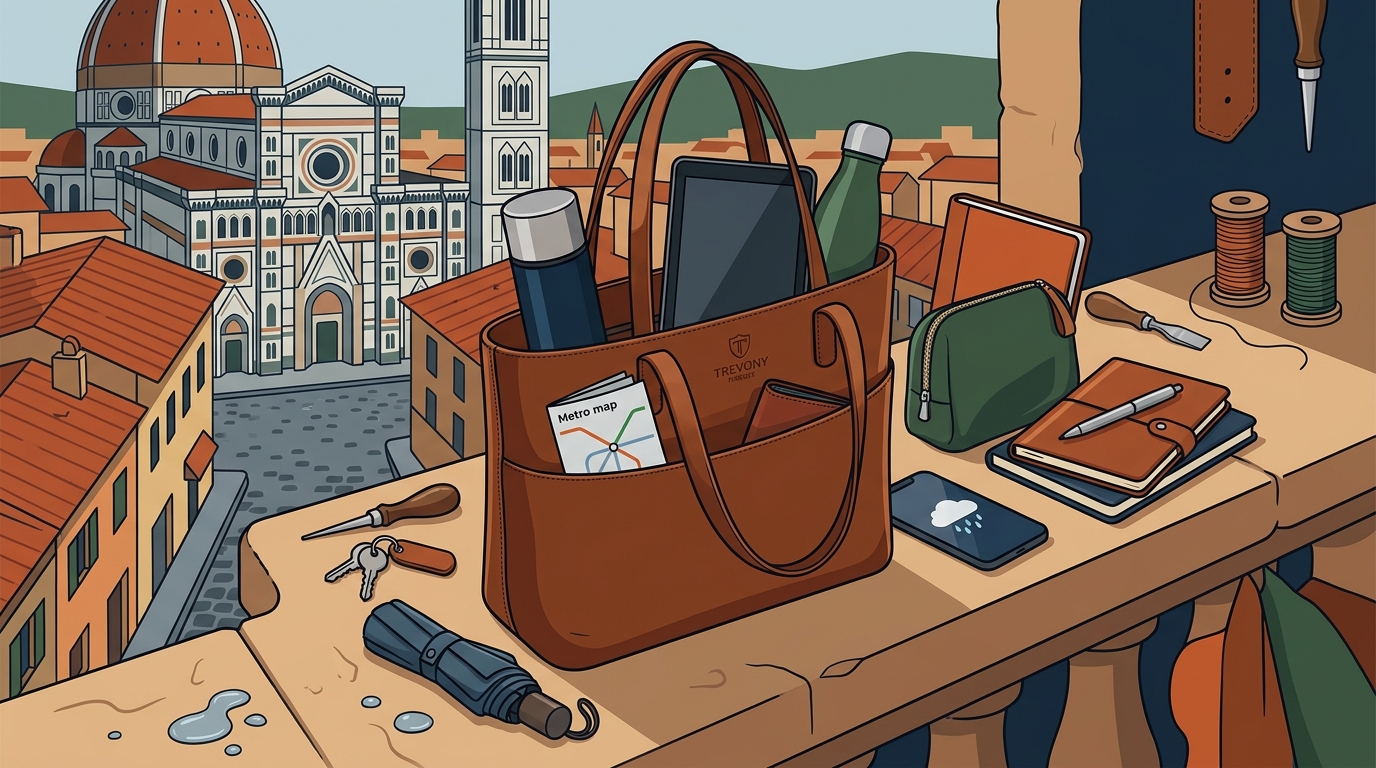
Why It Matters for Daily Use
- Durability: Vegetable-tanned leather is stronger and less prone to damage than chrome-tanned alternatives because it is made with natural materials. Many owners report using quality vegetable-tanned bags for 15–20 years, far exceeding chrome-tanned lifespans.
- Patina: Over time, vegetable-tanned leather develops a beautiful patina — a rich, warm shift in colour and sheen caused by sunlight, natural skin oils, and daily handling. Each bag becomes genuinely one-of-a-kind.
- Environmental responsibility: Unlike chrome tanning, which relies on chromium sulfate and other chemicals, vegetable tanning uses organic compounds and produces less pollution, making it the more sustainable option.
- Health: There are no harmful heavy metals in vegetable-tanned leather, an important consideration for an item that contacts your skin for hours daily.
At Trevony, every handbag is crafted from full-grain, vegetable-tanned hides sourced from European tanneries — the same standard used by the finest Florentine ateliers for generations.
Five Quality Markers to Check Before You Buy
Knowing the right tanning method is only the first step. Here are five tangible details that separate an heirloom-quality daily bag from a well-marketed mediocre one.
Edge Finishing
Look at the edges of leather straps and panels. They should be smoothly painted or burnished to a clean finish, never left raw or frayed. Hand-painted edges — a hallmark of Florentine production — give each bag its unique character while sealing the leather against moisture wicking.
Stitching Consistency
Stitching is the most visible proof of quality and attention to detail, as well as a guarantee of resistance and longevity over time. On a hand-stitched bag, each stitch locks independently; if one thread breaks, the rest hold firm. Machine-lock stitching, by contrast, can unravel from a single point of failure.
Hardware Quality
The hardware on the best Italian leather bags is meticulously chosen. High-quality zippers, clasps, and buckles made from durable metals such as stainless steel ensure smooth operation and long-term strength. Cheap hardware is often the first thing to fail on a daily-use bag — and the hardest to replace.
Interior Finishing
Examine the bag's interior as carefully as its exterior. Quality makers line their pieces with premium materials and finish seams invisibly, demonstrating commitment to excellence in details most buyers never see. The lining protects your belongings and prevents the interior leather from stretching unevenly.
Grain Integrity
Full-grain leather retains the hide's complete outer surface, including natural markings. These variations are not flaws — they are proof that no corrective coating has been applied to mask inferior material. A bag made of 100% full-grain leather creates a deep, rich colour and a unique texture that only improves with wear.
Best Silhouettes for Everyday Carry
The right shape depends on what your day looks like. Here is a practical framework:
| Silhouette | Best For | Capacity | Hands-Free? |
|---|---|---|---|
| Structured top-handle | Office, client meetings, polished errands | Medium — laptop sleeve, wallet, essentials | With optional shoulder strap |
| Crossbody | Commuting, travel, active days | Compact — phone, cards, keys | Yes |
| Tote | Work-to-weekend, parents on the go | Large — laptop, water bottle, change of shoes | Shoulder carry |
| Bucket bag | Casual outings, creative professions | Medium — flexible interior | With crossbody strap |
For meetings and professional settings, choose clean lines and a balanced proportion that reads confident and intentional. For commuting or active days, prioritise hands-free solutions like adjustable crossbody straps. Trevony designs each silhouette with convertible carry options so a single bag adapts to multiple scenarios within the same day.
How Trevony Builds a Daily-Use Handbag
Understanding generic quality markers is useful, but specifics matter. Here is what happens inside the Trevony atelier in Florence:
- Atelier heritage: Trevony partners with a family-run Florentine workshop that has worked leather for over seventy years. That continuity means techniques are not learned from a manual — they are handed down at the workbench.
- Hide selection: Every hide is sourced from European tanneries that practise vegetable tanning. Each piece of leather is inspected by hand and only the finest sections are selected — a process that rejects a significant portion of each hide to guarantee uniform grain and thickness.
- Hand-cutting: Patterns are cut by hand with precision, paying close attention to grain direction and texture to maximise natural beauty and structural strength in high-stress areas like handles and corners.
- Hand-stitching: Rather than relying on industrial sewing machines, Trevony artisans hand-stitch critical stress points. This means each stitch is independently locked, dramatically increasing the bag's lifespan under daily use.
- Hand-finishing: Edges are burnished and painted by hand — sometimes requiring multiple coats and drying stages — to create a smooth, sealed edge that resists moisture and abrasion.
- Low-volume production: Trevony operates on a low-volume artisan model. Small-batch production ensures each handbag receives meticulous attention, from first cut to final quality inspection.
The result is a bag designed not for a season, but for a lifetime — a piece that develops a personal patina, softens to your hand, and tells the story of everywhere you have carried it.
The Cost-Per-Wear Argument
Premium Italian handbags involve a higher upfront investment, but the math favours longevity. A handbag used daily for 15 years can cost as little as a few cents per day, while a trendy piece discarded after two seasons costs significantly more on a per-use basis. Quality becomes genuinely economical through longevity.
Beyond pure economics, a well-made Italian bag holds resale value and — in the case of vegetable-tanned leather — actually becomes more attractive with age. The patina that develops is impossible to replicate artificially, which is why vintage Italian leather pieces command strong secondary-market prices.
An investment in a Made in Italy handbag is an investment in longevity — a piece that will not only endure daily use but also develop a richer character and patina over decades, unlike fast-fashion items designed to be replaced.
Daily-Use Care Routine for Your Italian Leather Handbag
A vegetable-tanned leather bag requires minimal but consistent care to look its best over the years:
- Weekly: Wipe the exterior with a soft, dry cloth to remove surface dust and prevent grit from scratching the grain.
- Monthly: Inspect hardware for tarnish or looseness. Tighten any screws gently with the appropriate tool.
- Every 3–6 months: Apply a natural leather conditioner — free of petroleum or silicone — in thin, circular motions. Allow it to absorb overnight, then buff with a clean cloth. Conditioning maintains suppleness and prevents cracks.
- As needed: If the bag gets wet, blot moisture immediately with a soft cloth and let it air-dry naturally. Never use direct heat, which can cause cracking.
- Storage: When not in use, store the bag in a breathable cotton dust bag away from direct sunlight and moisture. Stuff the interior with acid-free tissue to maintain its shape.
With proper care, your Trevony handbag will not only last for years but grow more beautiful and meaningful over time — a true reflection of the Florentine craft tradition that created it.
Key Takeaways
- The best daily-use handbags start with full-grain, vegetable-tanned Italian leather — it is stronger, develops a unique patina, and is more sustainable than chrome-tanned alternatives.
- Check five quality markers before purchasing: edge finishing, stitch consistency, hardware durability, interior finishing, and grain integrity.
- Choose your silhouette based on your actual daily activities — a convertible design gives the most versatility.
- Think in cost-per-wear, not sticker price. A well-made Italian bag used daily for 15 years is one of the most economical accessories you can own.
- Trevony handbags are handcrafted in a family-run Florentine atelier using vegetable-tanned European hides, hand-cut, hand-stitched, and hand-finished for heirloom-quality construction.
- Minimal, consistent care — conditioning every few months and proper storage — keeps a vegetable-tanned bag looking better with every year of use.
Frequently Asked Questions
What makes Italian leather handbags better for daily use than other options?
Italian leather handbags — particularly those made from full-grain, vegetable-tanned hides — combine superior raw materials with centuries of artisan technique. The leather is denser, develops a protective patina, and is hand-finished at stress points, making it far more resilient under everyday wear than mass-produced alternatives.
How long does a quality Italian leather handbag last with daily use?
Many owners report using quality vegetable-tanned leather bags for 15–20 years with proper care. Some heirloom pieces last considerably longer. The key factors are full-grain leather, hand-stitched construction, and regular conditioning every three to six months.
Is vegetable-tanned leather more expensive than chrome-tanned leather?
Yes, vegetable-tanned pieces typically cost 20–40% more due to the extended processing time — up to 40 days versus a single day for chrome tanning. However, the superior longevity and developing patina provide greater value over decades of daily use.
What is the best way to care for a vegetable-tanned leather handbag?
Wipe weekly with a dry cloth, condition every 3–6 months with a natural leather cream free of petroleum or silicone, blot water immediately if the bag gets wet, and store in a breathable cotton bag away from direct sunlight. Avoid heat sources when drying, as this can crack the leather.
What silhouette is best for everyday carry?
It depends on your routine. A structured top-handle works best for office settings, a crossbody is ideal for commuting and active days, and a tote suits anyone who needs to carry a laptop or extra items. Convertible designs that offer multiple carry options provide the greatest everyday versatility.
Why does Trevony use vegetable-tanned leather?
Trevony selects vegetable-tanned, full-grain hides from European tanneries because this method produces leather that is stronger, free of harmful chemicals, environmentally responsible, and develops a beautiful patina with daily use — aligning with the brand's commitment to heirloom-quality, Made-in-Italy craftsmanship.