

Published by Trevony Editorial
The Leather Goods Buyer's Journey: A Step-by-Step Method to Evaluate Quality, Price, and Reviews Before You Invest
Luxury leather goods are meant to last decades—but only if you choose the right provider. This step-by-step tutorial walks you through every stage of the buying process, from your first Google search to unboxing day, so you can confidently evaluate material quality, pricing integrity, and real customer feedback before spending a single dollar.
Step 1 — Define What "Quality" Actually Means in Leather
Before you compare brands, you need a working definition of quality. In leather goods, quality is determined by three interlinked factors: hide grade, tanning method, and construction technique. Without clarity on these, you will be swayed by marketing language that sounds impressive but means very little.
Understand Leather Grades
Leather is not a single material—it is a hierarchy. There are four primary grades you will encounter, and the differences are dramatic. Full-grain leather is the top of the hide where the fibers are densest and strongest. It retains the natural surface, including subtle markings that prove authenticity. Top-grain leather has had its surface sanded to remove imperfections, making it smoother but somewhat less durable. Below these sit genuine leather (a misleading name for lower splits) and bonded leather, which is essentially ground-up scraps glued together.
When evaluating any provider, look for explicit mention of the grade on product pages. Brands that simply say \"genuine leather\" or \"real leather\" without specifying the grade may be using lower-quality material. As one leather expert explains, poor-quality leather is often heavily painted and tends to crack with age, actually shortening the product's lifespan rather than extending it.
Learn the Tanning Difference
The tanning method transforms raw hide into usable leather and profoundly affects how a product ages. Vegetable tanning uses natural tannins from bark and plants, producing structured, patina-friendly leather ideal for bags, belts, and wallets. It takes significantly longer than chemical alternatives—the vegetable tanning process can take up to six weeks in tanning pits, with hides carefully monitored for acidity and tannin strength. Chrome tanning, by contrast, is faster and produces softer leather, but the resulting material does not develop the same rich patina over time.
For items you intend to use daily over many years, vegetable-tanned, full-grain leather is the gold standard. At Trevony, every piece uses full-grain, vegetable-tanned hides sourced from European tanneries—a deliberate choice that ensures each bag and accessory develops a unique character with use rather than deteriorating.
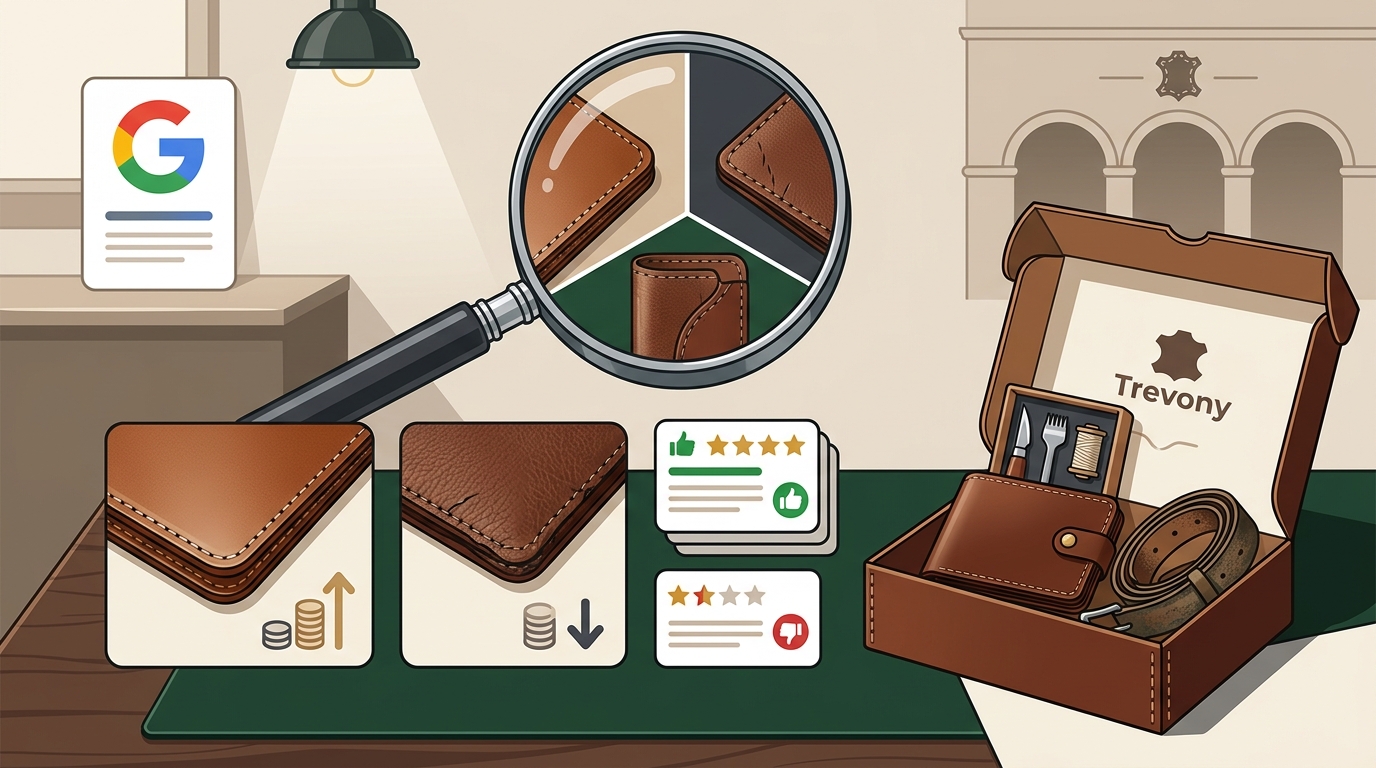
Step 2 — Build a Short List Using Provenance Signals
Once you understand the material hierarchy, you can start filtering brands. Provenance—where and how a product is made—is one of the most reliable quality signals in leather goods. Here is what to look for on a brand's website or product listing:
- Named tannery or tanning region. Brands confident in their materials will reference where their hides come from. Italian tanneries, particularly those in Tuscany, have centuries of vegetable-tanning expertise. Many high-end Italian tanneries specialize in full-grain leather.
- Specific construction details. Look for terms like hand-cut, hand-stitched, and hand-finished. Luxury brands invest in solid-metal hardware—gold-plated or palladium finishes—that resists tarnish, along with burnished edge painting and hand-finished interiors that reflect hours of artisan labor.
- Production scale transparency. A growing number of niche and artisanal brands are earning recognition for their obsessive focus on leather quality. These smaller producers often prioritize traditional techniques and direct customer relationships, offering a genuine alternative to mass-market luxury.
- Certifications and audits. Third-party certifications for fair labor, environmental sustainability, and material sourcing add a layer of verification that marketing copy alone cannot provide.
Trevony partners with a single family-run Florentine atelier that has worked leather for over seventy years—an arrangement that allows complete control over every production step, from hand-cutting hides to finishing edges. When you see this level of specificity on a brand's site, it is a strong positive signal.
Step 3 — Decode the Price Tag
Price is the dimension most buyers focus on first, but it is actually best evaluated after you understand materials and provenance. A price tag means nothing without context.
Why Vegetable-Tanned Goods Cost More
Vegetable tanning takes 30 to 60 times longer to produce than chrome-tanned leather, requires skilled craftspeople, and uses more costly natural tannins. The premium reflects real additional production cost, not merely brand positioning. When a provider charges significantly more for vegetable-tanned, full-grain products, that price often corresponds to genuine material and labor investments.
The Cost-Per-Year Calculation
Instead of comparing sticker prices, divide the price by expected lifespan. A well-cared-for full-grain vegetable-tanned product can last 20 or more years of regular use, often becoming more attractive with age rather than wearing out. A $600 bag that lasts 20 years costs $30 per year. A $150 bag made from bonded leather that cracks after two years costs $75 per year—two and a half times more.
Watch for Hidden Costs
- Repairs: Does the brand offer repair services or a warranty? Some premium brands even provide spare hardware parts.
- Resale value: Entry-level luxury bags tend to depreciate faster, stabilizing around 60–80 percent of retail after two years, while heritage and artisan pieces hold value better.
- Shipping and duties: For international purchases, factor in customs fees. Trevony ships from Italy to the United States with transparent pricing—no surprise surcharges at delivery.
Step 4 — Read Reviews Like an Investigator
Customer reviews are the closest thing to handling a product before you buy it online. But not all reviews are equally useful. Here is a method for extracting real insight from review sections.
Where to Look
Check multiple sources: the brand's own product pages, independent platforms like Trustpilot, Google Reviews, and social media. A BrightLocal survey found that 84 percent of consumers trust online reviews as much as personal recommendations. For luxury brands specifically, verified testimonials act as powerful social proof that signals quality and reliability to first-time buyers.
What to Read For
Ignore the star rating headline and focus on the content of mid-range reviews (three and four stars). These tend to be the most balanced. Look for recurring mentions of:
- Leather feel and smell: Reviewers who describe a warm, woody aroma and a dense, substantial feel are likely handling genuine vegetable-tanned leather. Vegetable-tanned leather gives off an intense, warm, unmistakable aroma—woody or sweet-spicy depending on the tannins used.
- Aging behavior: Positive aging language—\"developed a beautiful patina,\" \"looks better after six months\"—is a hallmark of quality. Products that crack, peel, or fade quickly are red flags.
- Customer service response: How a brand handles negative reviews is often more revealing than the positive ones. Quick, transparent replies that offer solutions signal a company that stands behind its products.
Spot Unreliable Reviews
Be cautious of review profiles that only have one review, clusters of five-star reviews posted on the same day, or reviews that read like marketing copy. False certifications and overstated craftsmanship claims can put a brand's credibility at serious risk—and the same is true of fabricated reviews.
Step 5 — Request or Inspect a Sample
If the purchase is significant—say, a handbag or briefcase over $300—consider requesting a leather swatch or visiting a stockist. Physical inspection remains the most reliable quality test.
The 60-Second Hands-On Test
- Smell it. Genuine vegetable-tanned leather has a rich, earthy scent. Chemically treated leather smells more neutral or slightly synthetic.
- Press it. Full-grain leather will wrinkle slightly under thumb pressure and spring back. Corrected or bonded leather feels plasticky and doesn't recover naturally.
- Check the edge. Cut edges on quality goods are burnished or painted cleanly, not rough or fraying. Hand-finished edges indicate hours of artisan labor.
- Examine the grain. Full-grain leather shows small variations in color and grain—signs of true craftsmanship, not defects. Perfectly uniform surfaces often indicate the top layer has been sanded away.
- Bend the stitching. Stitches should be even and tight. Hand-stitching (like a saddle stitch) uses two needles and creates a stronger seam than machine lock-stitching.
Every Trevony piece is hand-stitched and hand-finished in Florence, and the natural markings in the full-grain hide are considered part of its character—not imperfections to be hidden.
Step 6 — Make the Final Decision
At this point you should have a short list of two or three providers, each evaluated on materials, price-per-year, and verified reviews. Here is a simple decision matrix to finalize your choice:
| Criterion | Weight | What to Score |
|---|---|---|
| Hide Grade & Tanning | 35% | Full-grain + vegetable-tanned = highest score |
| Construction & Provenance | 25% | Hand-cut, hand-stitched, named atelier |
| Cost Per Year of Use | 20% | Lower cost per year = higher score |
| Review Sentiment & Service | 15% | Consistent quality mentions; responsive support |
| Sustainability & Ethics | 5% | Certified sourcing, transparent labor practices |
A 2024 McKinsey survey found that 65 percent of affluent consumers now consider sustainability a deciding factor in high-end purchases—so even that 5 percent weighting can be a tiebreaker between otherwise comparable options.
When Trevony is measured against this matrix, the results speak for themselves: full-grain vegetable-tanned European hides, hand-crafted construction in a seventy-year-old Florentine workshop, transparent pricing with no hidden markups, and a growing body of customer testimonials praising the leather's patina development and heirloom quality.
Key Takeaways
- Start with materials, not price. Full-grain, vegetable-tanned leather is the benchmark for longevity and beauty in leather goods.
- Provenance matters. Named tanneries, specific construction details, and low-volume artisan production are stronger quality signals than brand fame alone.
- Calculate cost per year, not just sticker price. A durable piece that lasts two decades is cheaper per year than a fast-fashion alternative that cracks in two.
- Read reviews strategically. Focus on mid-range reviews, aging language, and how the brand responds to criticism.
- Use your senses. A 60-second hands-on test—smell, press, check edges, examine grain, bend stitching—reveals more than any product description.
- Weight your decision. Use a structured matrix so emotion does not override evidence.
Frequently Asked Questions
What is the most important factor when choosing a leather goods provider?
Material quality—specifically the leather grade and tanning method—is the single most important factor. Full-grain, vegetable-tanned leather is the most durable and develops the best patina over time. A provider that clearly states these details on their product pages is far more trustworthy than one that uses vague terms like \"genuine leather\" or \"real leather.\"
How can I tell if a leather bag is genuinely high quality without seeing it in person?
Look for three things on the brand's website: explicit mention of the leather grade (full-grain or top-grain), the tanning method (vegetable-tanned is the premium standard), and named provenance (a specific tannery or region like Tuscany). Then cross-reference with independent customer reviews that mention how the product ages, smells, and feels over months of use.
Why is vegetable-tanned leather more expensive than chrome-tanned leather?
Vegetable tanning takes 30 to 60 times longer than chrome tanning, requires skilled craftspeople, and uses more costly natural tannins extracted from bark and plants. The higher price reflects genuine production costs—not just positioning. Over time, vegetable-tanned pieces often prove more economical because they can last 20 or more years.
Are customer reviews reliable for evaluating luxury leather goods?
Yes, when read critically. Research shows that 84 percent of consumers trust online reviews as much as personal recommendations. Focus on verified reviews on independent platforms, pay attention to mid-range ratings for balanced perspectives, and look for specific details about leather quality and aging rather than generic praise.
What makes Trevony different from other luxury leather goods brands?
Trevony partners with a single family-run Florentine atelier with over seventy years of leather-working heritage. Every piece is hand-cut, hand-stitched, and hand-finished from full-grain, vegetable-tanned European hides. The brand emphasizes low-volume artisan production and timeless designs that develop a rich patina with daily use—an approach that prioritizes heirloom quality over seasonal trends.
How do I calculate the true value of a leather bag?
Divide the purchase price by the expected years of use. A $600 full-grain bag lasting 20 years costs $30 per year. Compare that to a $150 bonded-leather bag that deteriorates in two years at $75 per year. Also factor in repair availability, warranty terms, and potential resale value to get the complete picture.