
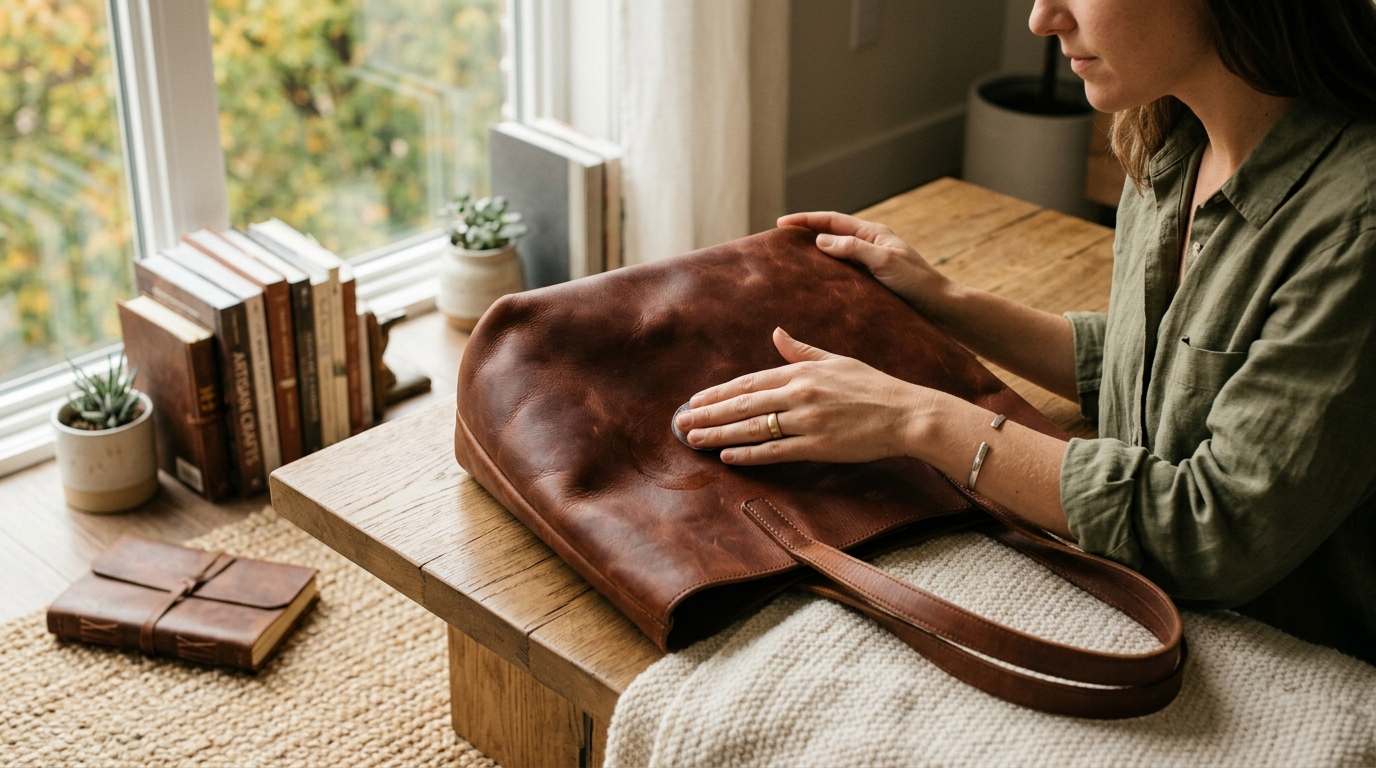
A beautifully hand-stitched leather wallet, tote, or belt deserves better than the back of a closet shelf. Cracking — that dreaded network of fine lines that ruins a once-flawless surface — almost always traces back to how and where leather is stored rather than a flaw in the hide itself. This guide approaches the problem seasonally, giving you climate-specific actions for every month of the year so your artisan leather pieces stay supple for a lifetime.
What Actually Causes Leather to Crack?
Before diving into storage strategies, it helps to understand the mechanism. Leather is composed of collagen fibres that rely on a balance of internal moisture and natural oils to remain flexible. Two forces disrupt that balance:
- Dehydration — Dry air, radiant heat, and UV exposure strip oils from the fibres, making them rigid and prone to fracture.
- Excess moisture — Overly humid conditions saturate the fibres and invite mould, which weakens the grain surface and can lead to irreversible staining.
Temperature swings compound both problems. When conditions fluctuate rapidly, leather expands and contracts, accelerating surface cracking. The goal of any storage plan is to maintain stability.
The Numbers That Matter: Temperature & Humidity Benchmarks
Multiple leather-industry sources converge on a narrow comfort zone. Store every handcrafted piece within these ranges and you eliminate most cracking risk:
| Parameter | Ideal Range | Danger Zone |
|---|---|---|
| Temperature | 60 °F – 72 °F (15 °C – 22 °C) | Above 80 °F or below 50 °F |
| Relative Humidity | 45 % – 60 % | Below 35 % or above 70 % |
At humidity levels below 35 %, leather becomes dry and brittle and can crack when handled. On the other end, when humidity exceeds 70 % and temperatures rise above 25 °C (77 °F), mould can begin forming on leather surfaces within 48–72 hours. An inexpensive digital hygrometer — available for roughly ten dollars — lets you monitor conditions in real time and react before damage sets in.
Seasonal Storage Playbook
Spring (Transitional Humidity)
Spring brings rising moisture in many regions. This is the ideal time to inspect every stored piece for early signs of mould or musty odour. Open closet doors for airflow, and if you live in a coastal or tropical climate, run a small dehumidifier in your wardrobe or storage room to keep humidity below 60 %. Wipe each item gently with a dry microfibre cloth to remove surface dust accumulated over winter.
Summer (Heat & UV Threat)
Summer is the most dangerous season for leather. Direct sunlight degrades the natural oils in leather, leading to discolouration, drying, and eventual cracking. Move leather goods away from windows, and never leave a bag on a car seat in full sun. In humid-summer climates like Southeast Asia (where ambient humidity can exceed 80 %), silica gel packets placed inside dust bags provide a moisture buffer between conditioning sessions.
Autumn (Ideal Conditioning Window)
Cooler, moderate-humidity autumn air makes this the perfect season for a thorough conditioning treatment. Clean first with a pH-balanced leather cleaner, let the piece dry completely, then apply a thin layer of quality leather conditioner. This replenishes oils before the dry winter months hit, creating a protective reservoir inside the fibres. When leather is stored, conditioner should ideally be reapplied every three months to maintain adequate protection.
Winter (Dry-Air Danger)
Central heating pulls indoor humidity well below the safe 45 % floor. Consider a room humidifier, or at minimum place open containers of water near radiators to raise ambient moisture. Never store leather goods near heaters or forced-air vents. In extremely dry conditions, leather can lose moisture rapidly and crack, so using a humidifier during winter is strongly advisable.
Item-by-Item Storage Techniques
Leather Bags & Totes
- Empty completely — Remove all contents, including receipts and small objects that can leave pressure marks or damage the lining.
- Stuff for shape — Fill the interior with acid-free tissue paper or a clean cotton pillowcase. Avoid magazine pages and newspaper, as ink can transfer to the lining.
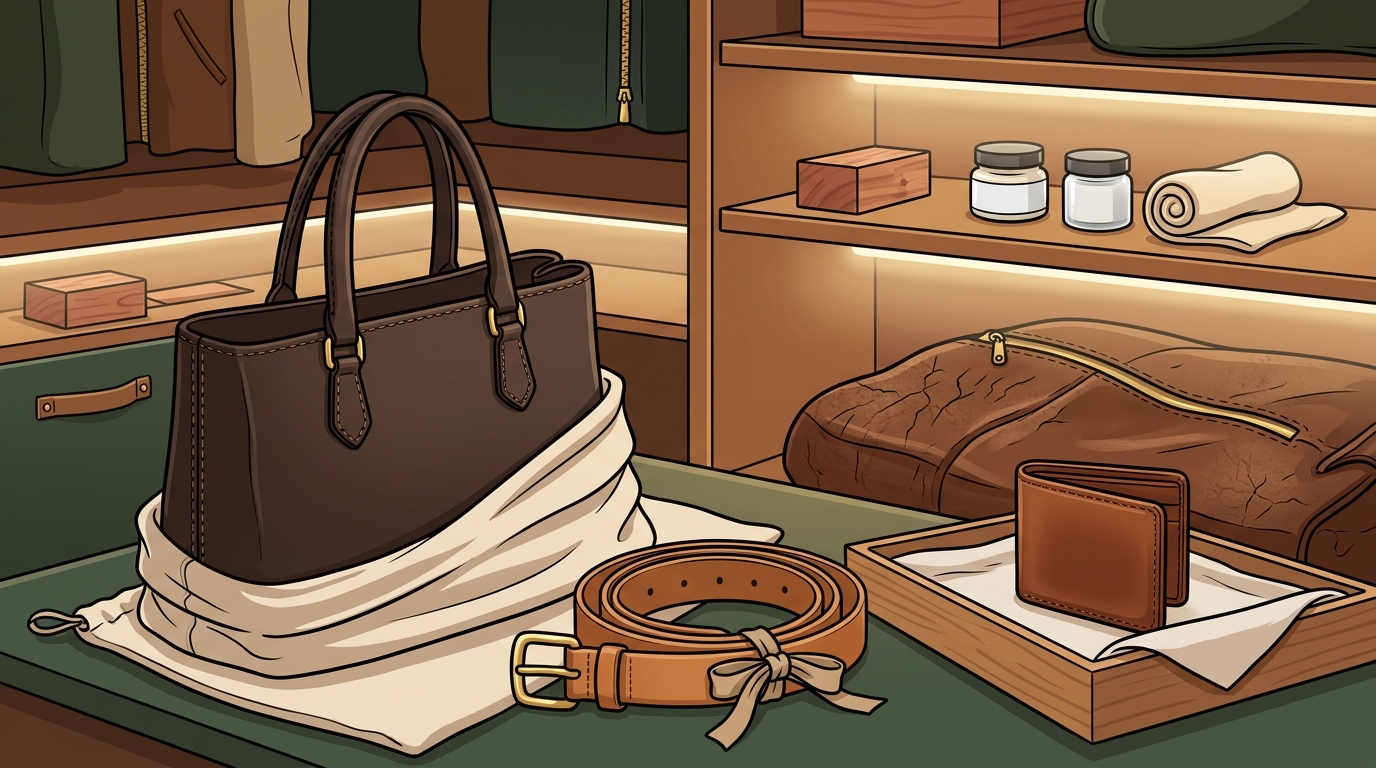
- Use a breathable dust bag — Never wrap leather in plastic. Plastic traps moisture and prevents the leather from breathing, which can cause mould to form. A cotton or flannel dust bag is ideal.
- Stand upright on a shelf — Laying bags flat under other items creates permanent creases. Keep coloured bags separated to avoid dye transfer.
Leather Belts
Avoid bending belts into tight coils, as this can lead to creases and cracks. Vertical hanging on a wide belt hanger is the best option. If you must store belts flat, lay them straight in a drawer or storage box. Never hang a belt by its buckle — that causes uneven stretching of the leather over time.
Leather Wallets & Small Accessories
Wallets rarely crack from environmental exposure alone — the constant handling keeps oils distributed. Problems arise during extended storage. Wrap each wallet individually in acid-free tissue, place it inside a breathable pouch, and store in a drawer away from direct light. Apply a light touch of conditioner before putting it away for more than a month.
Leather Jackets & Outerwear
Use a wide, padded hanger that follows the natural shoulder contour — wire hangers distort the leather. Store the jacket in a breathable garment bag, never a dry-cleaning plastic bag. Take the jacket out every few months to inspect it and allow it to breathe briefly. Avoid storing leather in damp basements, hot attics, or garages, where temperature and humidity fluctuate dramatically.
Five Storage Mistakes That Guarantee Cracking
- Storing on bare cement floors — Concrete acts as a moisture magnet, releasing dampness that migrates upward into leather. Always elevate items on shelving.
- Sealing in plastic bins — Without airflow, trapped humidity breeds mould and the leather cannot off-gas naturally.
- Skipping the pre-storage clean — Dirt and body oils left on the surface break down leather fibres over time, accelerating cracks.
- Ignoring metal contact — Tanning agents in both vegetable-tanned and chrome-tanned leather react with metals like iron, brass, and copper, leaving permanent stains that weaken the grain.
- Over-conditioning — More is not better. Excessive conditioner can make leather overly soft and even tacky, attracting dust and eventually weakening the surface.
Long-Term Storage Checklist (Months to Years)
When a leather piece will sit unused for an extended period, follow this protocol:
- Clean thoroughly with a gentle leather-specific cleaner.
- Apply a conditioner formulated for long-term leather care.
- Wrap in acid-free tissue or unbleached muslin — never plastic or coloured fabric.
- Place silica gel packets nearby to absorb ambient moisture spikes.
- Store in a climate-controlled space at 60–72 °F and 45–60 % RH.
- Schedule a check-up every two to three months: open the wrapping, inspect for mould or dryness, air the piece briefly, and re-condition if necessary.
Any damage leather sustains from improper storage is often irreversible, so prevention is always the wiser investment.
How Regional Climate Shapes Your Routine
Your storage approach should adapt to where you live. In tropical climates like Singapore or Malaysia, where humidity can peak above 95 %, the primary enemy is mould; prioritise airflow, dehumidifiers, and frequent inspections. In arid regions like the American Southwest or the Middle East, dehydration is the threat; condition more frequently and consider a humidifier in your storage area. Temperate-climate owners face both extremes — dry winters and humid summers — so rotating between humidification and dehumidification strategies throughout the year is essential.
Key Takeaways
- Leather cracking is almost always a storage and environment problem, not a material defect.
- Target 60–72 °F and 45–60 % relative humidity — invest in a hygrometer to stay informed.
- Always use breathable covers (cotton, muslin, acid-free tissue) — never plastic.
- Condition leather before storing and reapply every two to three months during long-term storage.
- Adapt your routine to the season and your regional climate.
- Stuff bags, use padded hangers for jackets, and store belts flat or hanging — shape retention prevents stress cracks.
Frequently Asked Questions
What is the ideal humidity for storing handcrafted leather goods?
The ideal relative humidity is between 45 % and 60 %. Below 35 %, leather becomes brittle and crack-prone. Above 70 %, mould growth becomes a serious risk, especially if temperatures also climb above 77 °F (25 °C).
Can I store leather goods in a plastic container or bag?
No. Plastic traps moisture and prevents leather from breathing, creating conditions that promote mould. Always use breathable materials such as cotton dust bags, muslin wraps, or acid-free tissue paper.
How often should I condition leather that is in storage?
For items stored longer than a month, apply a light coat of leather conditioner every two to three months. Avoid over-conditioning, which can make the leather overly soft and attract dust.
Does sunlight really cause leather to crack?
Yes. Ultraviolet rays degrade the natural oils in leather, leading to drying, discolouration, and eventual cracking. Always store leather goods away from windows and direct light sources.
Is it okay to fold leather bags for storage?
Folding creates permanent creases that can develop into cracks over time. Instead, stuff bags with acid-free tissue to maintain their shape and store them upright on a shelf.
What should I do if I find mould on a stored leather item?
Wipe the surface gently with a soft cloth lightly dampened with a mixture of water and mild soap, then allow it to air-dry completely away from heat. Follow up with a leather conditioner. For severe mould, consult a professional leather repair service to avoid causing further damage.