
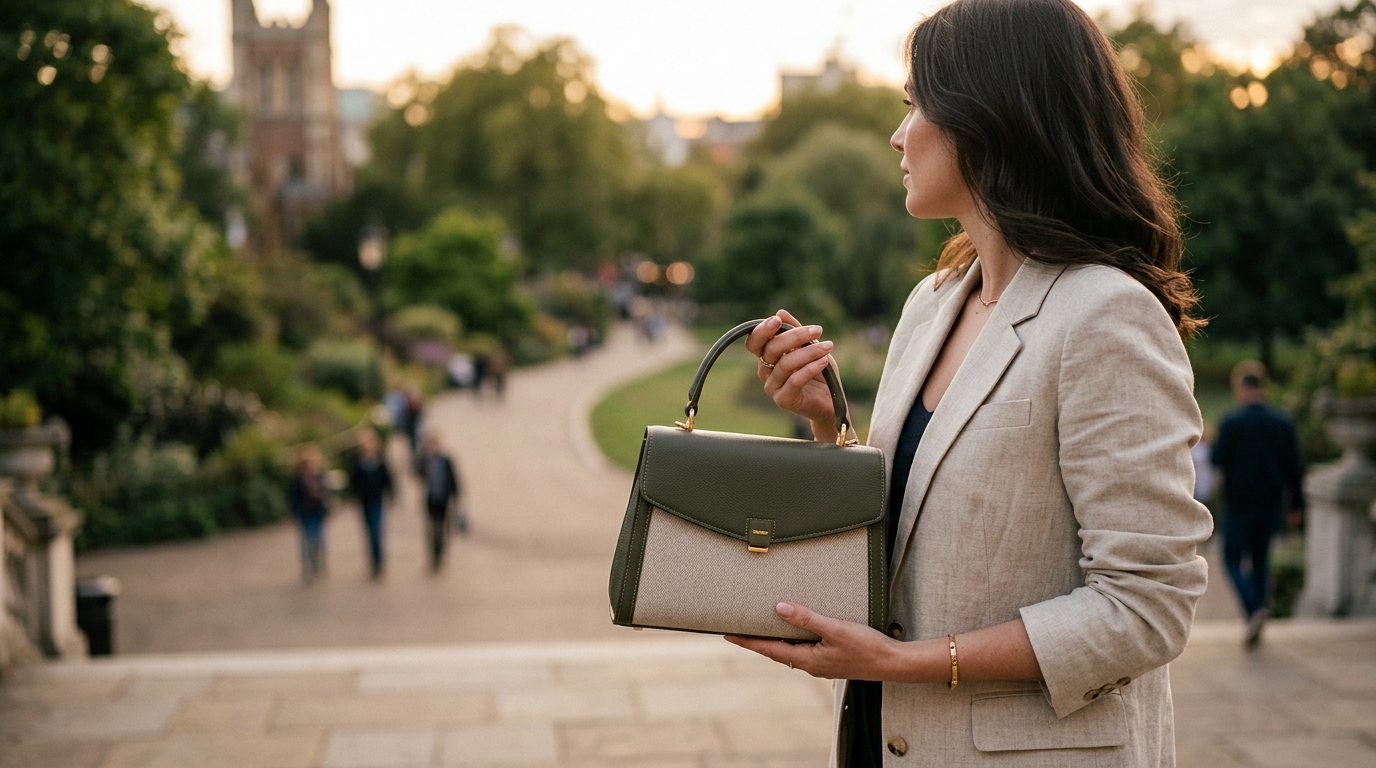
The modern luxury consumer no longer sees sustainability and elegance as opposing forces. In 2026, the handbag market proves they are inseparable. This ultimate guide walks you through every criterion—from material science to artisan heritage—so you can invest in a piece that honors both the planet and your personal style.
Why Sustainability Has Become Non-Negotiable in Luxury
The handbag industry is undergoing a value shift that goes far beyond marketing slogans. In 2026, sustainability has moved from a differentiator to a baseline expectation for discerning buyers. The global handbag market is projected to grow from USD 67.7 billion in 2024 to USD 97.2 billion by 2033, and eco-friendly products are growing faster than the industry average.
Consumers now factor environmental attributes and brand values into every purchasing decision. A 2023 survey found that 66 percent of consumers prefer brands that use ethical materials, and the number has only climbed since. Transparent supply chains that disclose product origins and ethical practices are becoming crucial for building brand trust.
The traditional fashion accessory sector contributes significantly to carbon emissions, water waste, and labour concerns. However, a new generation of luxury brands—and established heritage houses—are proving that style and responsibility can coexist. The real question is no longer whether to buy sustainably, but how to evaluate your options wisely.
The 2026 Material Landscape: Leather, Plant-Based, and Beyond
Choosing the right material is the single most impactful decision you will make. Here is a breakdown of the primary categories available in 2026.
Responsibly Sourced Leather
Leather remains polarising, but context matters. From an environmental perspective, leather has a significant footprint; however, it is extremely durable and naturally biodegradable. Keeping a leather handbag for many years can be a fairly sustainable choice, especially when it is vegetable-tanned rather than chrome-tanned, which creates additional pollution.
Look for brands that source hides as byproducts, use vegetable tanning, and craft pieces by hand to maximise longevity. A bag from Trevony, for instance, is handcrafted in Florence by a family of master artisans whose atelier has perfected leatherwork for more than seventy years. That kind of heritage-driven craftsmanship produces bags meant to be carried for decades, not discarded after a season.
Plant-Based Leather Alternatives
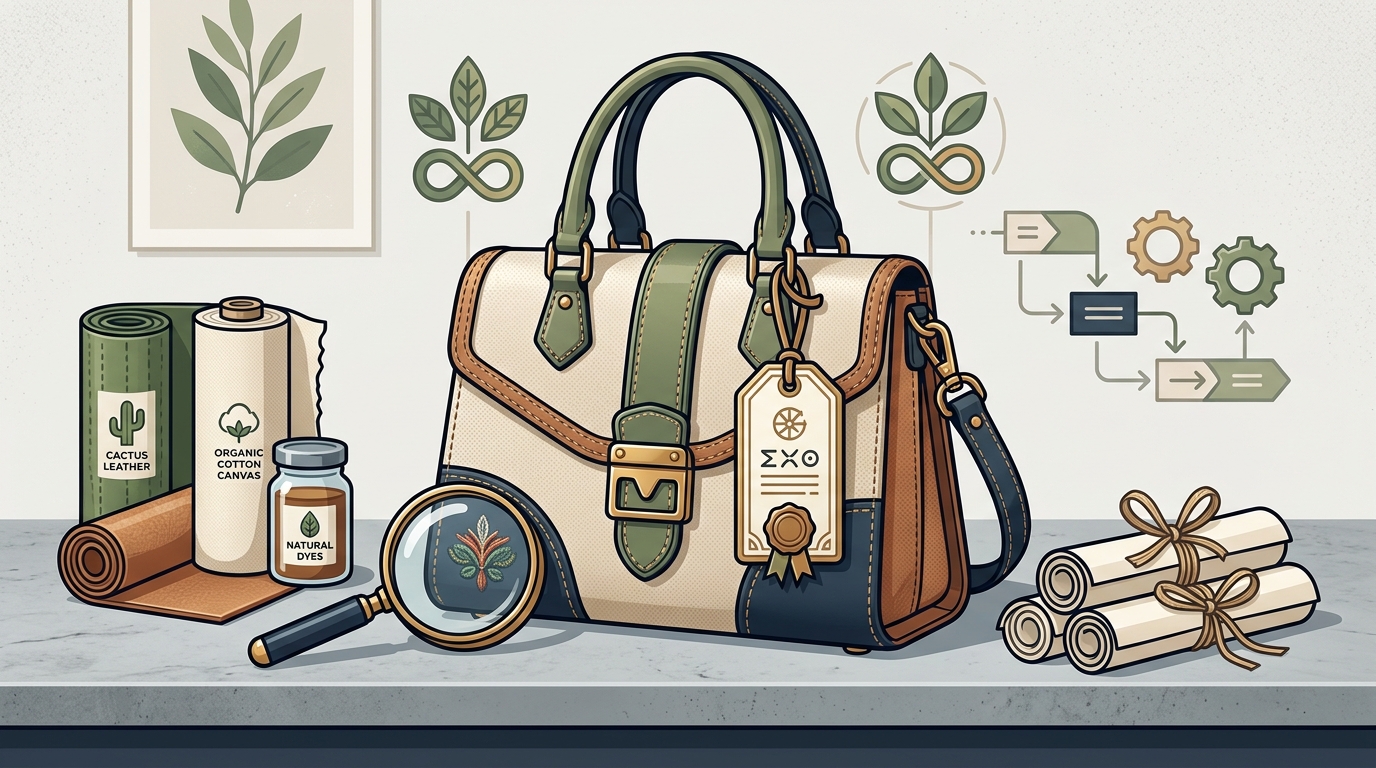
Innovation in plant-based leather has accelerated dramatically. Options now include cactus-based Desserto® leather, mushroom-derived Mylo™, grape-based VEGEA, apple-peel leather such as AppleSkin™, and MIRUM®—a plastic-free material made from natural tree rubber, plant fibres, and plant oils. Brands like Stella McCartney have championed materials such as VEGEA, Mylo™, and MIRUM for years, while newcomers like Allégorie work with mango, apple, and cactus leather sourced from agricultural waste.
One important caveat: not all vegan leather is created equal. Some vegan leathers are made from toxic synthetic materials such as polyvinyl chloride (PVC), which is an environmental liability. Always verify the specific composition rather than relying on a generic 'vegan leather' label.
Recycled and Upcycled Materials
Upcycled plastics, fishing nets, and surplus textiles are being transformed into stylish, durable bags. Some luxury brands now convert production leftovers into design highlights using deconstruction and patchwork techniques—a practice adopted by roughly 35 percent of high-end brands. Recycled nylon, recycled polyester, and deadstock fabric all keep existing materials in circulation longer.
Timeless vs. Trendy: Silhouettes That Endure
A sustainable purchase only delivers value if you actually use it for years. That means choosing a silhouette you will not tire of. In 2026, consumers are revisiting classic handbag shapes and reinterpreting them with contemporary materials and hardware, seeking timeless pieces that still feel fresh and relevant.
Silhouettes With Staying Power
- Structured totes — Versatile enough for work, travel, and weekend outings. A medium-sized tote in a neutral tone pairs with virtually any wardrobe.
- Crossbody bags — Hands-free convenience meets streamlined elegance. Look for clean lines and adjustable straps.
- Top-handle satchels — The quintessential ladylike bag. Opt for one with a detachable shoulder strap for versatility.
- East-West shapes — A horizontal silhouette that flatters most frames and offers deceptive interior space.
Details That Signal Longevity
Muted, tonal hardware ages gracefully. Neutral palettes—think forest green, cognac, black, and warm taupe—resist trend fatigue. Minimalist design language, free of oversized logos or novelty shapes, ensures the bag works across contexts for years.
A Five-Point Evaluation Framework for Conscious Buyers
Before adding any designer handbag to your collection, run it through these five criteria.
1. Material Transparency
Does the brand disclose exactly what the bag is made from and where those materials originate? Look for specifics—'vegetable-tanned Italian calf leather' or 'Desserto® cactus leather'—rather than vague claims. Some brands, like Dior, have even begun equipping eco-friendly handbags with NFC chips for carbon footprint passports, allowing full traceability.
2. Artisan Craftsmanship
A handcrafted bag produced in small batches by skilled artisans typically outlasts any factory-made equivalent. Heritage ateliers—whether in Florence, Ethiopia, or Portugal—invest decades of skill into every stitch. Trevony exemplifies this approach: each piece is shaped with patience and purpose, created to honour the milestones that define a life of meaning.
3. Ethical Labour Practices
Fair wages, safe working conditions, and third-party audits are non-negotiable markers. Certifications such as WRAP (Worldwide Responsible Accredited Production), BSCI, and GRS (Global Recycled Standard) provide independent verification.
4. Durability and Repairability
Sustainability is inseparable from longevity. Ask whether the brand offers repairs, replacement hardware, or reconditioning services. Circular-minded brands design bags where every component is recyclable once beyond repair.
5. Aesthetic Versatility
A bag that only works with one outfit or season is inherently wasteful. Prioritise designs in adaptable colourways with modular elements—detachable straps, convertible closures—that extend the product life cycle.
Why Artisan Heritage Is the Ultimate Sustainability Marker
Mass production optimises for speed; artisan production optimises for permanence. When a bag is handcrafted by people who have practised their craft across generations, the result is a product with built-in durability that no sustainability certification can fully replicate.
Consider the difference: a factory line may produce thousands of units per day, each identical and designed around a two-year replacement cycle. A Florentine atelier, by contrast, may produce a handful of bags per week—each one cut, stitched, and finished by hand, designed to develop a beautiful patina over decades of use.
This is the philosophy behind Trevony, where bags are handcrafted in Florence by artisans whose workshop has honed its techniques for over seventy years. The result is not just a handbag; it is a tactile archive of human skill, created to accompany its owner through life's defining moments.
Similarly, brands such as Parker Clay partner with artisans in Ethiopia, blending rich cultural handcraft traditions with modern design to create leather bags meant to look better with age. HYER GOODS takes another approach entirely, working with Italian artisans to transform luxury surplus leather into new pieces—giving high-end materials a second life.
Care and Longevity: Protecting Your Investment
Even the finest sustainable handbag requires thoughtful care. These practices will keep your investment beautiful for years.
- Rotate your collection. Alternating between two or three bags prevents material fatigue from constant daily wear and extends overall lifespan significantly.
- Store properly. Keep bags stuffed with acid-free tissue, upright, and in breathable dust bags—never in plastic.
- Clean gently. Use a soft, damp cloth for surface cleaning. For plant-based leathers, follow the manufacturer's specific guidance, as care requirements differ from animal leather.
- Condition periodically. Vegetable-tanned leather benefits from a quality leather conditioner every three to six months to maintain suppleness.
- Address damage early. Small scratches and scuffs are easier to resolve before they worsen. Contact the brand's repair service promptly.
Key Takeaways
- Sustainability and elegance are complementary — The 2026 market offers more options than ever for consumers who refuse to compromise on either.
- Material specifics matter more than labels — 'Vegan leather' can mean anything from cactus-based innovation to PVC. Demand transparency.
- Artisan craftsmanship equals built-in sustainability — A handcrafted bag from a heritage atelier, like those produced by Trevony in Florence, is designed to last decades.
- Choose timeless silhouettes — Classic shapes in neutral tones resist trend cycles and maximise cost-per-wear.
- Apply the five-point framework — Evaluate material transparency, craftsmanship, ethical labour, durability, and aesthetic versatility before every purchase.
- Care extends everything — Proper rotation, storage, and maintenance can double a handbag's functional life.
Frequently Asked Questions
Can a leather handbag truly be sustainable?
Yes, when the leather is sourced as a byproduct, vegetable-tanned to avoid toxic chemicals, and handcrafted for maximum durability. A well-made leather bag used for decades has a lower per-use environmental impact than a synthetic bag replaced every two years.
What is the most eco-friendly vegan leather available in 2026?
MIRUM® and Desserto® cactus leather are among the leaders. MIRUM® is 100 percent plastic-free, made from natural tree rubber, plant fibres, clay, charcoal, and quartz. Desserto® is made from sustainably harvested prickly pear cactus and rivals genuine leather in durability.
How do I spot greenwashing in handbag marketing?
Watch for vague terms like 'eco-friendly' or 'conscious' without supporting detail. Trustworthy brands name specific materials, cite certifications (GRS, WRAP, BSCI), and disclose factory locations and labour practices.
Why does artisan craftsmanship cost more?
Handcrafting requires skilled labour, longer production times, and premium materials. The trade-off is a product built to last far longer than mass-produced alternatives, which often translates to a lower cost per year of ownership.
What handbag silhouettes will still look current in five years?
Structured totes, clean crossbody bags, and top-handle satchels in neutral colourways have proven their staying power across multiple fashion cycles. Avoid novelty shapes or heavily logo-driven designs if longevity is your priority.
How should I store a designer handbag to maximise its lifespan?
Stuff it with acid-free tissue to preserve shape, store it upright in a breathable cotton dust bag, and keep it away from direct sunlight and humidity. Rotate bags regularly to prevent material fatigue.